Department of Mathematical Sciences, The University of Texas at Dallas, 800 W Campbell Rd, Richardson, TX 75080, USA.
Department of Pediatrics, The University of Texas Southwestern Medical Center, Dallas, TX 75390, USA.
Gigascience. 2021 Feb 19;10(2). doi: 10.1093/gigascience/giab009.
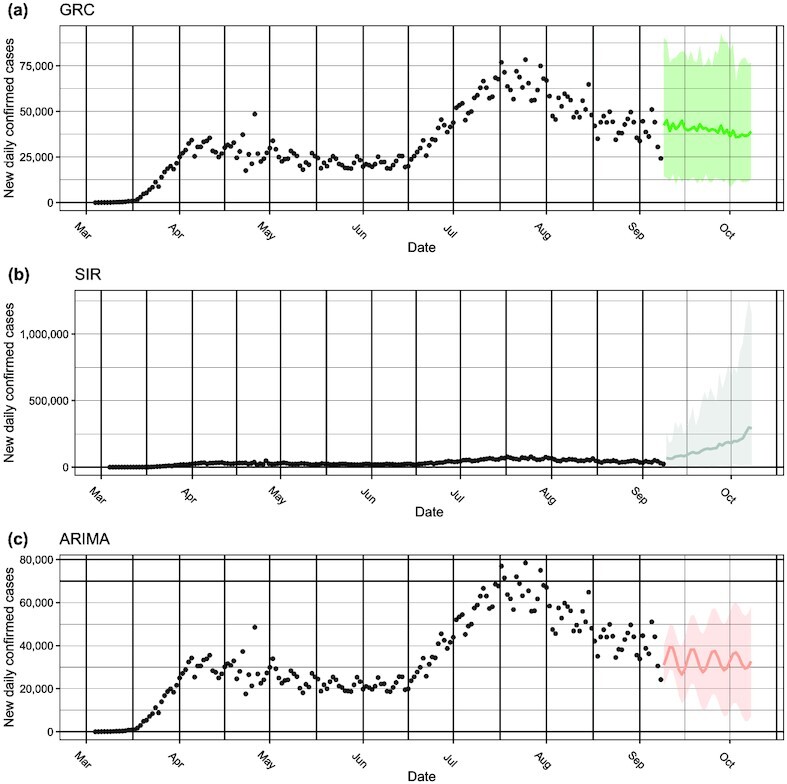
Forecasting of COVID-19 cases daily and weekly has been one of the challenges posed to governments and the health sector globally. To facilitate informed public health decisions, the concerned parties rely on short-term daily projections generated via predictive modeling. We calibrate stochastic variants of growth models and the standard susceptible-infectious-removed model into 1 Bayesian framework to evaluate and compare their short-term forecasts.
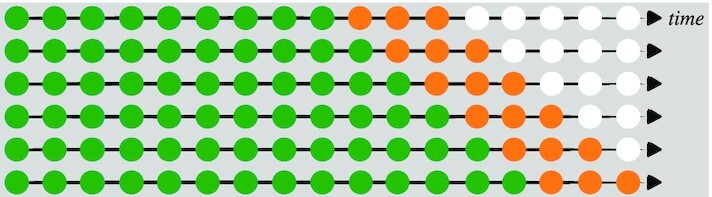
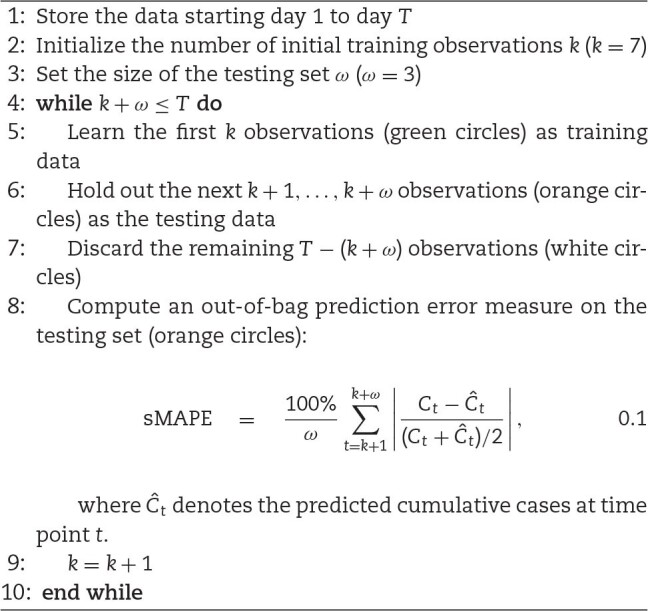
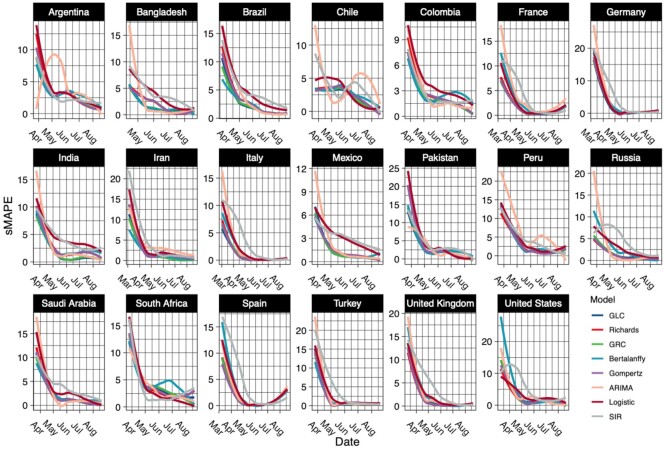
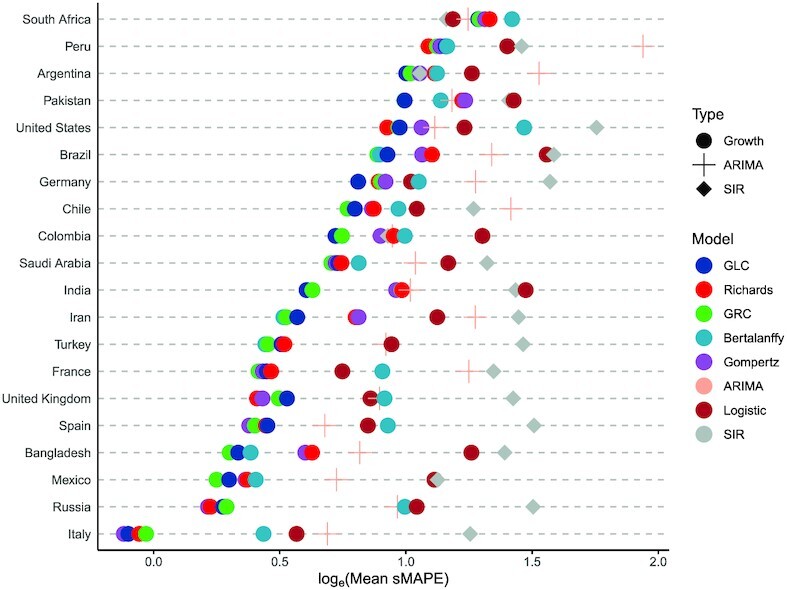
We implement rolling-origin cross-validation to compare the short-term forecasting performance of the stochastic epidemiological models and an autoregressive moving average model across 20 countries that had the most confirmed COVID-19 cases as of August 22, 2020.
None of the models proved to be a gold standard across all regions, while all outperformed the autoregressive moving average model in terms of the accuracy of forecast and interpretability.
预测每日和每周的 COVID-19 病例一直是全球各国政府和卫生部门面临的挑战之一。为了便于做出明智的公共卫生决策,相关各方依赖通过预测模型生成的短期每日预测。我们将增长模型和标准易感染-感染-清除模型的随机变量校准到一个贝叶斯框架中,以评估和比较它们的短期预测。
我们实施滚动原点交叉验证,以比较截至 2020 年 8 月 22 日确诊 COVID-19 病例最多的 20 个国家的随机传染病模型和自回归移动平均模型的短期预测性能。
在所有地区,没有一个模型被证明是黄金标准,而所有模型在预测准确性和可解释性方面都优于自回归移动平均模型。