Nasseri Simin, Yavarian Jila, Baghani Abbas Norouzian, Azad Talat Mokhtari, Nejati Ahmad, Nabizadeh Ramin, Hadi Mahdi, Jandaghi Nazanin Zahra Shafiei, Vakili Behnam, Vaghefi Seyed Koushyar Azam, Baghban Mahtab, Yousefi Somayeh, Nazmara Shahrokh, Alimohammadi Mahmood
Department of Environmental Health Engineering, School of Public Health, Tehran University of Medical Sciences, Tehran, Iran.
Center for Water Quality Research (CWQR), Institute for Environmental Research (IER), Tehran University of Medical Sciences, Tehran, Iran.
J Environ Health Sci Eng. 2021 Feb 24;19(1):573-584. doi: 10.1007/s40201-021-00629-6. eCollection 2021 Jun.
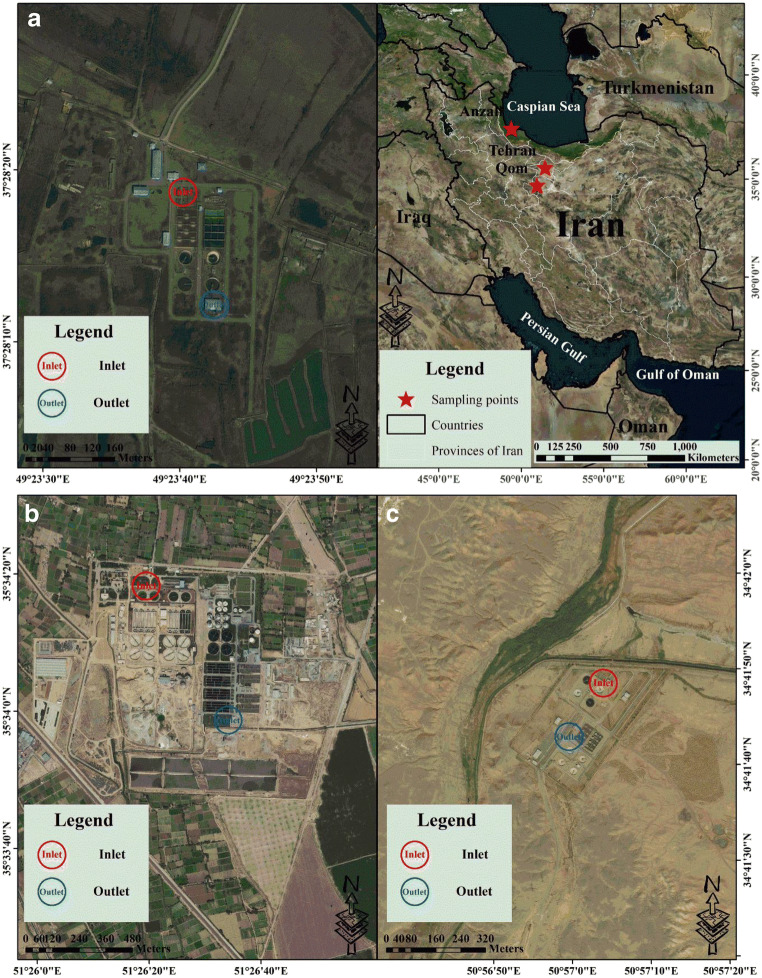
This study aimed to identifying the presence of SARS-CoV-2 RNA in raw and treated wastewater during the COVID-19 outbreak in Tehran, Qom and Anzali cities (Iran). From three wastewater treatment plants (WWTPs), 28 treated and untreated wastewater composite samples were collected from April 4 to May 2, 2020. In this study, polyethylene glycol 6000 (PEG 6000) was used through one-step real-time quantitative reverse transcriptase-polymerase chain reaction (qRT-PCR) for identification of RNA viruses. SARS-CoV-2 RNA was elicited from wastewater composite samples in all inlet samples taken from the three above mentioned cities. The results of outlet samples were as follows: 1) Results from Qom and East Anzali outlets showed no trace of SARS-CoV-2 RNA despite the difference in treatment disinfection method used (chlorine vs. ultraviolet (UV) disinfection). 2. In Tehran, SARS-CoV-2 RNA was not detected in any of the outlet samples taken from the modules disinfected by UV. Out of the four samples taken from the modules disinfected by chlorine, two were positive for the SARS-CoV-2 RNA which could have been caused by deficiencies in operation and maintenance. It can be concluded that meeting the standards of operation and maintenance (O&M) in WWTPs can considerably ensure that wastewater does not act as one of the roots of transmission for the disease.
本研究旨在确定在伊朗德黑兰、库姆和安扎利市新冠疫情期间原水和处理后废水中是否存在SARS-CoV-2 RNA。从三个污水处理厂(WWTPs)收集了28个处理过和未处理的废水混合样本,时间为2020年4月4日至5月2日。在本研究中,通过一步实时定量逆转录聚合酶链反应(qRT-PCR)使用聚乙二醇6000(PEG 6000)来鉴定RNA病毒。从上述三个城市采集的所有进水样本的废水混合样本中均检测出SARS-CoV-2 RNA。出水样本的结果如下:1)库姆和东安扎利污水处理厂出水的检测结果显示,尽管使用的处理消毒方法不同(氯消毒与紫外线(UV)消毒),但均未检测到SARS-CoV-2 RNA的痕迹。2. 在德黑兰,从采用紫外线消毒的模块采集的任何出水样本中均未检测到SARS-CoV-2 RNA。在从采用氯消毒的模块采集的四个样本中,有两个样本的SARS-CoV-2 RNA呈阳性,这可能是由于运行和维护方面的缺陷所致。可以得出结论,污水处理厂达到运行和维护(O&M)标准能够很大程度上确保废水不会成为该疾病的传播源头之一。