Keet Rochelle, Rip Diane
Department of Food Science, Centre for Food Safety, Stellenbosch University, South Africa.
AIMS Microbiol. 2021 Jan 19;7(1):40-58. doi: 10.3934/microbiol.2021004. eCollection 2021.
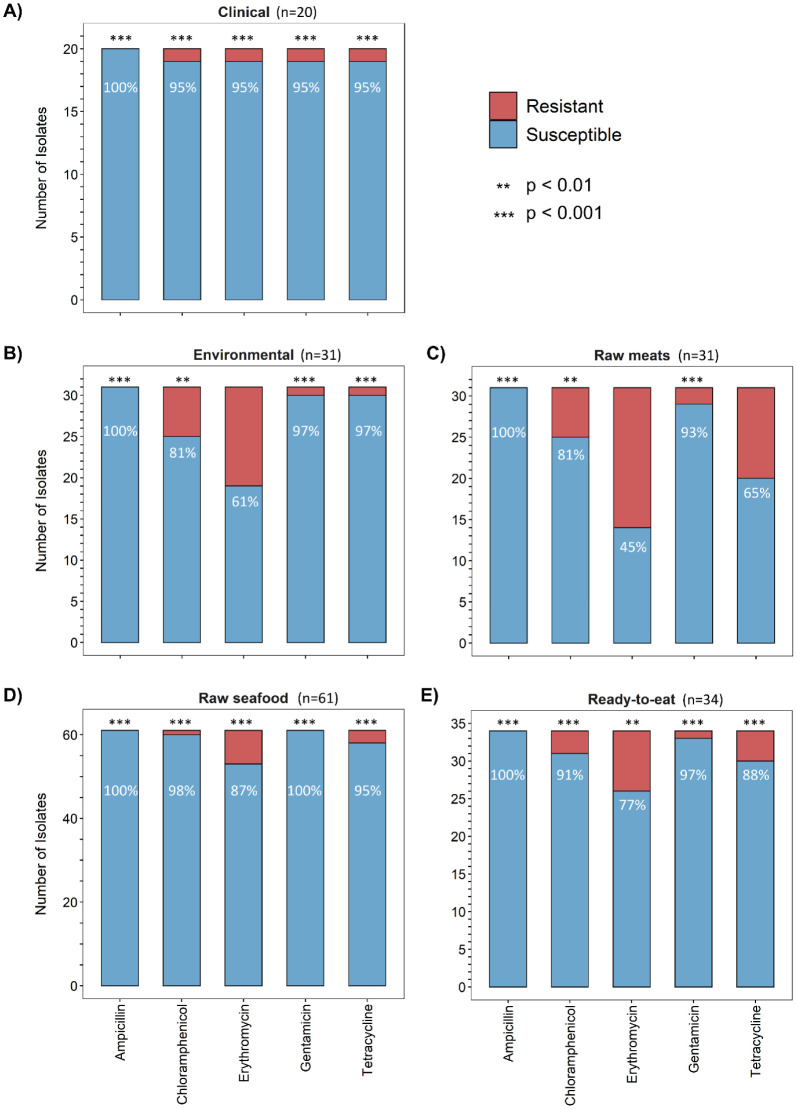
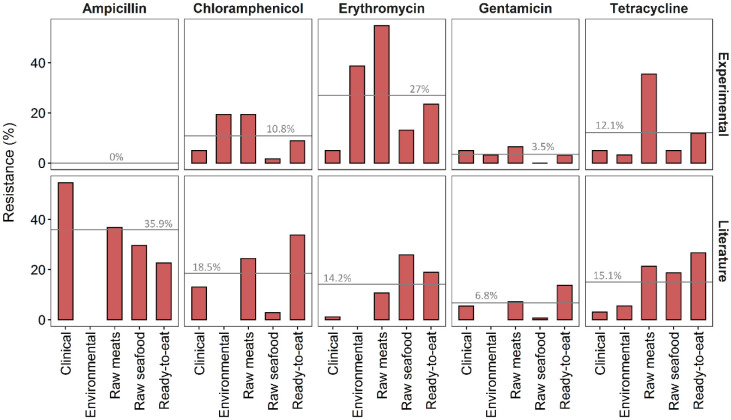
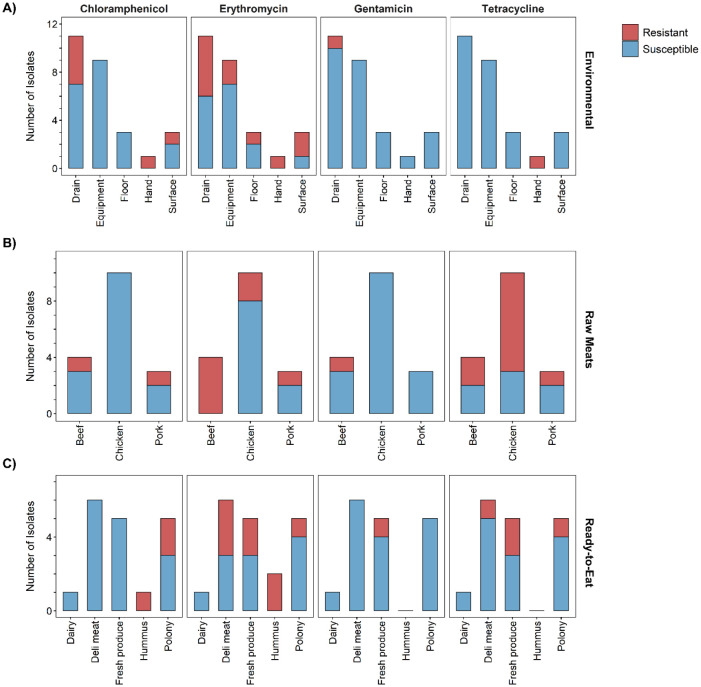
Food-borne disease outbreaks are common and offer valuable insights into the causes, impacts, and mechanisms underlying food pathogens. This also serves as a good foundation to validate the performance of current best practice control methods, for example antibiotics, that are used in the fight against food pathogens. Listeriosis outbreaks, caused by , is no exception. In 2018, South Africa experienced the largest global listeriosis outbreak recorded to date. However, despite the scale of this outbreak, information on the bacterium and its resistance towards antibiotics is still severely lacking. Furthermore, until now it remained to be determined whether antibiotic resistance patterns in South Africa mirror resistance patterns elsewhere in the world. The aim of this study was therefore to evaluate the efficacy of antibiotics that are currently used against . Using the European Committee on Antimicrobial Susceptibility Testing (EUCAST) disc diffusion method, isolates (n = 177) from diverse origins in the Western Cape, South Africa (clinical, food, and environment) were tested for susceptibility against five different antibiotics, namely ampicillin, erythromycin, chloramphenicol, gentamicin, and tetracycline. Isolates were collected over a period of two years (2017-2019). All isolates were susceptible to ampicillin, the currently recommended antibiotic, while a large number of isolates were resistant to chloramphenicol, erythromycin, and tetracycline. Also, patterns of resistance observed here are different to patterns observed elsewhere. The findings of this study demonstrate that it is imperative to continuously monitor the efficacy of currently recommended antibiotics, since resistance patterns can quickly develop when such antibiotics are overutilized, and secondly, that it is crucial to assess local antibiotic resistance patterns in conjunction with global patterns, since the latter is not necessarily generalizable to local scales.
食源性疾病暴发很常见,能为了解食源性病原体的成因、影响及潜在机制提供宝贵见解。这也为验证当前用于对抗食源性病原体的最佳实践控制方法(如抗生素)的性能提供了良好基础。由[未提及病原体名称]引起的李斯特菌病暴发也不例外。2018年,南非经历了有记录以来全球最大规模的李斯特菌病暴发。然而,尽管此次暴发规模巨大,但关于该细菌及其对抗生素的耐药性信息仍严重匮乏。此外,直到现在仍有待确定南非的抗生素耐药模式是否与世界其他地区的耐药模式相符。因此,本研究的目的是评估目前用于对抗[未提及病原体名称]的抗生素的疗效。采用欧洲抗菌药物敏感性试验委员会(EUCAST)纸片扩散法,对来自南非西开普不同来源(临床、食品和环境)的177株[未提及病原体名称]分离株进行了五种不同抗生素(氨苄青霉素、红霉素、氯霉素、庆大霉素和四环素)的敏感性测试。分离株在两年时间(2017 - 2019年)内收集。所有分离株对目前推荐使用的抗生素氨苄青霉素敏感,而大量分离株对氯霉素、红霉素和四环素耐药。此外,这里观察到的耐药模式与其他地方观察到的模式不同。本研究结果表明,必须持续监测目前推荐使用的抗生素的疗效,因为过度使用此类抗生素时耐药模式可能迅速形成,其次,结合全球模式评估当地抗生素耐药模式至关重要,因为全球模式不一定能推广到地方层面。