IRCCS SDN, Naples, Italy.
University of Warwick, Coventry, United Kingdom.
J Med Internet Res. 2021 Apr 1;23(4):e22394. doi: 10.2196/22394.
Machine learning algorithms have been drawing attention at the joining of pathology and radiology in prostate cancer research. However, due to their algorithmic learning complexity and the variability of their architecture, there is an ongoing need to analyze their performance.
This study assesses the source of heterogeneity and the performance of machine learning applied to radiomic, genomic, and clinical biomarkers for the diagnosis of prostate cancer. One research focus of this study was on clearly identifying problems and issues related to the implementation of machine learning in clinical studies.
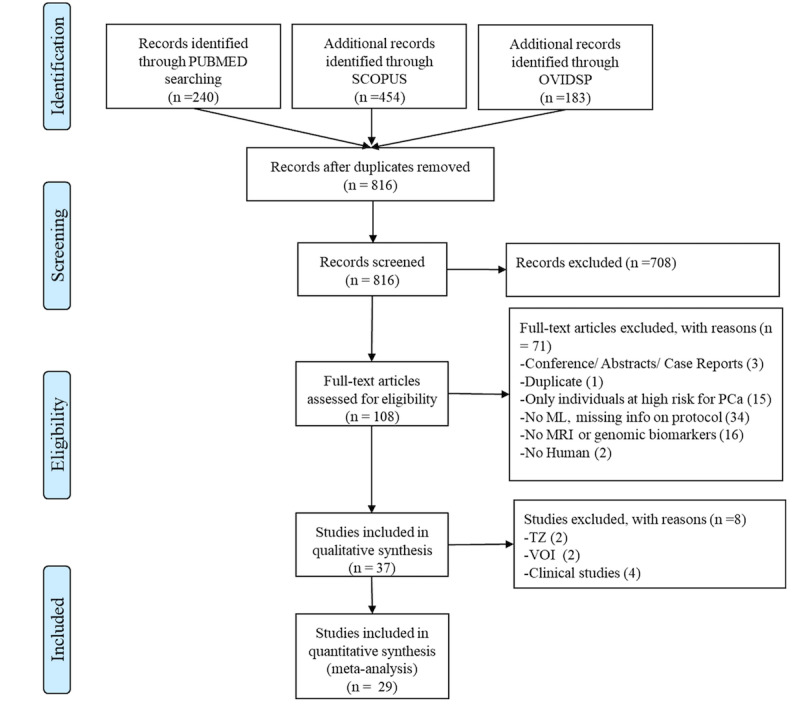
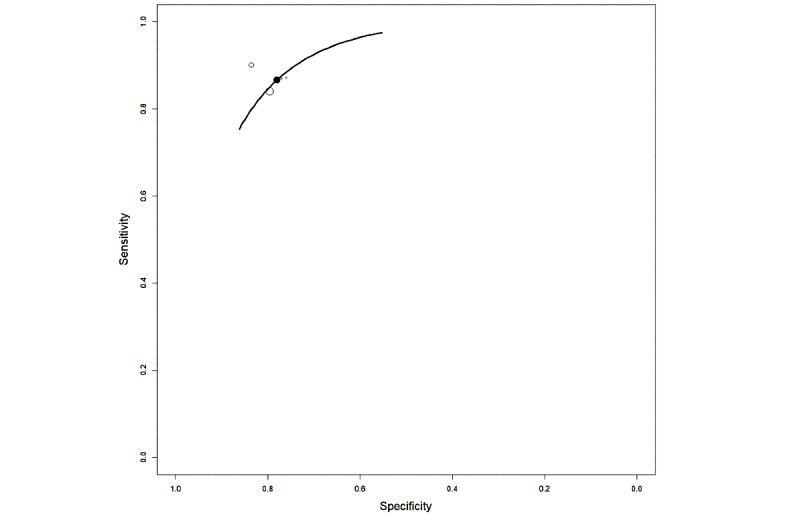
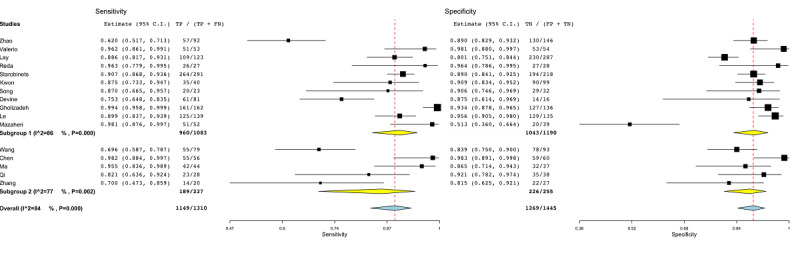
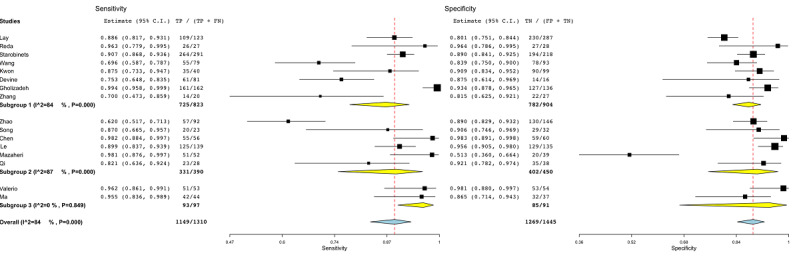
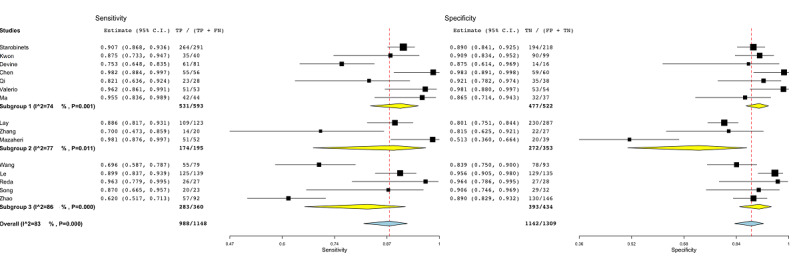
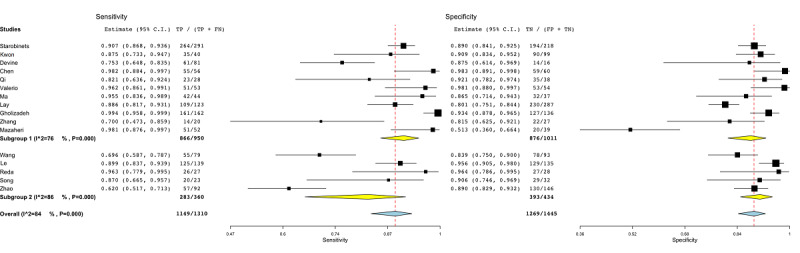
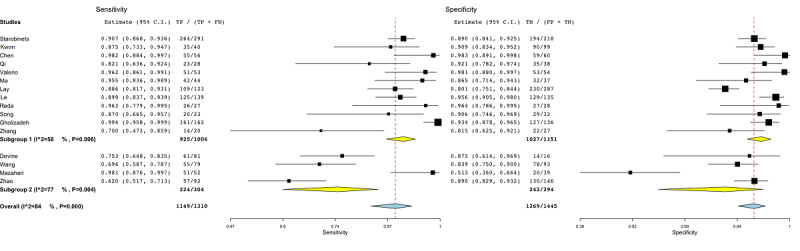
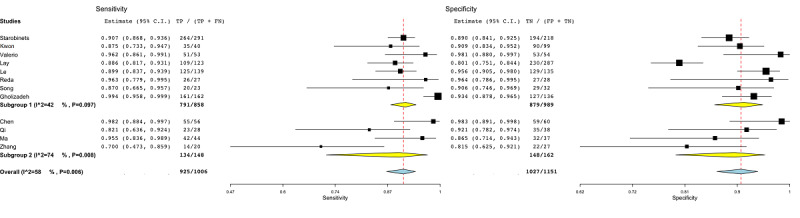
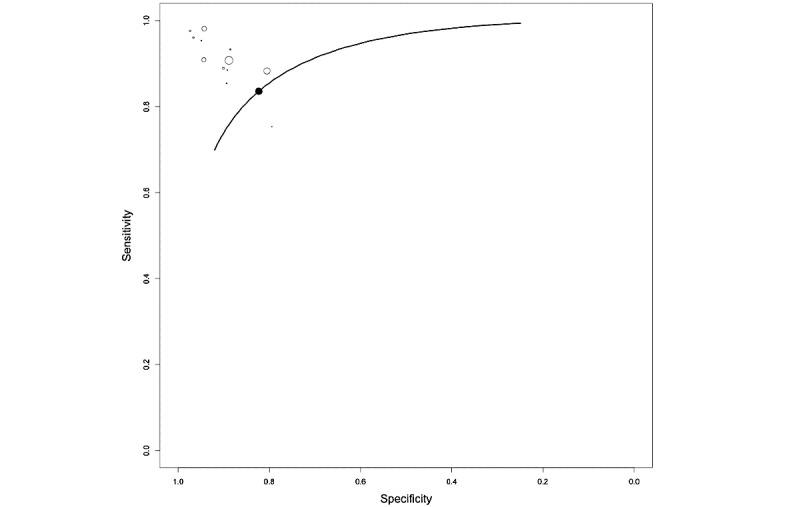
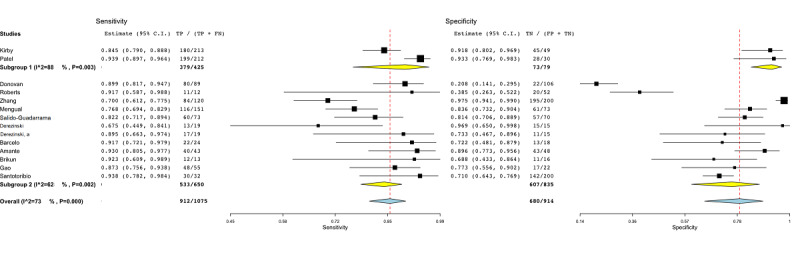
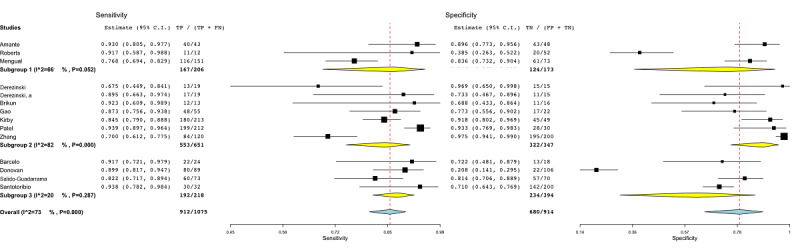
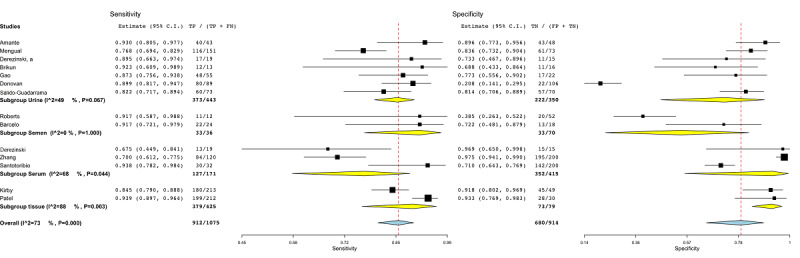
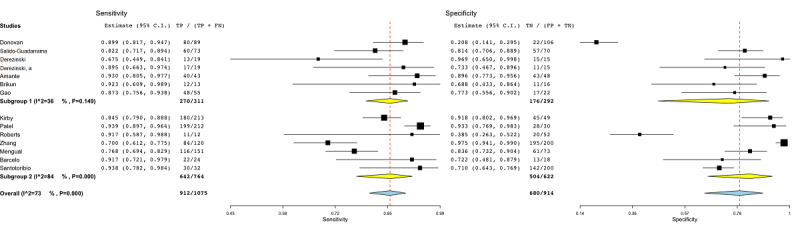
Following the PRISMA (Preferred Reporting Items for Systematic Reviews and Meta-Analyses) protocol, 816 titles were identified from the PubMed, Scopus, and OvidSP databases. Studies that used machine learning to detect prostate cancer and provided performance measures were included in our analysis. The quality of the eligible studies was assessed using the QUADAS-2 (quality assessment of diagnostic accuracy studies-version 2) tool. The hierarchical multivariate model was applied to the pooled data in a meta-analysis. To investigate the heterogeneity among studies, I statistics were performed along with visual evaluation of coupled forest plots. Due to the internal heterogeneity among machine learning algorithms, subgroup analysis was carried out to investigate the diagnostic capability of machine learning systems in clinical practice.
In the final analysis, 37 studies were included, of which 29 entered the meta-analysis pooling. The analysis of machine learning methods to detect prostate cancer reveals the limited usage of the methods and the lack of standards that hinder the implementation of machine learning in clinical applications.
The performance of machine learning for diagnosis of prostate cancer was considered satisfactory for several studies investigating the multiparametric magnetic resonance imaging and urine biomarkers; however, given the limitations indicated in our study, further studies are warranted to extend the potential use of machine learning to clinical settings. Recommendations on the use of machine learning techniques were also provided to help researchers to design robust studies to facilitate evidence generation from the use of radiomic and genomic biomarkers.
机器学习算法在前列腺癌研究中将病理学和放射学结合方面引起了关注。然而,由于其算法学习的复杂性和架构的可变性,需要不断分析其性能。
本研究评估了机器学习应用于放射组学、基因组学和临床生物标志物诊断前列腺癌的异质性来源和性能。本研究的一个研究重点是明确识别与机器学习在临床研究中的实施相关的问题和问题。
根据 PRISMA(系统评价和荟萃分析的首选报告项目)协议,从 PubMed、Scopus 和 OvidSP 数据库中确定了 816 个标题。本分析纳入了使用机器学习检测前列腺癌并提供性能指标的研究。使用 QUADAS-2(诊断准确性研究质量评估工具-2)工具评估合格研究的质量。在荟萃分析中应用层次多变量模型对汇总数据进行分析。为了研究研究之间的异质性,进行了 I 统计量分析,并结合耦合森林图进行了直观评估。由于机器学习算法内部存在异质性,因此进行了亚组分析,以调查机器学习系统在临床实践中的诊断能力。
最终分析纳入 37 项研究,其中 29 项进入荟萃分析。对机器学习方法检测前列腺癌的分析表明,该方法的使用有限,缺乏标准,这阻碍了机器学习在临床应用中的实施。
对于几项研究调查多参数磁共振成像和尿液生物标志物,机器学习用于诊断前列腺癌的性能被认为是令人满意的;然而,鉴于我们研究中指出的局限性,需要进一步的研究来扩展机器学习在临床环境中的潜在用途。还提供了有关使用机器学习技术的建议,以帮助研究人员设计稳健的研究,促进从放射组学和基因组生物标志物的使用中生成证据。