Sergi Domenico, Gélinas Alex, Beaulieu Jimmy, Renaud Justine, Tardif-Pellerin Emilie, Guillard Jérôme, Martinoli Maria-Grazia
Cellular Neurobiology, Department of Medical Biology, Université du Québec, Trois-Rivières, QC G9A 5H7, Canada.
Adelaide Medical School, The University of Adelaide, Adelaide, SA 5000, Australia.
Foods. 2021 Mar 11;10(3):586. doi: 10.3390/foods10030586.
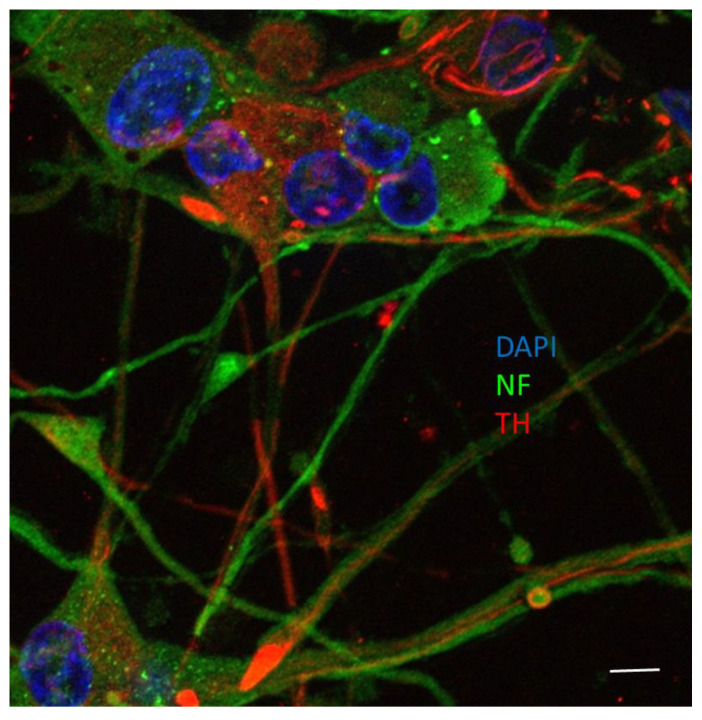
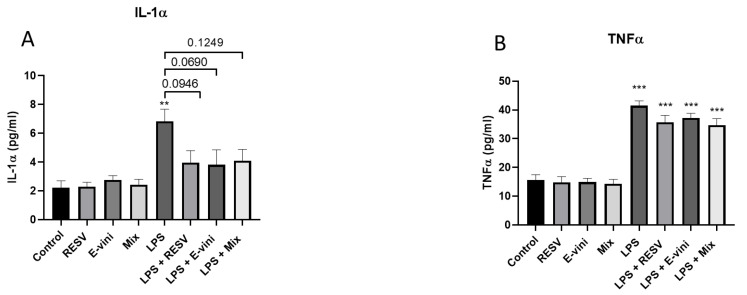
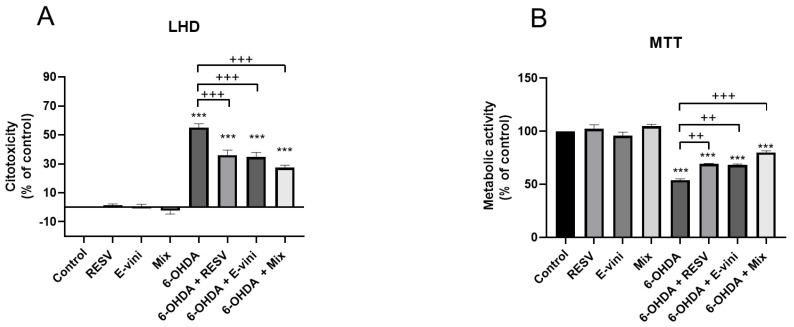
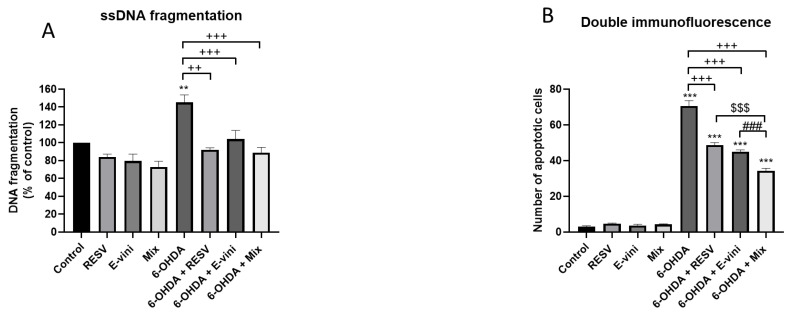
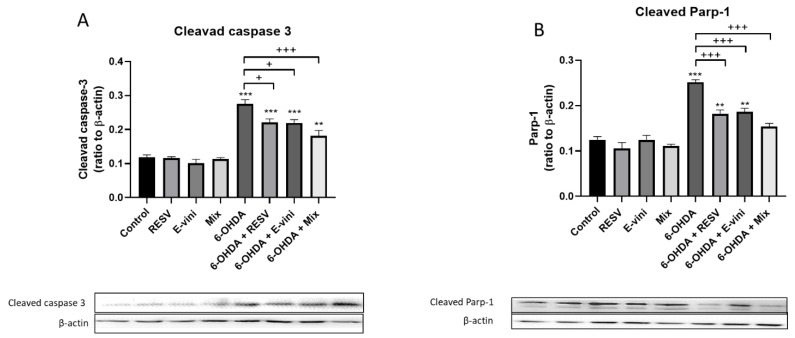
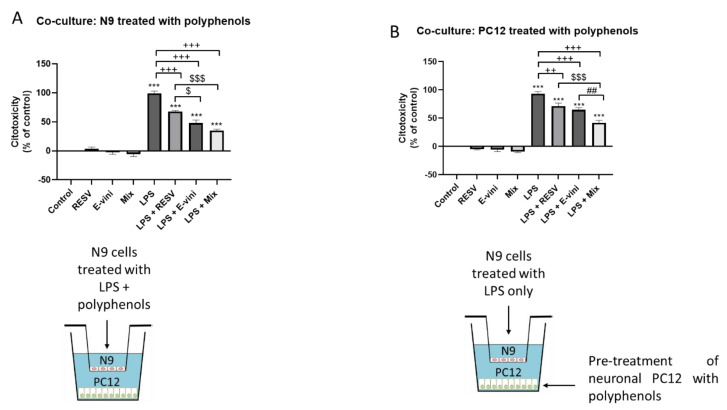
The polyphenol trans-ε-viniferin (viniferin) is a dimer of resveratrol, reported to hold antioxidant and anti-inflammatory properties. The aims of our study were to evaluate the neuroprotective potential of viniferin in the nerve growth factor (NGF)-differentiated PC12 cells, a dopaminergic cellular model of Parkinson's disease (PD) and assess its anti-inflammatory properties in a N9 microglia-neuronal PC12 cell co-culture system. The neuronal cells were pre-treated with viniferin, resveratrol or their mixture before the administration of 6-hydroxydopamine (6-OHDA), recognized to induce parkinsonism in rats. Furthermore, N9 microglia cells, in a co-culture system with neuronal PC12, were pre-treated with viniferin, resveratrol or their mixture to investigate whether these polyphenols could reduce lipopolysaccharide (LPS)-induced inflammation. Our results show that viniferin as well as a mixture of viniferin and resveratrol protects neuronal dopaminergic cells from 6-OHDA-induced cytotoxicity and apoptosis. Furthermore, when viniferin, resveratrol or their mixture was used to pre-treat microglia cells in our co-culture system, they reduced neuronal cytotoxicity induced by glial activation. Altogether, our data highlight a novel role for viniferin as a neuroprotective and anti-inflammatory molecule in a dopaminergic cellular model, paving the way for nutraceutical therapeutic avenues in the complementary treatments of PD.
多酚反式-ε-白藜芦醇(白藜芦醇)是白藜芦醇的二聚体,据报道具有抗氧化和抗炎特性。我们研究的目的是评估白藜芦醇在神经生长因子(NGF)分化的PC12细胞(一种帕金森病(PD)的多巴胺能细胞模型)中的神经保护潜力,并在N9小胶质细胞-神经元PC12细胞共培养系统中评估其抗炎特性。在给予公认能诱导大鼠帕金森症的6-羟基多巴胺(6-OHDA)之前,先用白藜芦醇、白藜芦醇或它们的混合物预处理神经元细胞。此外,在与神经元PC12的共培养系统中,用白藜芦醇、白藜芦醇或它们的混合物预处理N9小胶质细胞,以研究这些多酚是否能减轻脂多糖(LPS)诱导的炎症。我们的结果表明,白藜芦醇以及白藜芦醇和白藜芦醇的混合物可保护神经元多巴胺能细胞免受6-OHDA诱导的细胞毒性和凋亡。此外,当在我们的共培养系统中用白藜芦醇、白藜芦醇或它们的混合物预处理小胶质细胞时,它们可降低由胶质细胞激活诱导的神经元细胞毒性。总之,我们的数据突出了白藜芦醇在多巴胺能细胞模型中作为神经保护和抗炎分子的新作用,为PD补充治疗中的营养治疗途径铺平了道路。