Institute of Veterinary Medicine of Serbia, Food and Feed Department, Autoput 3, 11070 Beograd, Serbia.
Faculty of Food Technology Osijek, Josip Juraj Strossmayer University of Osijek, F. Kuhača 20, 31000 Osijek, Croatia.
Toxins (Basel). 2021 Mar 10;13(3):198. doi: 10.3390/toxins13030198.
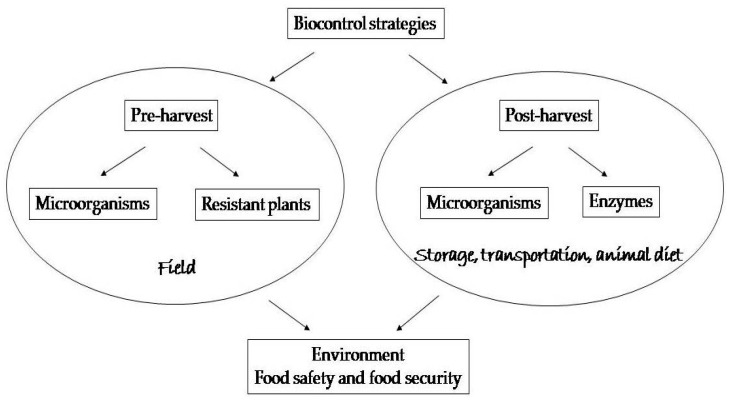
Seeking useful biological agents for mycotoxin detoxification has achieved success in the last twenty years thanks to the participation of many multidisciplinary teams. We have recently witnessed discoveries in the fields of bacterial genetics (inclusive of next-generation sequencing), protein encoding, and bioinformatics that have helped to shape the latest perception of how microorganisms/mycotoxins/environmental factors intertwine and interact, so the road is opened for new breakthroughs. Analysis of literature data related to the biological control of mycotoxins indicates the ability of yeast, bacteria, fungi and enzymes to degrade or adsorb mycotoxins, which increases the safety and quality of susceptible crops, animal feed and, ultimately, food of animal origin (milk, meat and eggs) by preventing the presence of residues. Microbial detoxification (transformation and adsorption) is becoming a trustworthy strategy that leaves no or less toxic compounds and contributes to food security. This review summarizes the data and highlights the importance and prospects of these methods.
在过去的二十年中,由于许多多学科团队的参与,寻找有用的生物制剂来解毒霉菌毒素已经取得了成功。我们最近见证了细菌遗传学(包括下一代测序)、蛋白质编码和生物信息学领域的发现,这些发现有助于塑造人们对微生物/霉菌毒素/环境因素相互交织和相互作用的最新认识,从而为新的突破开辟了道路。对与霉菌毒素生物防治相关的文献数据的分析表明,酵母、细菌、真菌和酶降解或吸附霉菌毒素的能力,通过防止残留,提高了易受影响的作物、动物饲料以及最终动物源性食品(牛奶、肉类和鸡蛋)的安全性和质量。微生物解毒(转化和吸附)正在成为一种可靠的策略,不会留下或留下更少的有毒化合物,并有助于食品安全。本文综述了这些方法的数据,并强调了它们的重要性和前景。