Mosselhy Dina A, Virtanen Jenni, Kant Ravi, He Wei, Elbahri Mady, Sironen Tarja
Department of Virology, Faculty of Medicine, University of Helsinki, P.O. Box 21, 00014 Helsinki, Finland.
Department of Veterinary Biosciences, Faculty of Veterinary Medicine, University of Helsinki, P.O. Box 66, 00014 Helsinki, Finland.
Nanomaterials (Basel). 2021 Mar 19;11(3):796. doi: 10.3390/nano11030796.
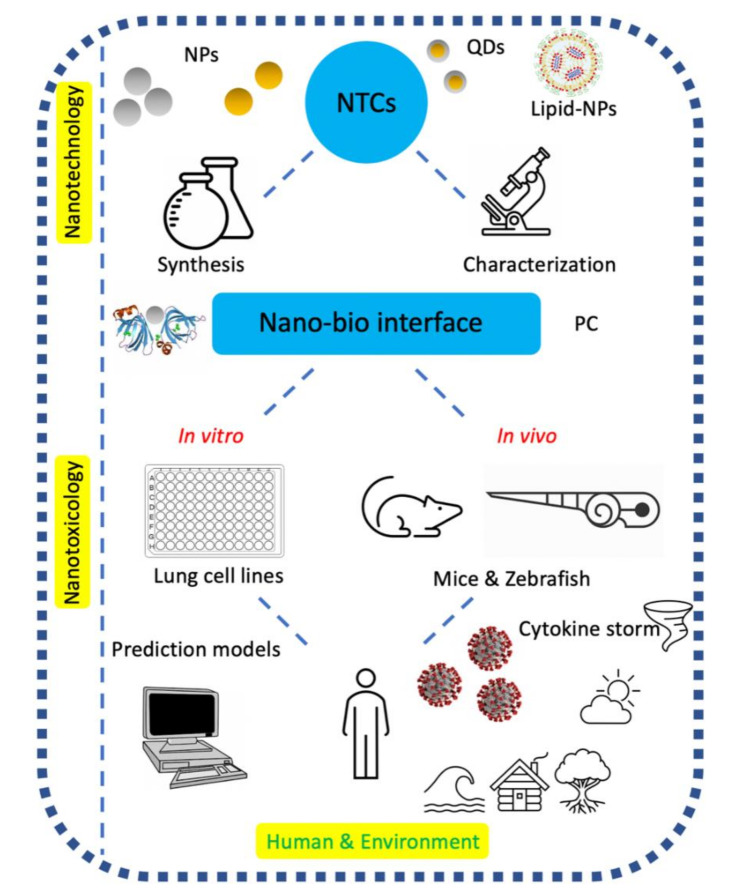
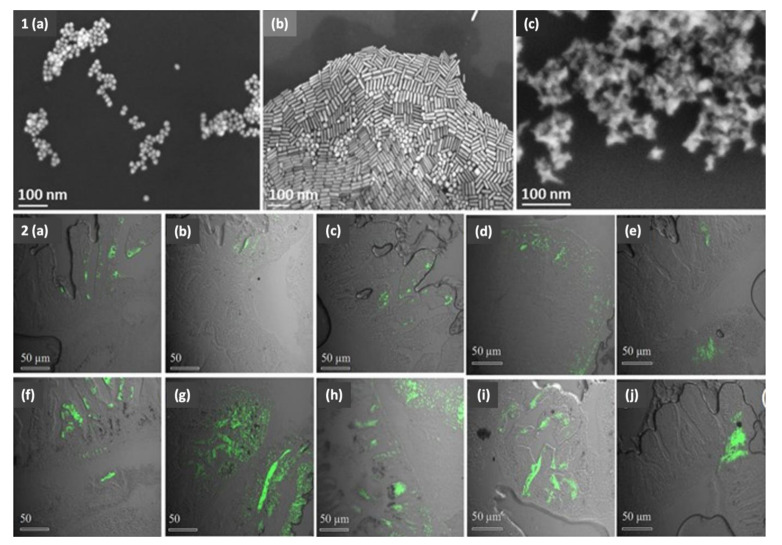
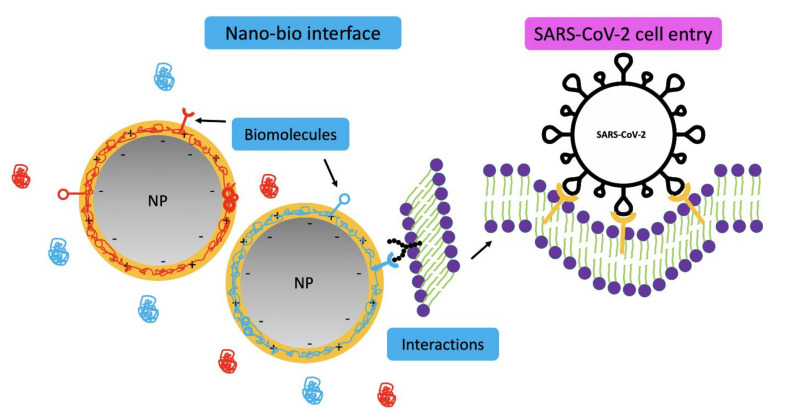
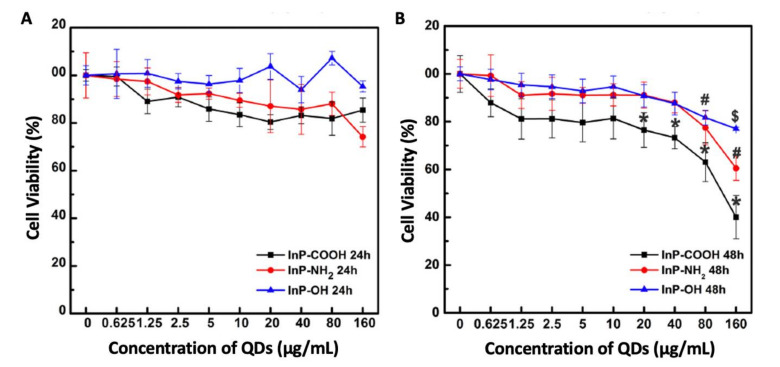
Every day, new information is presented with respect to how to best combat the severe acute respiratory syndrome coronavirus 2 (SARS-CoV-2). This manuscript sheds light on such recent findings, including new co-factors (i.e., neuropilin-1) and routes (i.e., olfactory transmucosal) allowing cell entry of SARS-CoV-2 and induction of neurological symptoms, as well as the new SARS-CoV-2 variants. We highlight the SARS-CoV-2 human-animal interfaces and elaborate containment strategies using the same vaccination (i.e., nanoparticle "NP" formulations of the BNT162b2 and mRNA-1273 vaccines) for humans, minks, raccoon dogs, cats, and zoo animals. We investigate the toxicity issues of anti-CoV NPs (i.e., plasmonic NPs and quantum dots) on different levels. Namely, nano-bio interfaces (i.e., protein corona), in vitro (i.e., lung cells) and in vivo (i.e., zebrafish embryos) assessments, and impacts on humans are discussed in a narrative supported by original figures. Ultimately, we express our skeptical opinion on the comprehensive administration of such antiviral nanotheranostics, even when integrated into facemasks, because of their reported toxicities and the different NP parameters (e.g., size, shape, surface charge, and purity and chemical composition of NPs) that govern their end toxicity. We believe that more toxicity studies should be performed and be presented, clarifying the odds of the safe administration of nanotoxocological solutions and the relief of a worried public.
每天都会有关于如何最佳对抗严重急性呼吸综合征冠状病毒2(SARS-CoV-2)的新信息出现。本手稿揭示了这些最新发现,包括新的辅助因子(即神经纤毛蛋白-1)和途径(即嗅觉经粘膜途径),这些因素使得SARS-CoV-2能够进入细胞并引发神经症状,以及新出现的SARS-CoV-2变体。我们强调了SARS-CoV-2在人与动物之间的接触界面,并阐述了针对人类、水貂、貉、猫和动物园动物使用相同疫苗接种(即BNT162b2和mRNA-1273疫苗的纳米颗粒“NP”制剂)的防控策略。我们在不同层面研究了抗冠状病毒纳米颗粒(即等离子体纳米颗粒和量子点)的毒性问题。具体而言,纳米-生物界面(即蛋白质冠层)、体外(即肺细胞)和体内(即斑马鱼胚胎)评估以及对人类的影响将在配有原始数据的叙述中进行讨论。最终,由于这些抗病毒纳米诊疗剂已报道的毒性以及决定其最终毒性的不同纳米颗粒参数(例如,尺寸、形状、表面电荷以及纳米颗粒的纯度和化学成分),我们对这类抗病毒纳米诊疗剂的全面应用表示怀疑,即使它们被整合到口罩中也是如此。我们认为应该进行并展示更多的毒性研究,以阐明纳米毒理学解决方案安全应用的可能性,并缓解公众的担忧。