Salvatore Christian, Interlenghi Matteo, Monti Caterina B, Ippolito Davide, Capra Davide, Cozzi Andrea, Schiaffino Simone, Polidori Annalisa, Gandola Davide, Alì Marco, Castiglioni Isabella, Messa Cristina, Sardanelli Francesco
Department of Science, Technology, and Society, Scuola Universitaria IUSS, Istituto Universitario di Studi Superiori, Piazza della Vittoria 15, 27100 Pavia, Italy.
DeepTrace Technologies S.R.L., via Conservatorio 17, 20122 Milano, Italy.
Diagnostics (Basel). 2021 Mar 16;11(3):530. doi: 10.3390/diagnostics11030530.
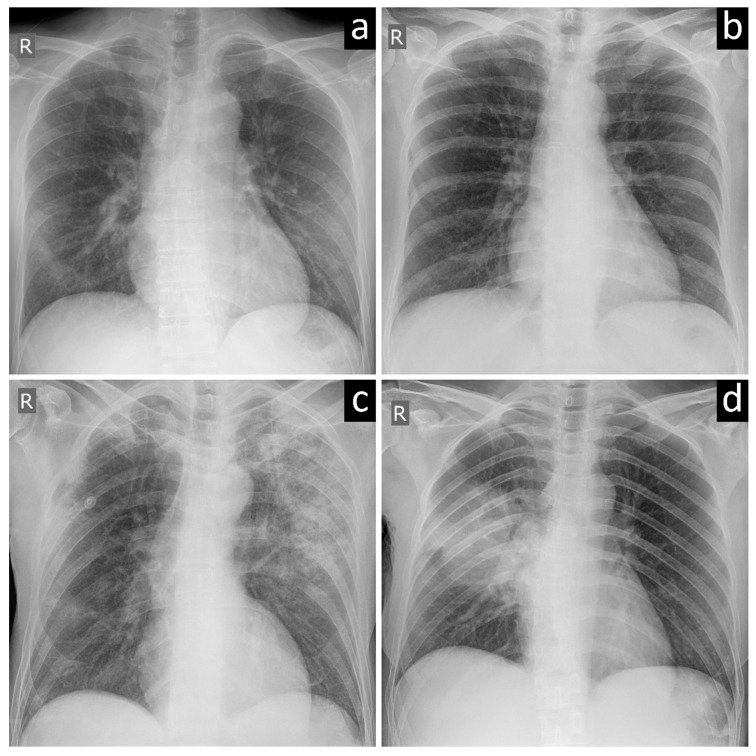
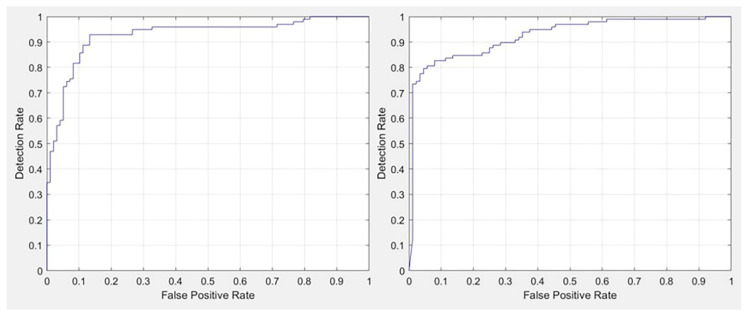
We assessed the role of artificial intelligence applied to chest X-rays (CXRs) in supporting the diagnosis of COVID-19. We trained and cross-validated a model with an ensemble of 10 convolutional neural networks with CXRs of 98 COVID-19 patients, 88 community-acquired pneumonia (CAP) patients, and 98 subjects without either COVID-19 or CAP, collected in two Italian hospitals. The system was tested on two independent cohorts, namely, 148 patients (COVID-19, CAP, or negative) collected by one of the two hospitals (independent testing I) and 820 COVID-19 patients collected by a multicenter study (independent testing II). On the training and cross-validation dataset, sensitivity, specificity, and area under the curve (AUC) were 0.91, 0.87, and 0.93 for COVID-19 versus negative subjects, 0.85, 0.82, and 0.94 for COVID-19 versus CAP. On the independent testing I, sensitivity, specificity, and AUC were 0.98, 0.88, and 0.98 for COVID-19 versus negative subjects, 0.97, 0.96, and 0.98 for COVID-19 versus CAP. On the independent testing II, the system correctly diagnosed 652 COVID-19 patients versus negative subjects (0.80 sensitivity) and correctly differentiated 674 COVID-19 versus CAP patients (0.82 sensitivity). This system appears promising for the diagnosis and differential diagnosis of COVID-19, showing its potential as a second opinion tool in conditions of the variable prevalence of different types of infectious pneumonia.
我们评估了应用于胸部X光(CXR)的人工智能在支持新型冠状病毒肺炎(COVID-19)诊断中的作用。我们使用10个卷积神经网络的集成模型进行训练和交叉验证,该模型的数据来自意大利两家医院收集的98例COVID-19患者、88例社区获得性肺炎(CAP)患者以及98例既无COVID-19也无CAP的受试者的胸部X光片。该系统在两个独立队列上进行了测试,即两家医院之一收集的148例患者(COVID-19、CAP或阴性)(独立测试I)和多中心研究收集的820例COVID-19患者(独立测试II)。在训练和交叉验证数据集中,COVID-19与阴性受试者相比,灵敏度、特异度和曲线下面积(AUC)分别为0.91、0.87和0.93;COVID-19与CAP相比,分别为0.85、0.82和0.94。在独立测试I中,COVID-19与阴性受试者相比,灵敏度、特异度和AUC分别为0.98、0.88和0.98;COVID-19与CAP相比,分别为0.97、0.96和0.98。在独立测试II中,该系统正确诊断了652例COVID-19患者与阴性受试者(灵敏度为0.80),并正确区分了674例COVID-19与CAP患者(灵敏度为0.82)。该系统在COVID-19的诊断和鉴别诊断方面似乎很有前景,显示出其作为不同类型传染性肺炎患病率各异情况下的第二种意见工具的潜力。