Department of Electrical and Computer Engineering, University of California, Santa Cruz, Santa Cruz, CA, USA.
School of Electrical and Computer Engineering, The University of Oklahoma, Norman, OK, USA.
Sci Rep. 2021 May 10;11(1):9887. doi: 10.1038/s41598-021-88807-2.
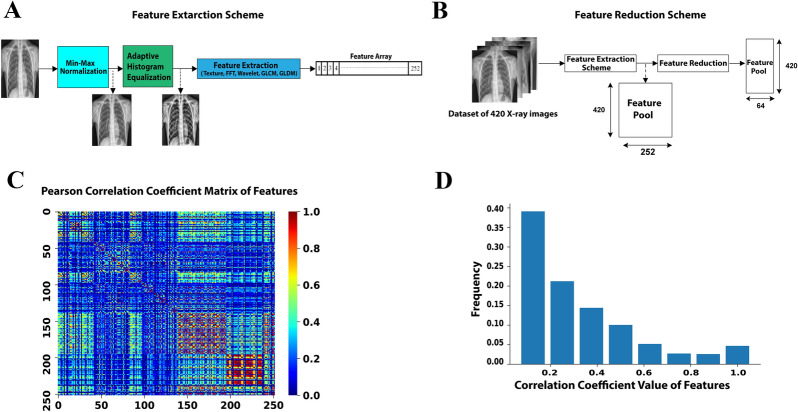
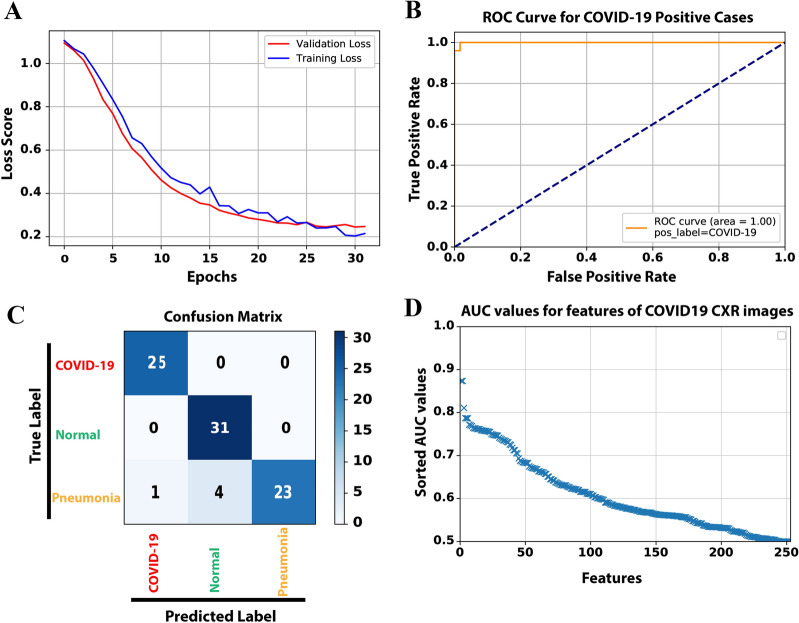
Chest-X ray (CXR) radiography can be used as a first-line triage process for non-COVID-19 patients with pneumonia. However, the similarity between features of CXR images of COVID-19 and pneumonia caused by other infections makes the differential diagnosis by radiologists challenging. We hypothesized that machine learning-based classifiers can reliably distinguish the CXR images of COVID-19 patients from other forms of pneumonia. We used a dimensionality reduction method to generate a set of optimal features of CXR images to build an efficient machine learning classifier that can distinguish COVID-19 cases from non-COVID-19 cases with high accuracy and sensitivity. By using global features of the whole CXR images, we successfully implemented our classifier using a relatively small dataset of CXR images. We propose that our COVID-Classifier can be used in conjunction with other tests for optimal allocation of hospital resources by rapid triage of non-COVID-19 cases.
胸部 X 射线(CXR)摄影可作为非 COVID-19 肺炎患者的一线分诊过程。然而,COVID-19 的 CXR 图像特征与其他感染引起的肺炎的特征相似,这使得放射科医生的鉴别诊断具有挑战性。我们假设基于机器学习的分类器可以可靠地区分 COVID-19 患者和其他类型肺炎的 CXR 图像。我们使用降维方法生成一组 CXR 图像的最优特征,以构建一个高效的机器学习分类器,能够以高精度和灵敏度区分 COVID-19 病例和非 COVID-19 病例。通过使用整个 CXR 图像的全局特征,我们成功地在相对较小的 CXR 图像数据集上实现了我们的分类器。我们提出,我们的 COVID-Classifier 可以与其他测试结合使用,通过对非 COVID-19 病例进行快速分诊,优化医院资源的分配。