Brownstein Callum G, Rimaud Diana, Singh Benjamin, Fruleux-Santos Laurie-Anne, Sorg Marine, Micklewright Dominic, Millet Guillaume Y
Univ Lyon, UJM-Saint-Etienne, Inter-university Laboratory of Human Movement Biology, EA 7424, F-42023, Saint-Etienne, France.
Department of Exercise and clinical Physiology, University Hospital of Saint-Etienne, Saint Etienne, France.
Sports Med Open. 2021 Apr 8;7(1):25. doi: 10.1186/s40798-021-00316-8.
The Rating of Fatigue (ROF) scale can measure changes in perceived fatigue in a variety of contexts.
The aim of the present study was to translate and subsequently validate the ROF scale in the French language.
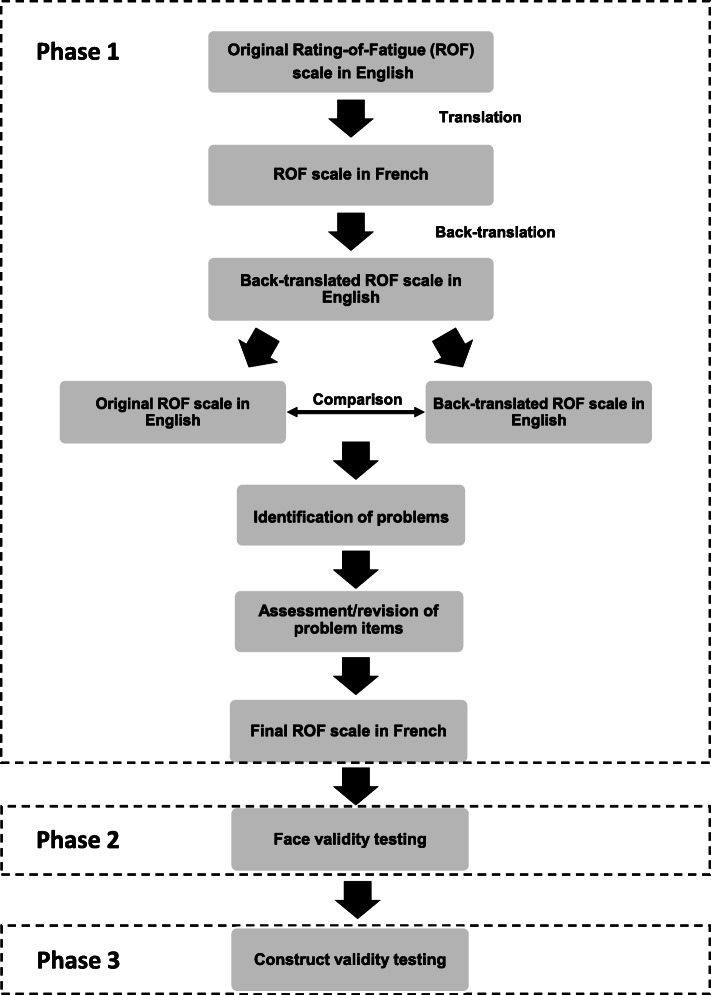
The study was composed of three phases. Phase 1 involved a comprehensive translation, back-translation, and consolidation process in order to produce the French ROF scale. During phase 2, the face validity of the French ROF scale was assessed. A cohort of 60 native French speaking participants responded to a range of Likert scale items which probed the purposes of the ROF scale and what it is intended to measure. During phase 3, the convergent and divergent validity of the ROF scale was assessed during ramped cycling to exhaustion and 10 min of resting recovery.
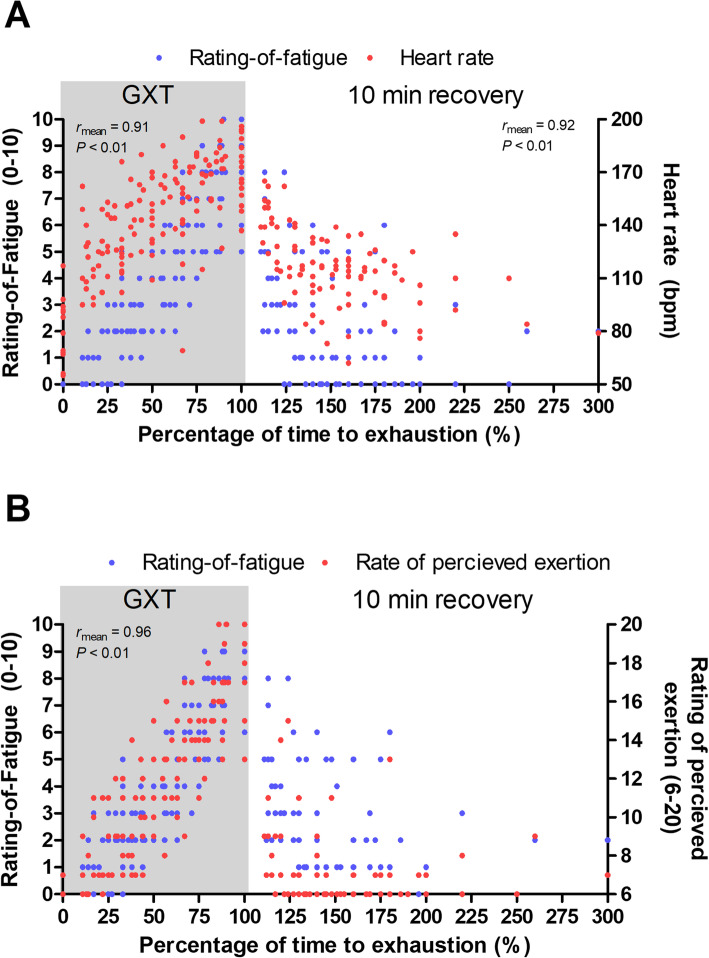
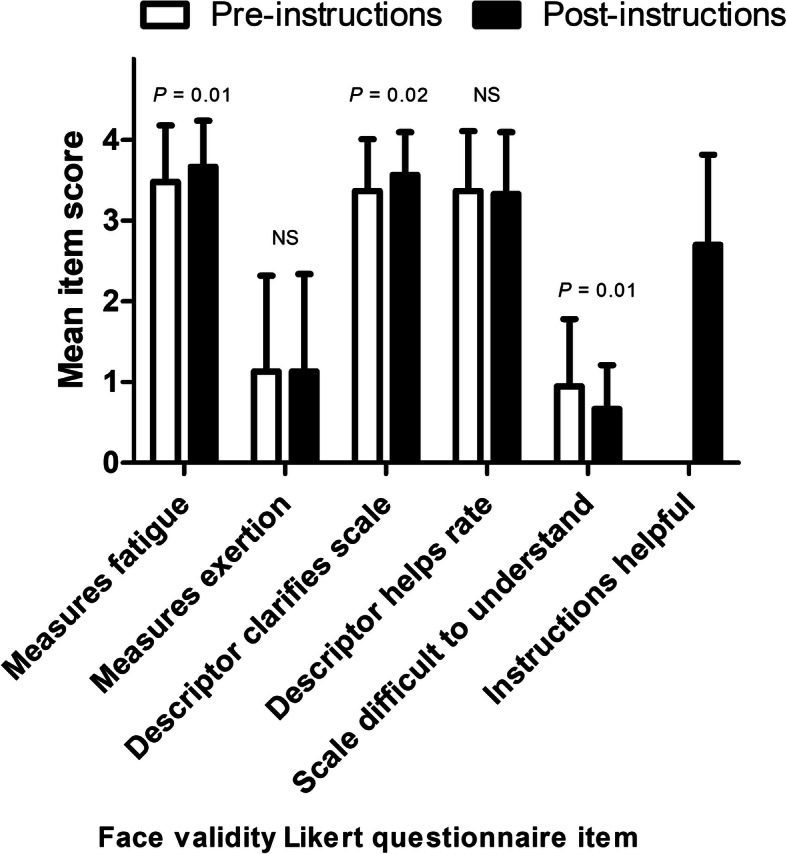
The results from phase 1 demonstrated comparability and interpretability between the original and back-translated ROF scale. In phase 2, participants reported a high face validity, with a score of 3.48 ± 0.70 out of 4 when given the item probing whether the scale "measures fatigue". This score further improved (3.67 ± 0.57, P = 0.01) after participants read the accompanying instructions. Participants were able to distinguish the purposes of the scale for measuring fatigue rather than exertion. In phase 3, strong correlations were found between ROF and heart rate (HR) both during exercise (r = 0.91, P < 0.01) and recovery (r = 0.92, P < 0.01), while discriminant validity between ROF and rating of perceived exertion (RPE) was found during recovery.
The present study permits the applications of the ROF scale in the French language.
疲劳评分(ROF)量表可在多种情况下测量主观疲劳的变化。
本研究旨在将ROF量表翻译成法语并随后进行验证。
该研究包括三个阶段。第一阶段涉及全面的翻译、回译和整合过程,以生成法语版ROF量表。在第二阶段,评估法语版ROF量表的表面效度。一组60名以法语为母语的参与者对一系列李克特量表项目做出了回应,这些项目探究了ROF量表的用途及其旨在测量的内容。在第三阶段,在递增负荷骑行至疲劳和10分钟的休息恢复期间评估ROF量表的收敛效度和区分效度。
第一阶段的结果表明原始版和回译版ROF量表具有可比性和可解释性。在第二阶段,参与者报告表面效度较高,在被问及该量表是否“测量疲劳”这一项目时,得分为3.48±0.70(满分4分)。在参与者阅读附带说明后,该分数进一步提高(3.67±0.57,P = 0.01)。参与者能够区分该量表测量疲劳而非用力程度的目的。在第三阶段,发现运动期间(r = 0.91,P < 0.01)和恢复期间(r = 0.92,P < 0.01)ROF与心率(HR)之间存在强相关性,而在恢复期间发现ROF与主观用力程度评分(RPE)之间具有区分效度。
本研究允许法语版ROF量表的应用。