Cardiac Electromechanics Research Group, Biomedical Engineering Department, King´s College London, London, United Kingdom.
Cardiac Modelling and Imaging Biomarkers, Biomedical Engineering Department, King´s College London, London, United Kingdom.
PLoS Comput Biol. 2021 Apr 15;17(4):e1008851. doi: 10.1371/journal.pcbi.1008851. eCollection 2021 Apr.
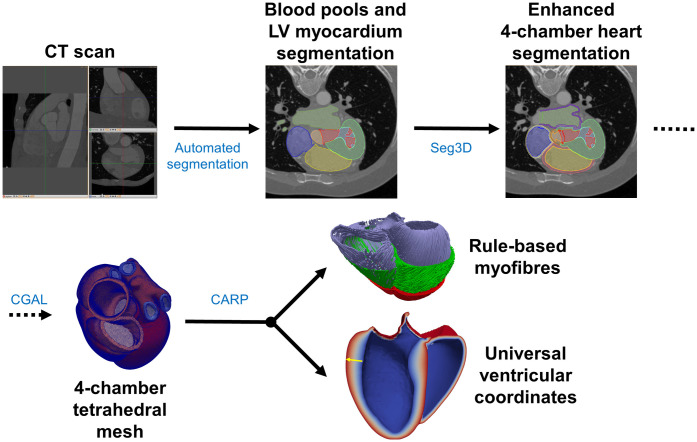
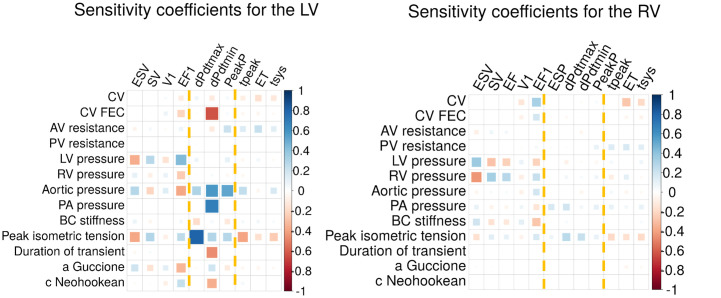
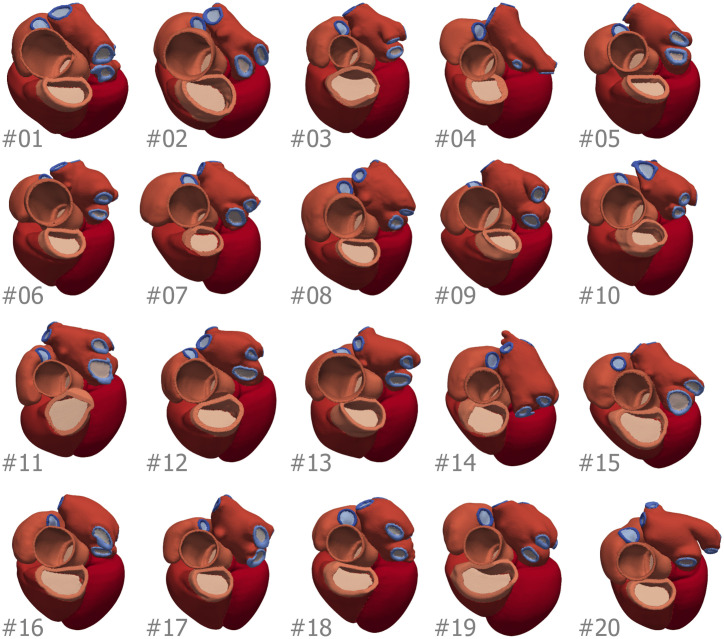
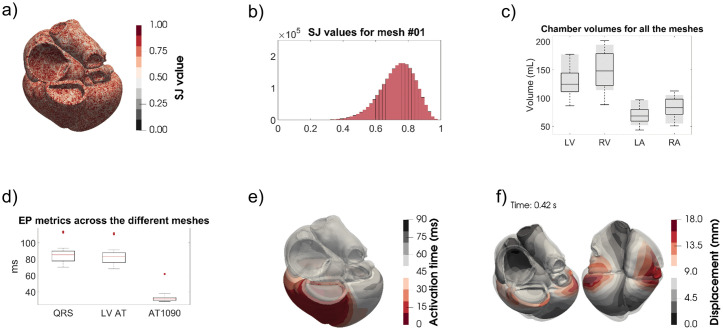
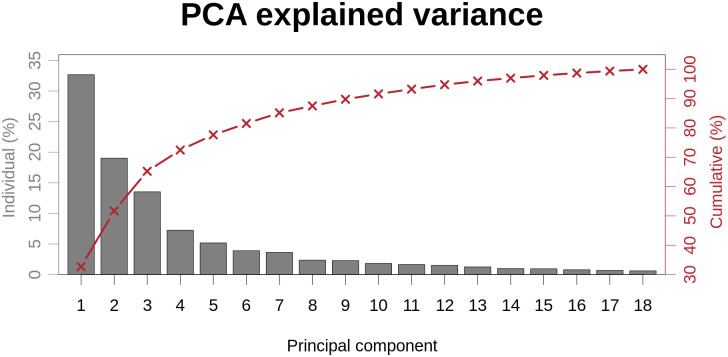
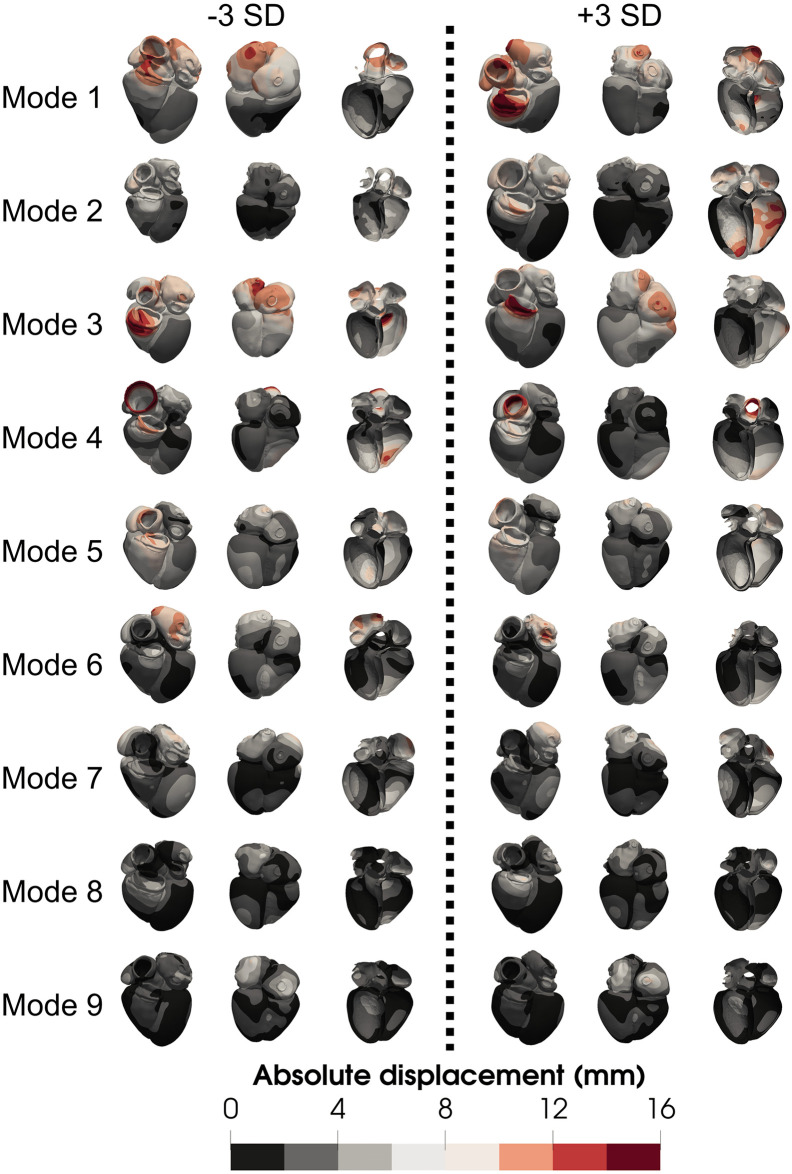
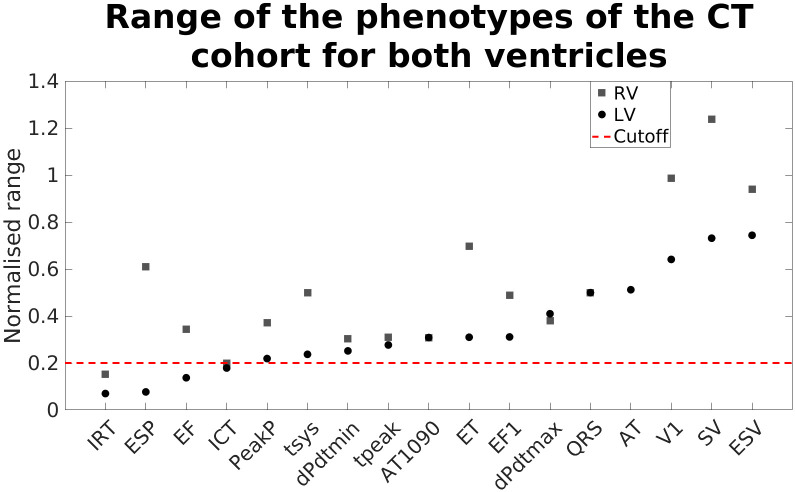
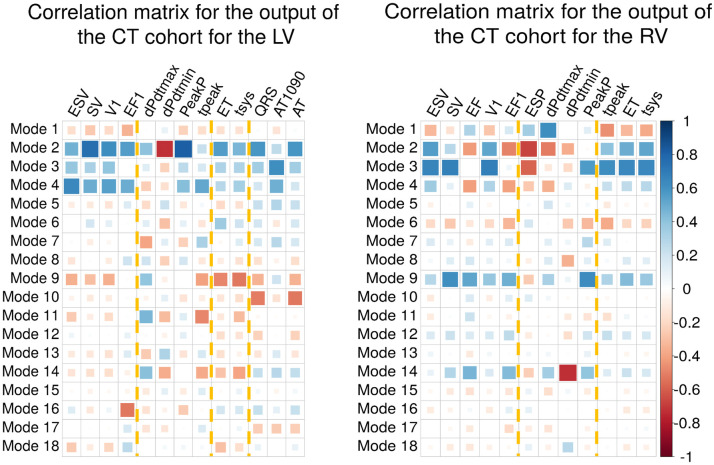
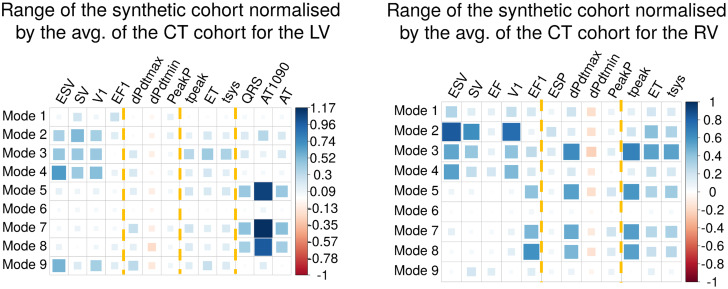
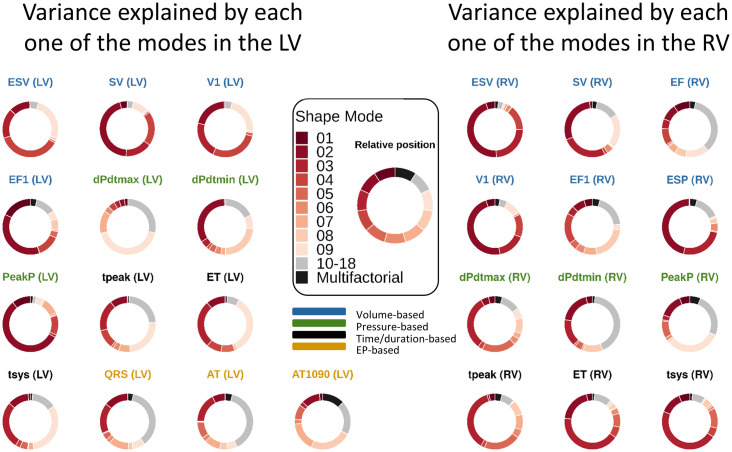
Cardiac anatomy plays a crucial role in determining cardiac function. However, there is a poor understanding of how specific and localised anatomical changes affect different cardiac functional outputs. In this work, we test the hypothesis that in a statistical shape model (SSM), the modes that are most relevant for describing anatomy are also most important for determining the output of cardiac electromechanics simulations. We made patient-specific four-chamber heart meshes (n = 20) from cardiac CT images in asymptomatic subjects and created a SSM from 19 cases. Nine modes captured 90% of the anatomical variation in the SSM. Functional simulation outputs correlated best with modes 2, 3 and 9 on average (R = 0.49 ± 0.17, 0.37 ± 0.23 and 0.34 ± 0.17 respectively). We performed a global sensitivity analysis to identify the different modes responsible for different simulated electrical and mechanical measures of cardiac function. Modes 2 and 9 were the most important for determining simulated left ventricular mechanics and pressure-derived phenotypes. Mode 2 explained 28.56 ± 16.48% and 25.5 ± 20.85, and mode 9 explained 12.1 ± 8.74% and 13.54 ± 16.91% of the variances of mechanics and pressure-derived phenotypes, respectively. Electrophysiological biomarkers were explained by the interaction of 3 ± 1 modes. In the healthy adult human heart, shape modes that explain large portions of anatomical variance do not explain equivalent levels of electromechanical functional variation. As a result, in cardiac models, representing patient anatomy using a limited number of modes of anatomical variation can cause a loss in accuracy of simulated electromechanical function.
心脏解剖结构在确定心脏功能方面起着至关重要的作用。然而,人们对特定和局部解剖结构变化如何影响不同的心脏功能输出知之甚少。在这项工作中,我们检验了这样一个假设,即在统计形状模型(SSM)中,最能描述解剖结构的模式对于确定心脏机电模拟的输出也非常重要。我们从无症状受试者的心脏 CT 图像中制作了患者特异性的四腔心网格(n = 20),并从 19 个病例中创建了一个 SSM。前 9 个模式捕获了 SSM 中 90%的解剖结构变化。功能模拟输出与模式 2、3 和 9 的相关性最好(平均 R = 0.49 ± 0.17、0.37 ± 0.23 和 0.34 ± 0.17)。我们进行了全局敏感性分析,以确定不同模式对不同模拟电生理和机械心脏功能指标的影响。模式 2 和 9 对确定模拟左心室力学和压力衍生表型最为重要。模式 2 分别解释了力学和压力衍生表型方差的 28.56 ± 16.48%和 25.5 ± 20.85%,模式 9 分别解释了 12.1 ± 8.74%和 13.54 ± 16.91%。电生理生物标志物由 3 ± 1 个模式的相互作用解释。在健康成人心脏中,解释大部分解剖结构变异性的形状模式并不能解释相当水平的机电功能变化。因此,在心脏模型中,使用解剖结构变异性的有限数量模式来表示患者解剖结构可能会导致模拟机电功能的准确性损失。