Yang Yuxuan, Zhao Xiaodan, Yu Jing, Chen Xingxing, Wang Ruyue, Zhang Mengyuan, Zhang Qiang, Zhang Yanfeng, Wang Shuang, Cheng Yilong
Key Laboratory of Shaanxi Province for Craniofacial Precision Medicine Research, College of Stomatology, Xi'an Jiaotong University, Xi'an, 710049, China.
School of Chemistry, Xi'an Jiaotong University, Xi'an, 710049, China.
Bioact Mater. 2021 Apr 17;6(11):3962-3975. doi: 10.1016/j.bioactmat.2021.04.007. eCollection 2021 Nov.
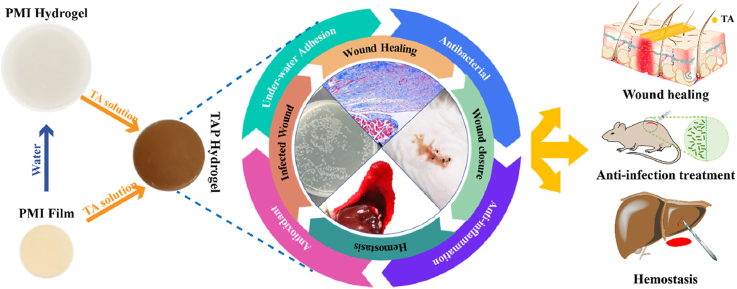
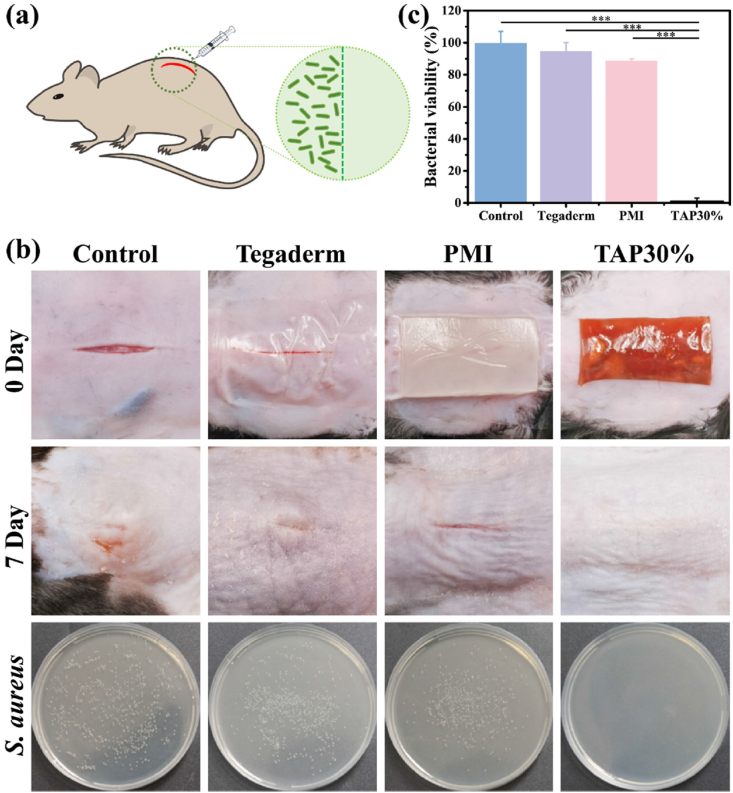
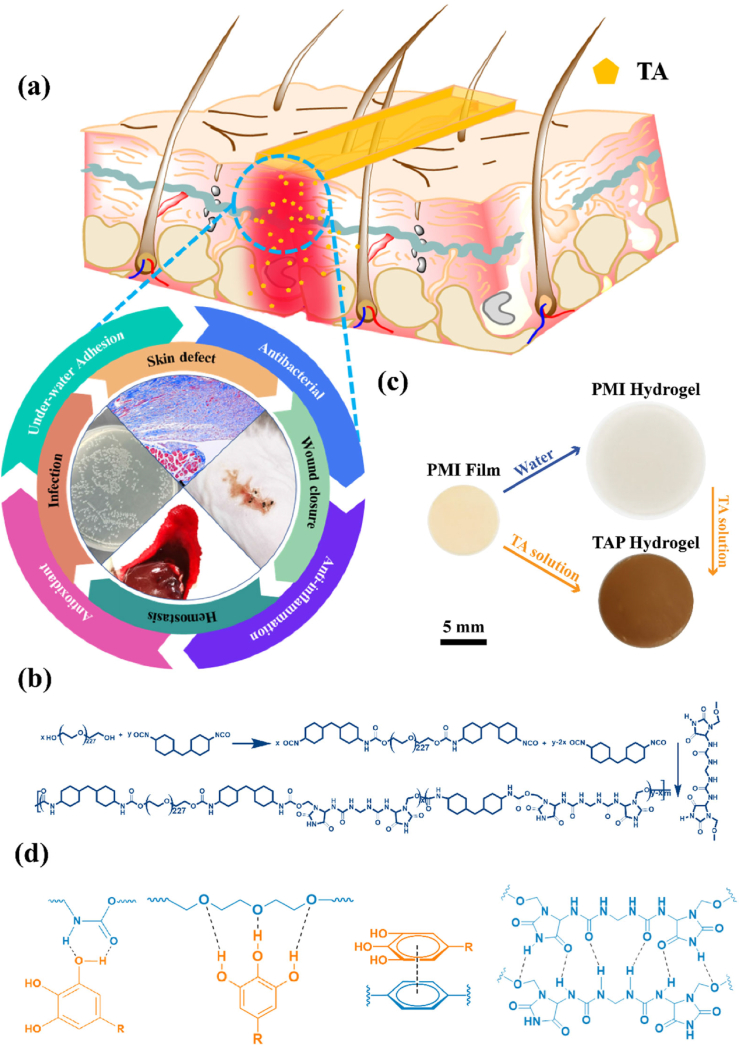
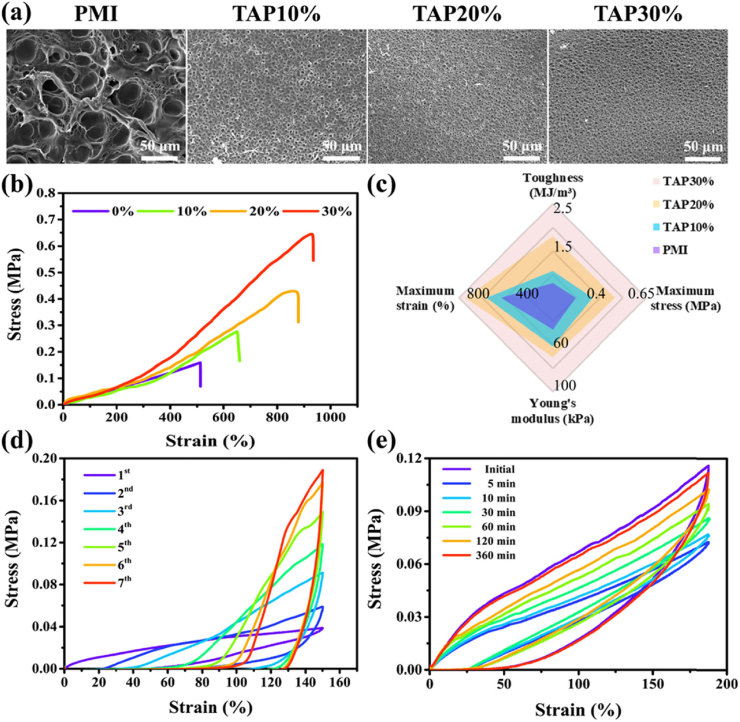
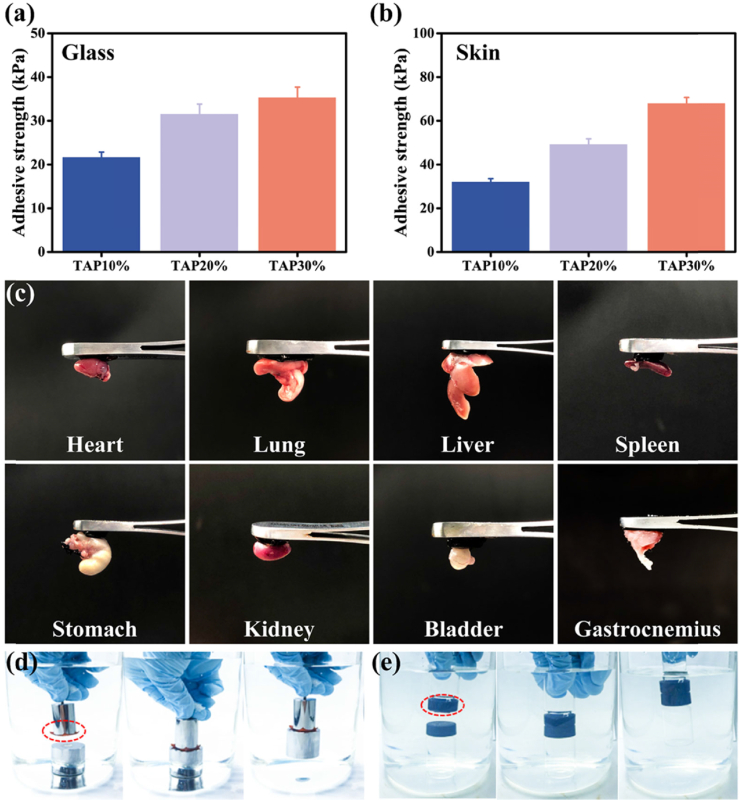
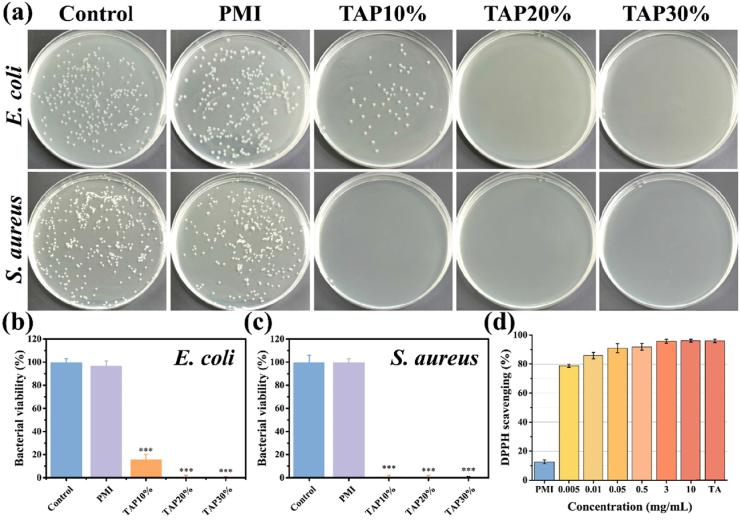
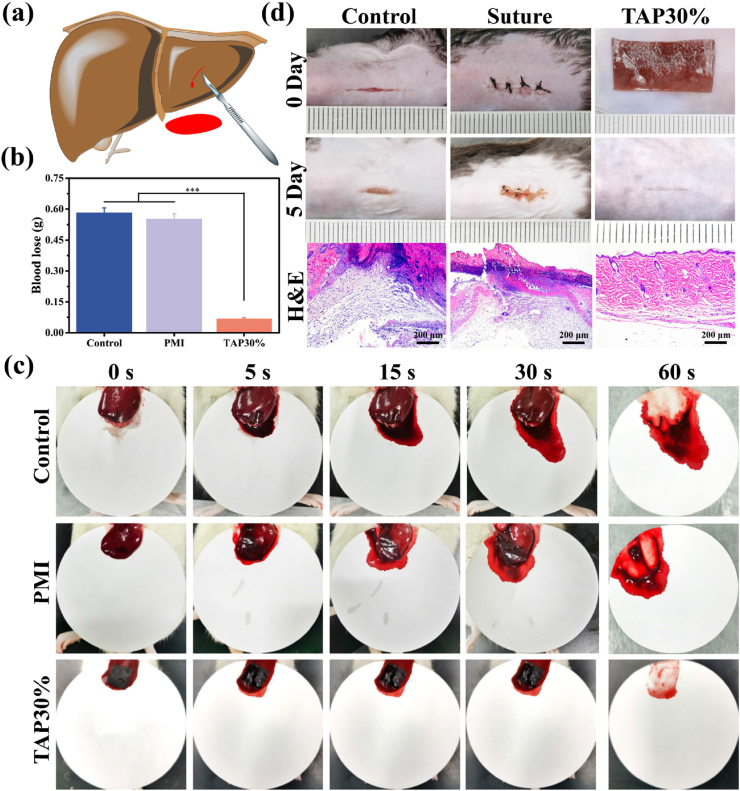
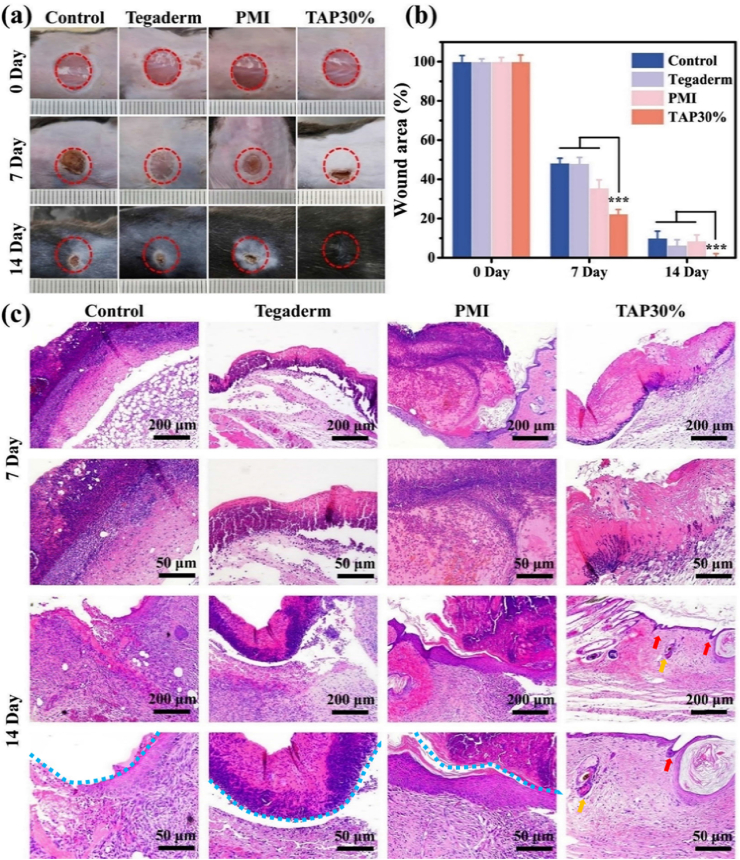
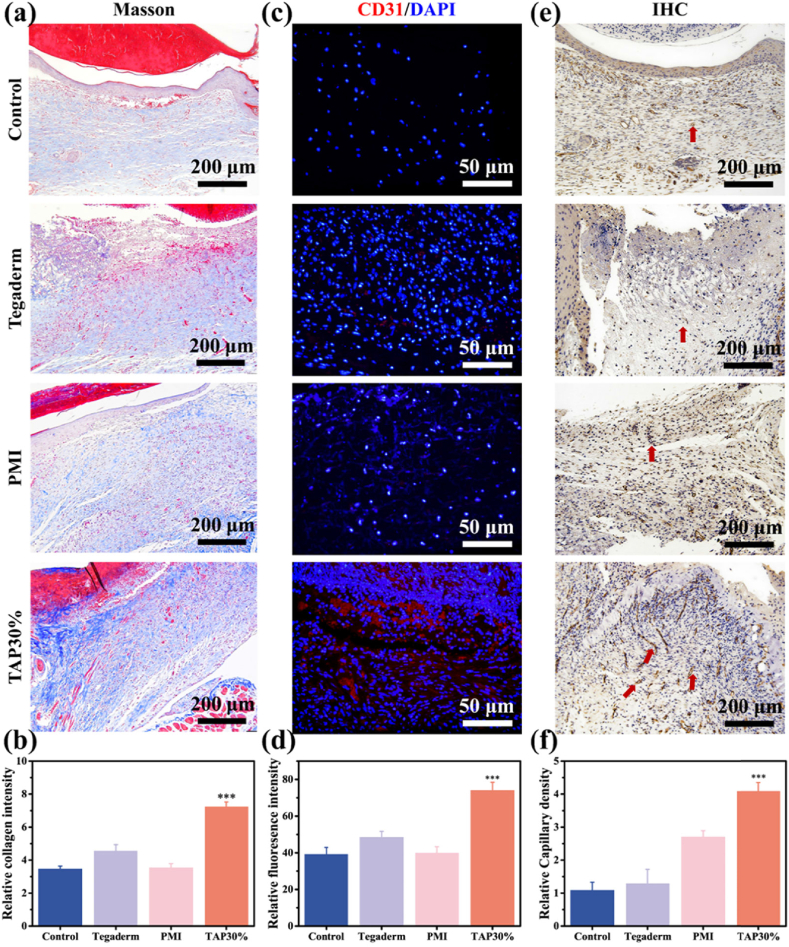
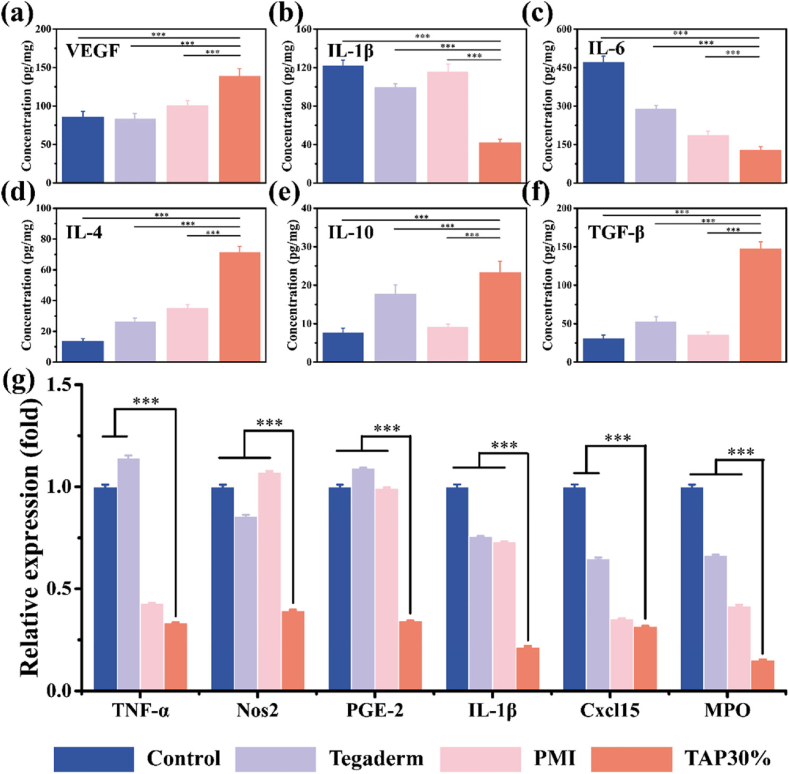
The treatment of diabetic chronic wounds remains a global challenge due to the up-regulated inflammation response, oxidant stress, and persistent infection during healing process. Developing wound dressing materials with ideal biocompatibility, adequate mechanical strength, considerable under-water adhesion, sufficient anti-inflammation, antioxidant, and antibacterial properties is on-demand for clinical applications. In this study, we developed a bioactive skin-mimicking hydrogel band-aid through the combination of tannic acid (TA) and imidazolidinyl urea reinforced polyurethane (PMI) (TAP hydrogel) and explored its potentials in various medical applications, including hemostasis, normal skin incision, full-thickness skin wounds, and bacterial-infection skin incision on diabetic mice. TA was loaded into PMI hydrogel network to enhance the mechanical properties of TAP hydrogels through multiple non-covalent interactions (break strength: 0.28-0.64 MPa; elongation at break: 650-930%), which could resist the local stress and maintain the structural integrity of wound dressings during applications. Moreover, owing to the promising moisture-resistant adhesiveness and organ hemostasis, outstanding anti-inflammation, antibacterial, and antioxidant properties, TAP hydrogels could efficiently promote the recovery of skin incision and defects on diabetic mice. To further simulate the practical situation and explore the potential in clinical application, we also verified the treatment efficiency of TAP hydrogel in -infected skin incision model on diabetic mice.
由于在愈合过程中炎症反应上调、氧化应激和持续感染,糖尿病慢性伤口的治疗仍然是一个全球性挑战。开发具有理想生物相容性、足够机械强度、可观水下粘附性、充分抗炎、抗氧化和抗菌性能的伤口敷料材料是临床应用的迫切需求。在本研究中,我们通过将单宁酸(TA)和咪唑烷基脲增强聚氨酯(PMI)相结合,开发了一种具有生物活性的仿皮肤水凝胶创可贴(TAP水凝胶),并探索了其在各种医学应用中的潜力,包括止血、正常皮肤切口、全层皮肤伤口以及糖尿病小鼠的细菌感染皮肤切口。TA被加载到PMI水凝胶网络中,通过多种非共价相互作用增强TAP水凝胶的机械性能(断裂强度:0.28 - 0.64MPa;断裂伸长率:650 - 930%),这可以抵抗局部应力并在应用过程中保持伤口敷料的结构完整性。此外,由于其具有良好的耐湿粘附性和器官止血性能、出色的抗炎、抗菌和抗氧化性能,TAP水凝胶可以有效地促进糖尿病小鼠皮肤切口和缺损的恢复。为了进一步模拟实际情况并探索其临床应用潜力,我们还验证了TAP水凝胶在糖尿病小鼠感染皮肤切口模型中的治疗效果。