D'Atri Aurora, Scarpelli Serena, Gorgoni Maurizio, Truglia Ilaria, Lauri Giulia, Cordone Susanna, Ferrara Michele, Marra Camillo, Rossini Paolo Maria, De Gennaro Luigi
Department of Psychology, University of Rome "Sapienza", Via dei Marsi, 78, Rome 00185, Italy.
Department of Biotechnological and Applied Clinical Sciences, University of L'Aquila, Coppito (L'Aquila) 67100, Italy.
iScience. 2021 Apr 1;24(4):102386. doi: 10.1016/j.isci.2021.102386. eCollection 2021 Apr 23.
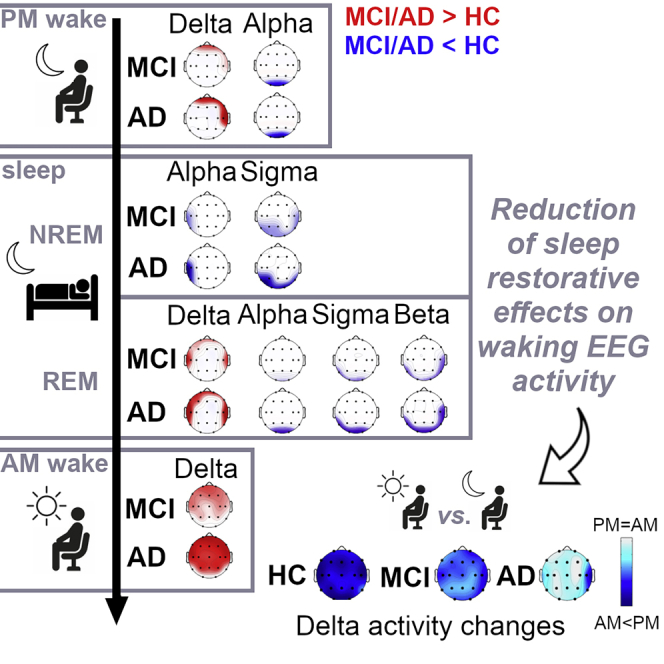
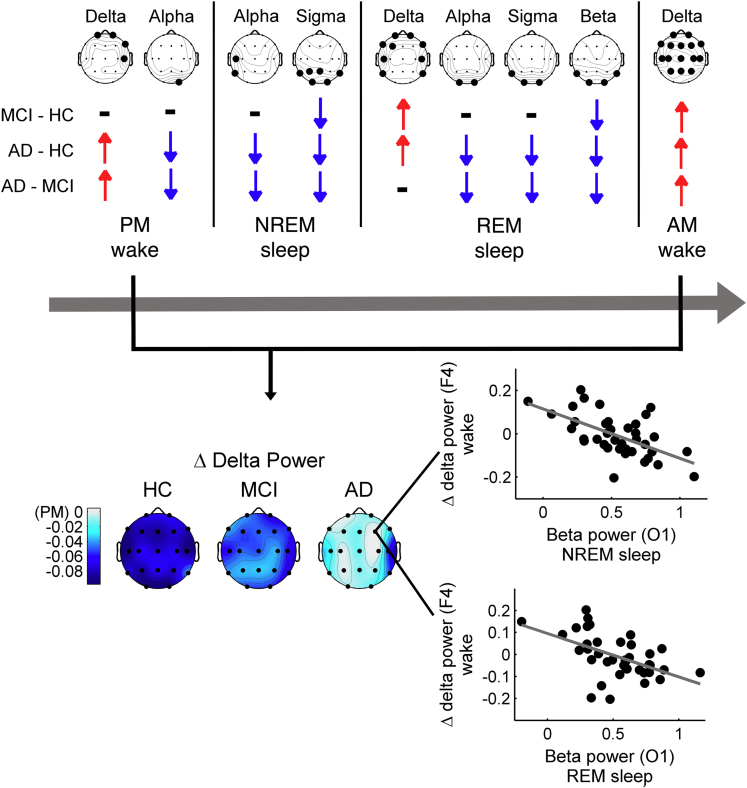
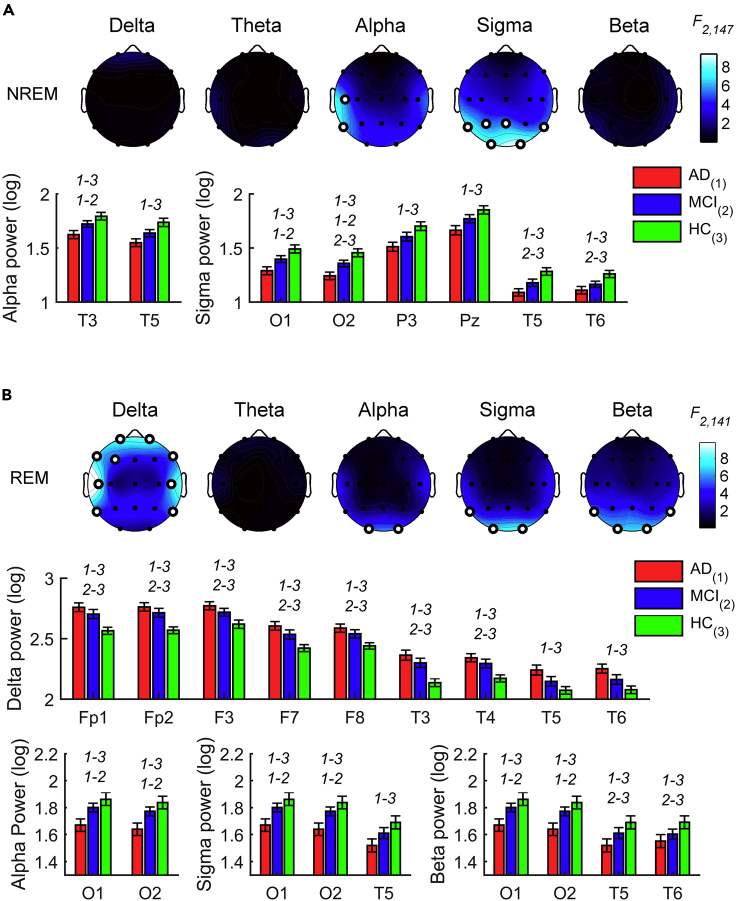
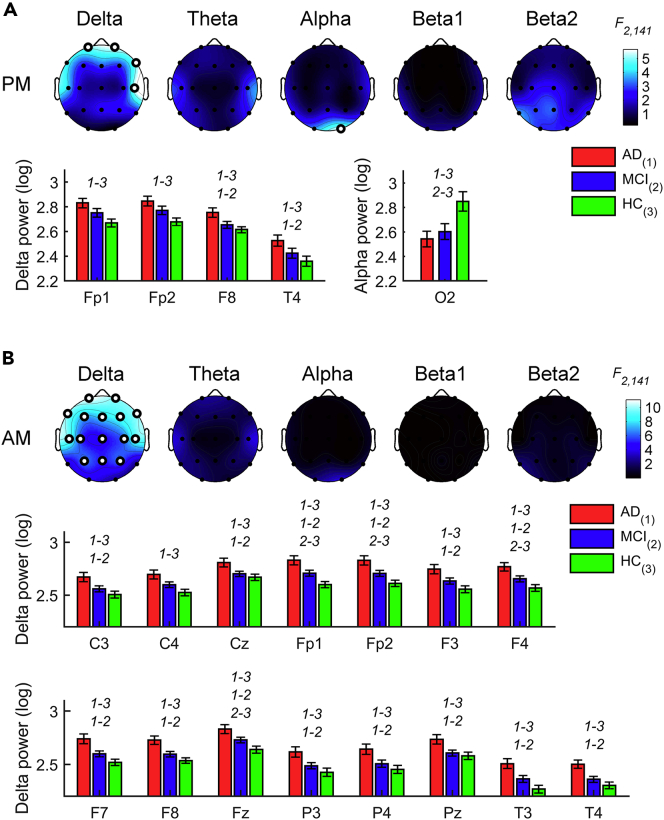
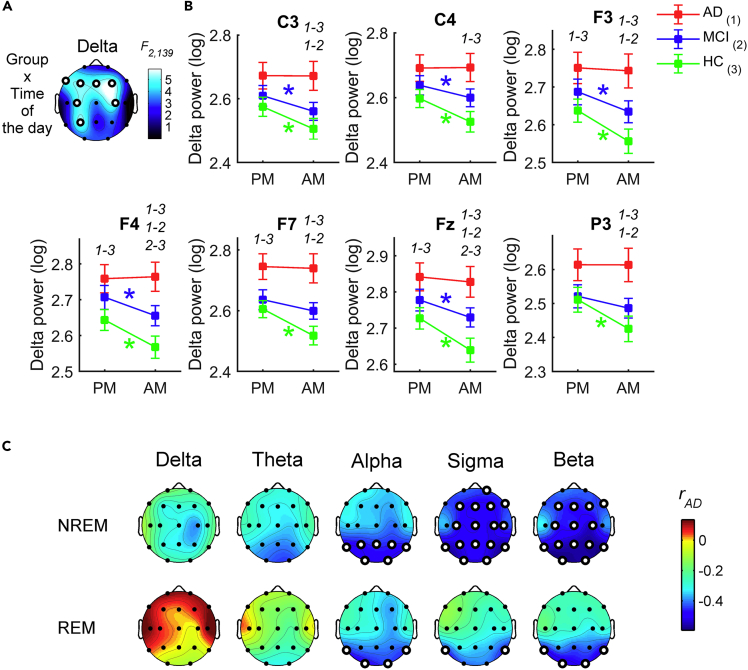
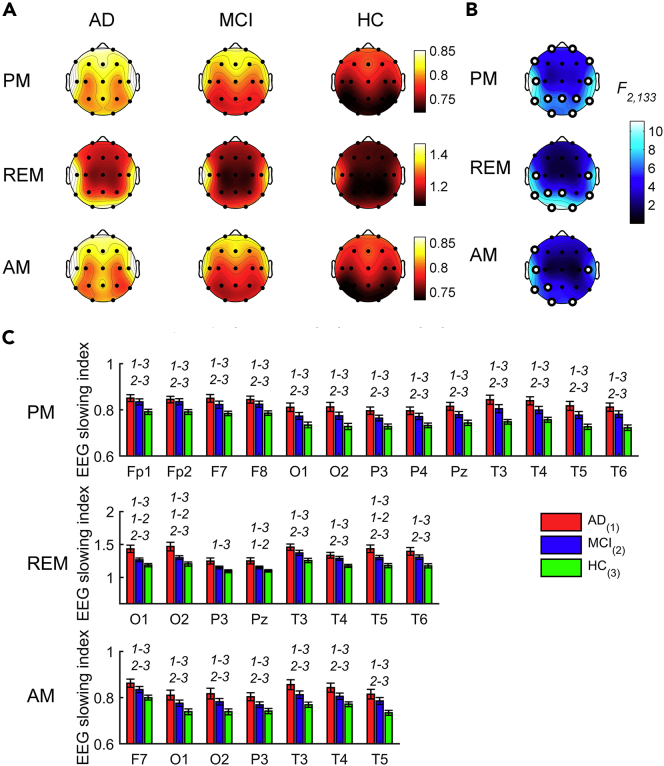
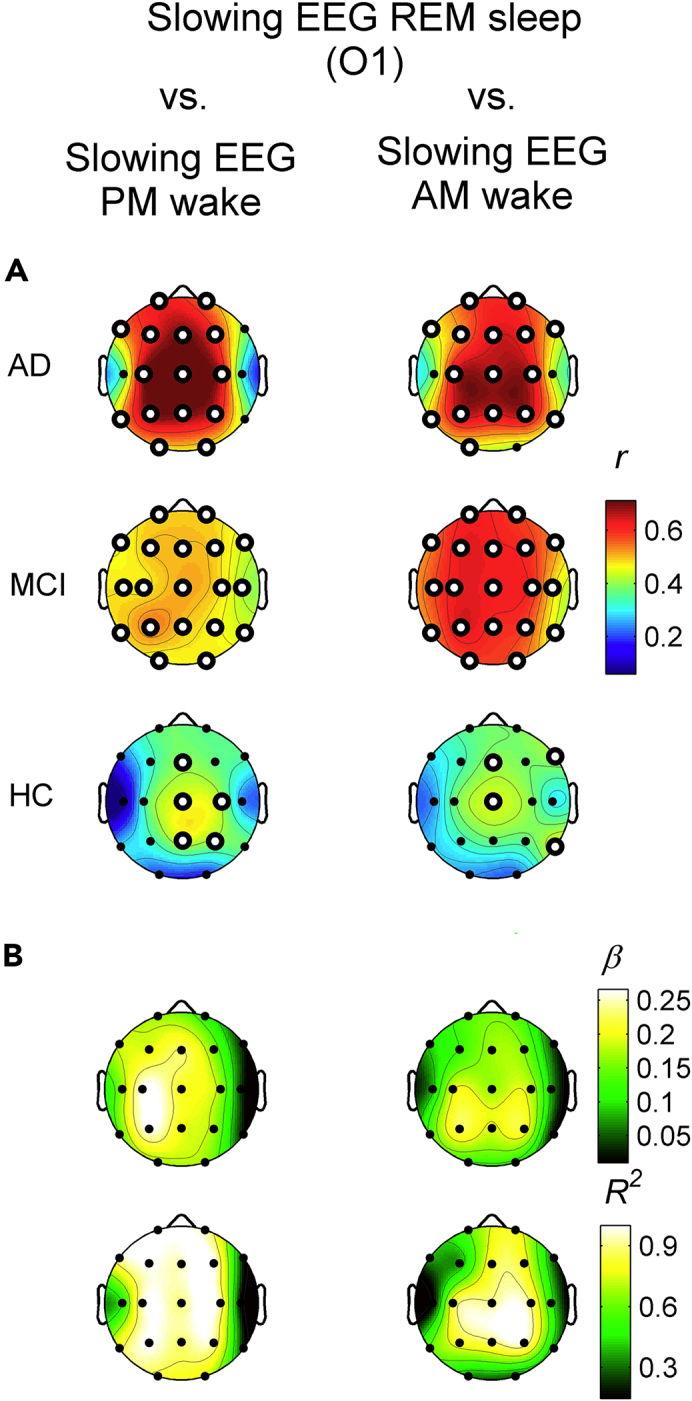
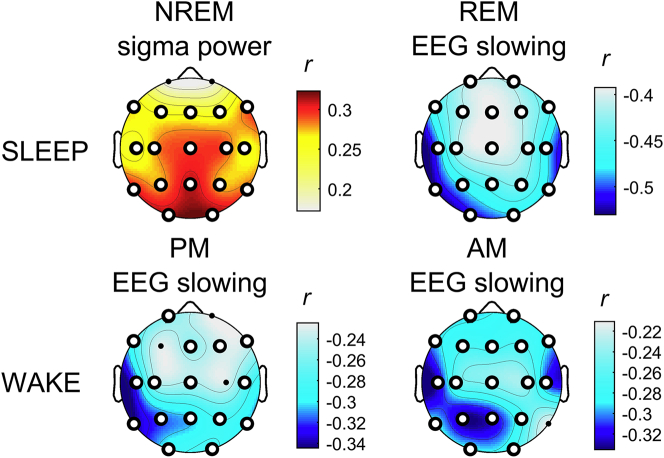
Patients with Alzheimer's disease (AD) undergo a slowing of waking electroencephalographic (EEG) rhythms since prodromal stages, which could be ascribed to poor sleep quality. We examined the relationship between wake and sleep alterations by assessing EEG activity during sleep and (pre-sleep/post-sleep) wakefulness in AD, mild cognitive impairment (MCI) and healthy controls. AD and MCI show high sleep latency and less slow-wave sleep. Reduced sigma activity characterizes non-rapid eye movement (NREM) sleep, reflecting sleep spindles loss. The EEG slowing characterizes REM sleep and wakefulness of AD and MCI, with strong correlations among the two phenomena suggesting common neuropathological mechanisms. Evening-to-morning variations in waking EEG revealed the gradual disappearance in MCI and AD of overnight changes in delta activity, indicating a progressive decay of sleep restorative functions on diurnal activity that correlates with the impairment of sleep high-frequency activity in AD. Our findings support a linkage between wake and sleep alterations, and the importance of sleep-related processes in Alzheimer's disease progression.
自前驱期起,阿尔茨海默病(AD)患者的清醒脑电图(EEG)节律就会减缓,这可能归因于睡眠质量差。我们通过评估AD、轻度认知障碍(MCI)和健康对照者睡眠期间以及(睡前/睡后)清醒状态下的EEG活动,研究了清醒和睡眠改变之间的关系。AD和MCI表现出高睡眠潜伏期和较少的慢波睡眠。非快速眼动(NREM)睡眠的特征是西格玛活动减少,反映了睡眠纺锤波的丧失。EEG减慢是AD和MCI快速眼动睡眠和清醒状态的特征,这两种现象之间的强相关性表明存在共同的神经病理机制。清醒EEG的早晚变化显示,MCI和AD患者的δ活动夜间变化逐渐消失,这表明睡眠对日间活动的恢复功能逐渐衰退,这与AD患者睡眠高频活动受损相关。我们的研究结果支持清醒和睡眠改变之间的联系,以及睡眠相关过程在阿尔茨海默病进展中的重要性。