Department of General Surgery and Surgical-Medical Specialties, School of Dentistry, University of Catania, 95124 Catania, Italy.
Int J Mol Sci. 2021 May 21;22(11):5456. doi: 10.3390/ijms22115456.
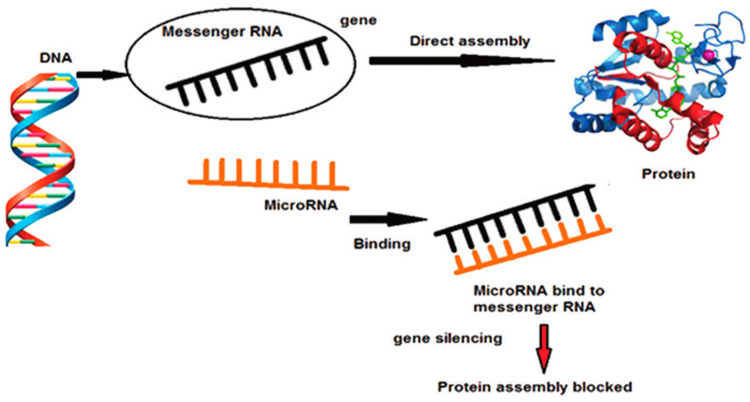
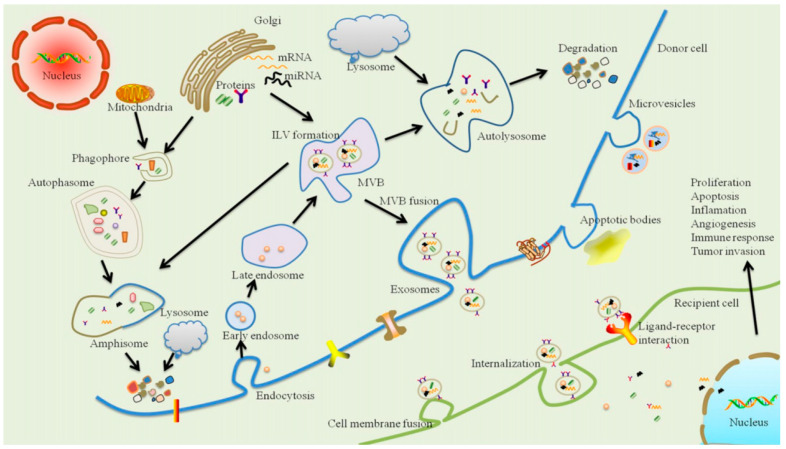
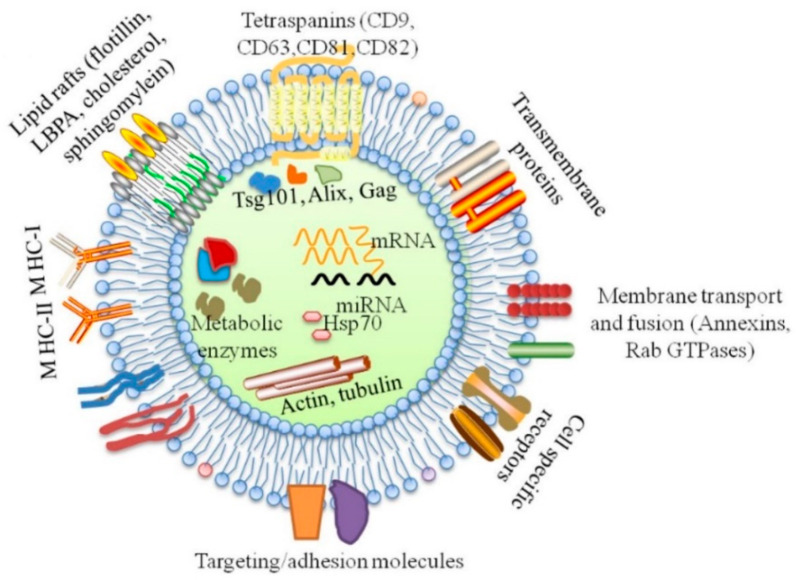
During the last few decades, it has been established that messenger ribonucleic acid (mRNA) transcription does not inevitably lead to protein translation, but there are numerous processes involved in post-transcriptional regulation, which is a continuously developing field of research. MicroRNAs (miRNAs) are a group of small non-coding RNAs, which negatively regulate protein expression and are implicated in several physiological and pathological mechanisms. Aberrant expression of miRNAs triggers dysregulation of multiple cellular processes involved in innate and adaptive immune responses. For many years, it was thought that miRNAs acted only within the cell in which they were synthesised, but, recently, they have been found outside cells bound to lipids and proteins, or enclosed in extracellular vesicles, namely exosomes. They can circulate throughout the body, transferring information between cells and altering gene expression in the recipient cells, as they can fuse with and be internalised by the recipient cells. Numerous studies on miRNAs have been conducted in order to identify possible biomarkers that can be used in the diagnosis of periodontal disease. However, as therapeutic agents, single miRNAs can target several genes and influence multiple regulatory networks. The aim of this review was to examine the molecular role of miRNAs and exosomes in the pathophysiology of periodontal disease and to evaluate possible clinical and future implications for a personalised therapeutical approach.
在过去的几十年中,已经证实信使核糖核酸(mRNA)转录不一定会导致蛋白质翻译,但在后转录调控中有许多过程参与其中,这是一个不断发展的研究领域。 microRNAs(miRNAs)是一组小的非编码 RNA,它们负调控蛋白质表达,并涉及多种生理和病理机制。miRNAs 的异常表达会引发先天和适应性免疫反应中涉及的多个细胞过程的失调。多年来,人们一直认为 miRNAs 仅在合成它们的细胞内发挥作用,但最近发现它们存在于细胞外,与脂质和蛋白质结合,或包含在细胞外囊泡中,即外泌体中。它们可以在体内循环,在细胞之间传递信息,并改变受体细胞中的基因表达,因为它们可以与受体细胞融合并被内化。已经进行了许多关于 miRNAs 的研究,以鉴定可能用于牙周病诊断的生物标志物。然而,作为治疗剂,单个 miRNAs 可以靶向几个基因并影响多个调控网络。本综述的目的是研究 miRNAs 和外泌体在牙周病病理生理学中的分子作用,并评估个性化治疗方法的可能临床和未来意义。