Department of Biotechnology, Yeungnam University, Gyeongsan 38541, Gyeongbuk, Korea.
Biomolecules. 2021 May 9;11(5):705. doi: 10.3390/biom11050705.
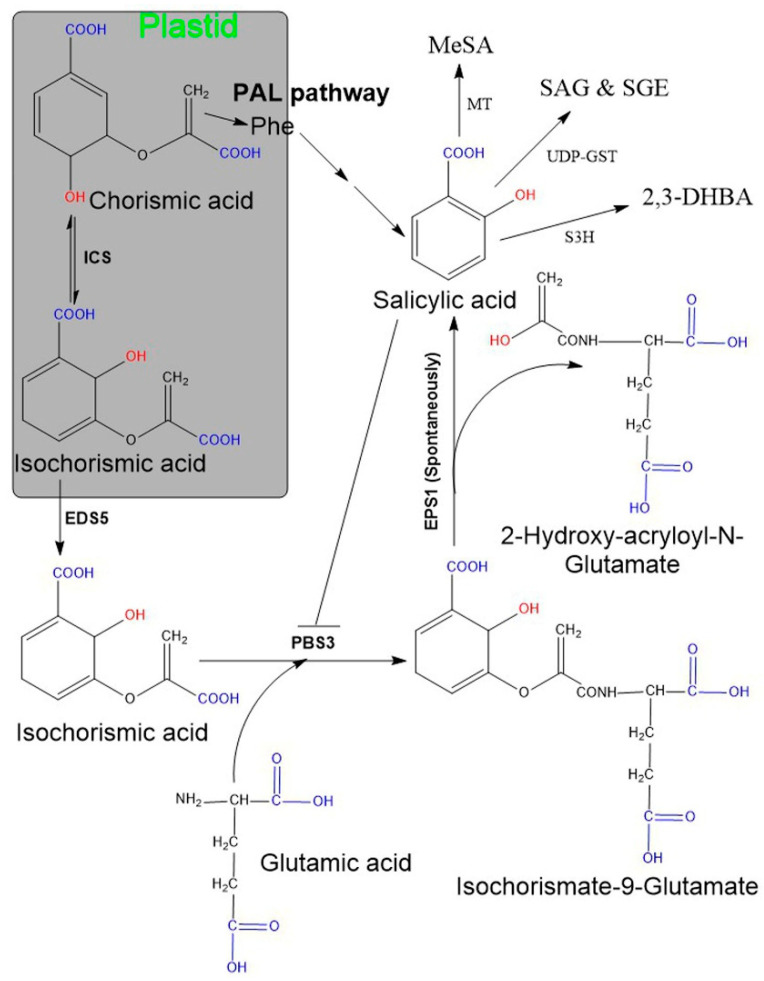
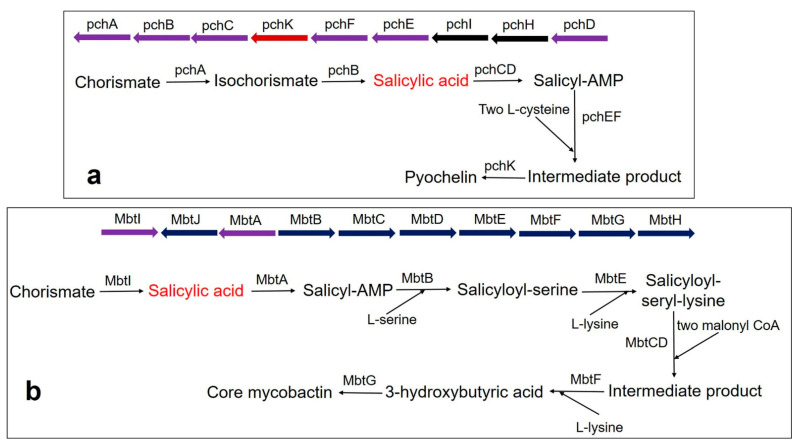
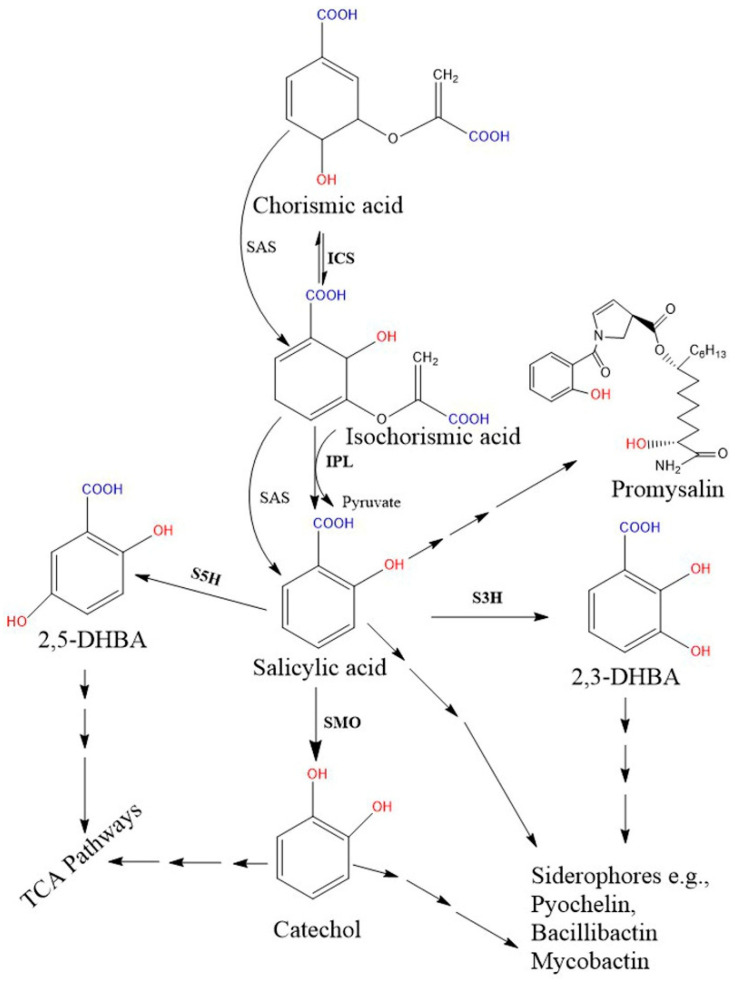
Salicylic acid (SA) is an active secondary metabolite that occurs in bacteria, fungi, and plants. SA and its derivatives (collectively called salicylates) are synthesized from chorismate (derived from shikimate pathway). SA is considered an important phytohormone that regulates various aspects of plant growth, environmental stress, and defense responses against pathogens. Besides plants, a large number of bacterial species, such as , , , , , , , and , have been reported to synthesize salicylates through the NRPS/PKS biosynthetic gene clusters. This bacterial salicylate production is often linked to the biosynthesis of small ferric-ion-chelating molecules, salicyl-derived siderophores (known as catecholate) under iron-limited conditions. Although bacteria possess entirely different biosynthetic pathways from plants, they share one common biosynthetic enzyme, isochorismate synthase, which converts chorismate to isochorismate, a common precursor for synthesizing SA. Additionally, SA in plants and bacteria can undergo several modifications to carry out their specific functions. In this review, we will systematically focus on the plant and bacterial salicylate biosynthesis and its metabolism.
水杨酸(SA)是一种存在于细菌、真菌和植物中的活性次生代谢物。SA 及其衍生物(统称为水杨酸盐)是由莽草酸(来源于莽草酸途径)合成的。SA 被认为是一种重要的植物激素,它调节植物生长、环境胁迫和防御反应等多个方面。除了植物之外,许多细菌物种,如 、 、 、 、 、 、 和 ,已经被报道通过 NRPS/PKS 生物合成基因簇合成水杨酸盐。这种细菌水杨酸盐的产生通常与在缺铁条件下合成小的铁离子螯合分子、水杨酸衍生的铁载体(称为儿茶酚)有关。尽管细菌和植物具有完全不同的生物合成途径,但它们共享一种共同的生物合成酶,即异分支酸合酶,它将分支酸转化为异分支酸,这是合成 SA 的共同前体。此外,植物和细菌中的 SA 可以经历几种修饰来执行其特定的功能。在这篇综述中,我们将系统地关注植物和细菌中水杨酸盐的生物合成及其代谢。