Kamagata Koji, Andica Christina, Kato Ayumi, Saito Yuya, Uchida Wataru, Hatano Taku, Lukies Matthew, Ogawa Takashi, Takeshige-Amano Haruka, Akashi Toshiaki, Hagiwara Akifumi, Fujita Shohei, Aoki Shigeki
Department of Radiology, Juntendo University Graduate School of Medicine, Tokyo 113-8421, Japan.
Department of Multidisciplinary Internal Medicine, Faculty of Medicine, Tottori University, Yonago 683-8504, Japan.
Int J Mol Sci. 2021 May 14;22(10):5216. doi: 10.3390/ijms22105216.
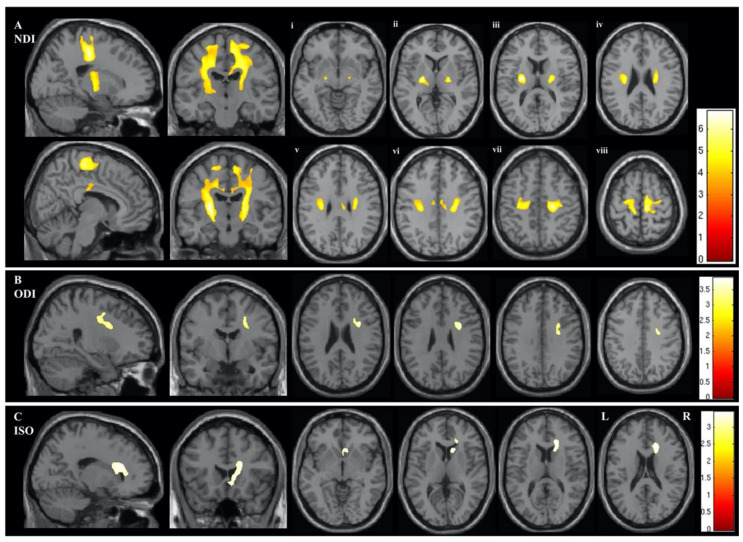
There has been an increasing prevalence of neurodegenerative diseases with the rapid increase in aging societies worldwide. Biomarkers that can be used to detect pathological changes before the development of severe neuronal loss and consequently facilitate early intervention with disease-modifying therapeutic modalities are therefore urgently needed. Diffusion magnetic resonance imaging (MRI) is a promising tool that can be used to infer microstructural characteristics of the brain, such as microstructural integrity and complexity, as well as axonal density, order, and myelination, through the utilization of water molecules that are diffused within the tissue, with displacement at the micron scale. Diffusion tensor imaging is the most commonly used diffusion MRI technique to assess the pathophysiology of neurodegenerative diseases. However, diffusion tensor imaging has several limitations, and new technologies, including neurite orientation dispersion and density imaging, diffusion kurtosis imaging, and free-water imaging, have been recently developed as approaches to overcome these constraints. This review provides an overview of these technologies and their potential as biomarkers for the early diagnosis and disease progression of major neurodegenerative diseases.
随着全球老龄化社会的迅速增加,神经退行性疾病的患病率一直在上升。因此,迫切需要能够在严重神经元丧失发生之前检测病理变化并从而促进采用疾病修饰治疗方式进行早期干预的生物标志物。扩散磁共振成像(MRI)是一种很有前景的工具,通过利用在组织内扩散的水分子,其位移在微米尺度,可用于推断大脑的微观结构特征,如微观结构完整性和复杂性,以及轴突密度、排列和髓鞘形成。扩散张量成像(DTI)是评估神经退行性疾病病理生理学最常用的扩散MRI技术。然而,扩散张量成像有几个局限性,最近已开发出包括神经突方向离散度和密度成像、扩散峰度成像和自由水成像在内的新技术,作为克服这些限制的方法。本综述概述了这些技术及其作为主要神经退行性疾病早期诊断和疾病进展生物标志物的潜力。