Hunan Key Laboratory of Biomedical Nanomaterials and Devices, Hunan University of Technology, Zhuzhou, 412007, China.
J Nanobiotechnology. 2021 Jun 1;19(1):166. doi: 10.1186/s12951-021-00914-4.
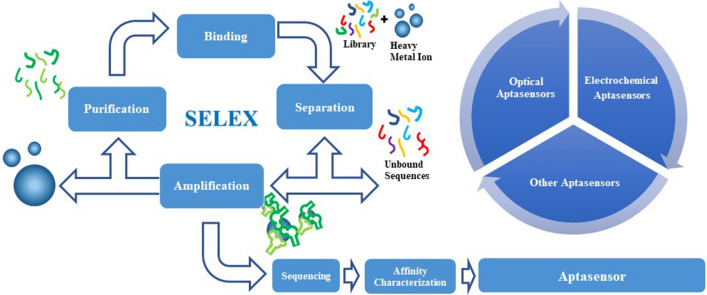
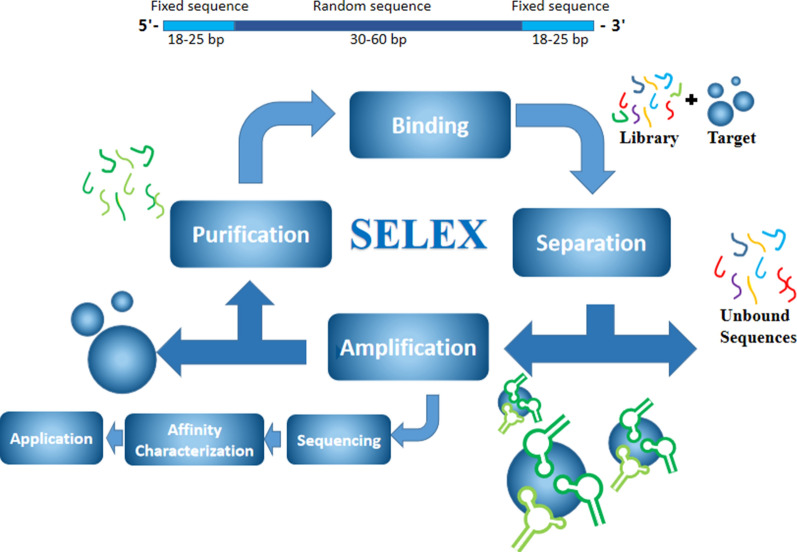
Heavy metal pollution has become more and more serious with industrial development and resource exploitation. Because heavy metal ions are difficult to be biodegraded, they accumulate in the human body and cause serious threat to human health. However, the conventional methods to detect heavy metal ions are more strictly to the requirements by detection equipment, sample pretreatment, experimental environment, etc. Aptasensor has the advantages of strong specificity, high sensitivity and simple preparation to detect small molecules, which provides a new direction platform in the detection of heavy metal ions. This paper reviews the selection of aptamers as target for heavy metal ions since the 21th century and aptasensors application for detection of heavy metal ions that were reported in the past five years. Firstly, the selection methods for aptamers with high specificity and high affinity are introduced. Construction methods and research progress on sensor based aptamers as recognition element are also introduced systematically. Finally, the challenges and future opportunities of aptasensors in detecting heavy metal ions are discussed.
随着工业发展和资源开发,重金属污染变得越来越严重。由于重金属离子难以生物降解,它们在人体内积累,对人类健康造成严重威胁。然而,传统的重金属离子检测方法对检测设备、样品预处理、实验环境等要求更为严格。适体传感器具有特异性强、灵敏度高、制备简单等优点,可用于小分子的检测,为重金属离子的检测提供了新的方向平台。本文综述了 21 世纪以来,作为重金属离子靶标的适体的选择和近五年来基于适体传感器检测重金属离子的应用。首先,介绍了高特异性和高亲和力适体的选择方法。系统介绍了基于适体作为识别元件的传感器的构建方法和研究进展。最后,讨论了适体传感器在检测重金属离子方面面临的挑战和未来机遇。