Department of Plant Biotechnology, Korea University, Seoul, 02841, Korea.
Department of Biotechnology, Korea University, Seoul, 02841, Korea.
BMC Plant Biol. 2021 Jun 2;21(1):252. doi: 10.1186/s12870-021-03036-z.
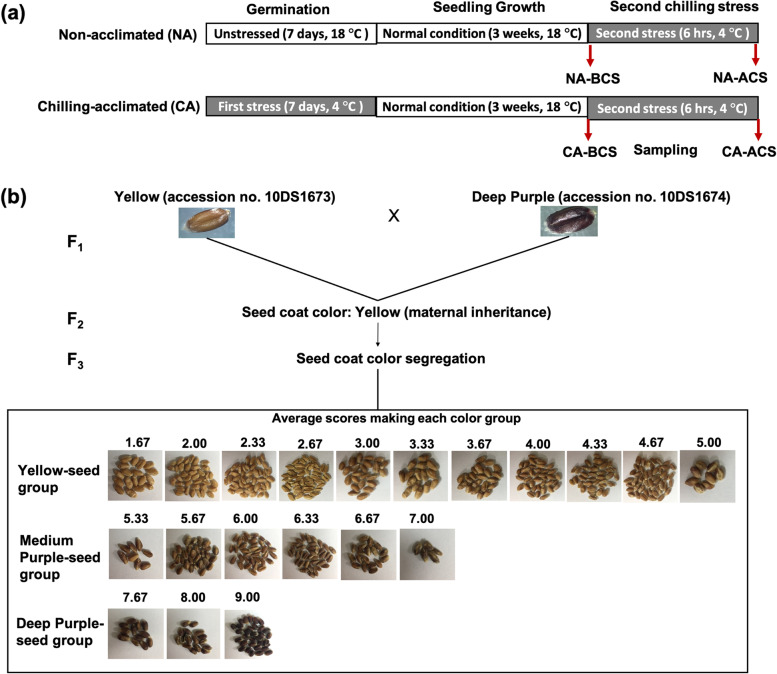
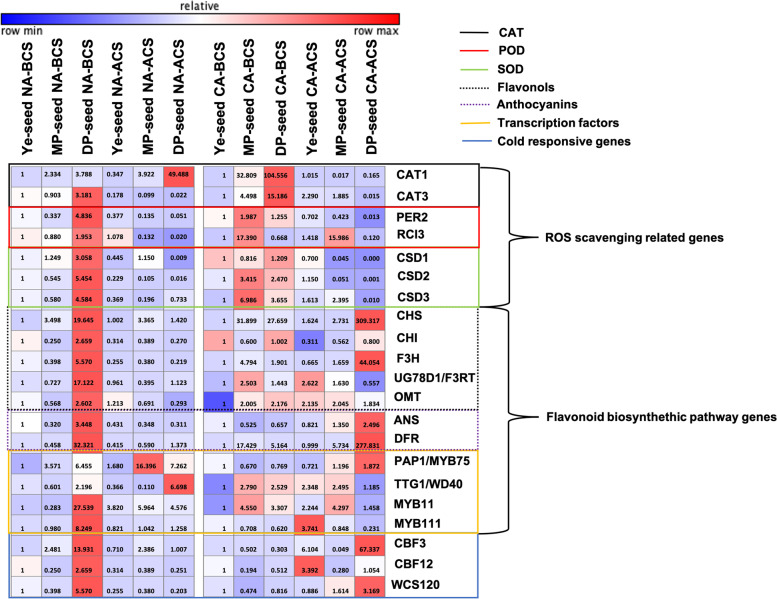
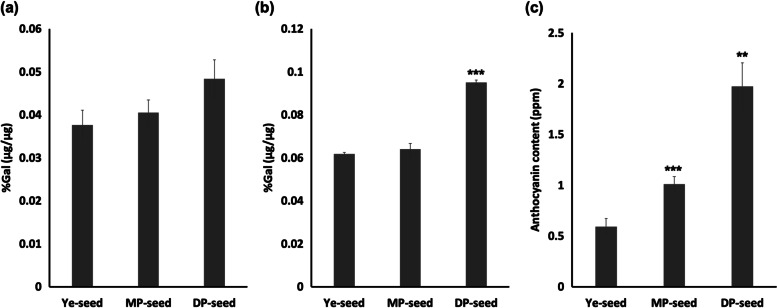
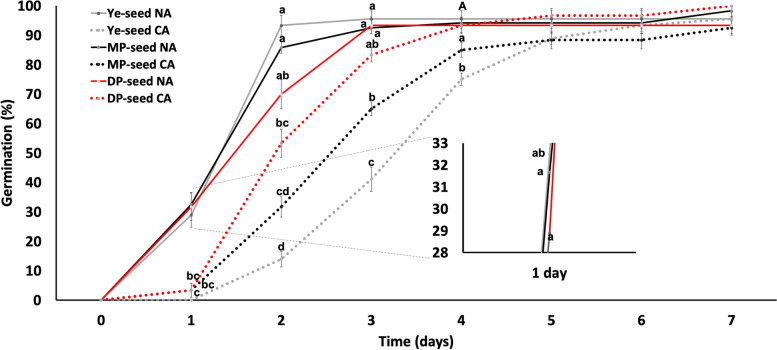
Flavonoids can protect plants against extreme temperatures and ROS due to their antioxidant activities. We found that deep-purple seed coat color was controlled by two gene interaction (12:3:1) from the cross between yellow and deep-purple seed coat colored inbreds. F seeds were grouped in 3 by seed coat color and germinated under chilling (4 °C) and non-acclimated conditions (18 °C) for a week, followed by normal conditions (18 °C) for three weeks and a subsequent chilling stress (4 °C) induction. We analyzed mean daily germination in each group. Additionally, to study the acclimation in relationship to the different seed coat colors on the germination ability and seedling performances under the cold temperatures, we measured the chlorophyll content, ROS scavenging activity, and expression levels of genes involved in ROS scavenging, flavonoid biosynthetic pathway, and cold response in seedlings.
The results of seed color segregation between yellow and deep purple suggested a two-gene model. In the germination study, normal environmental conditions induced the germination of yellow-seed, while under chilling conditions, the germination ratio of deep purple-seed was higher than that of yellow-colored seeds. We also found that the darker seed coat colors were highly responsive to cold acclimation based on the ROS scavenging enzymes activity and gene expression of ROS scavenging enzymes, flavonoid biosynthetic pathway and cold responsive genes.
We suggest that deep purple colored seed might be in a state of innate pre-acquired stress response state under normal conditions to counteract stresses in a more effective way. Whereas, after the acclimation, another stress should enhance the cold genes expression response, which might result in a more efficient chilling stress response in deep purple seed seedlings. Low temperature has a large impact on the yield of crops. Thus, understanding the benefit of seed coat color response to chilling stress and the identification of limiting factors are useful for developing breeding strategies in order to improve the yield of wheat under chilling stress.
黄酮类化合物由于其抗氧化活性,可以保护植物免受极端温度和 ROS 的侵害。我们发现,黄、深紫色种皮自交系杂交后代的种皮颜色由两个基因互作(12:3:1)控制。将 F1 种子按种皮颜色分为 3 组,在冷胁迫(4°C)和非驯化条件(18°C)下分别培养 1 周,然后在正常条件(18°C)下培养 3 周,最后进行冷胁迫(4°C)诱导。我们分析了每组种子的平均日发芽率。此外,为了研究在不同种皮颜色下,种子对冷胁迫的适应能力以及幼苗对冷胁迫的响应,我们测定了叶绿素含量、ROS 清除活性以及与 ROS 清除、黄酮类生物合成途径和冷胁迫响应相关的基因的表达水平。
黄、深紫色种皮的种子颜色分离结果表明存在两个基因模型。在发芽研究中,正常环境条件诱导黄色种子发芽,而在冷胁迫条件下,深紫色种子的发芽率高于黄色种子。我们还发现,深色种皮的种子对冷驯化的反应性更高,这表现在 ROS 清除酶活性和基因表达、黄酮类生物合成途径和冷响应基因的表达上。
我们认为,在正常条件下,深紫色种子可能处于一种先天的预适应应激状态,以便更有效地应对应激。而在适应后,另一种应激应该会增强冷基因表达的响应,这可能会导致深紫色种子幼苗对冷胁迫的响应更有效。低温对作物的产量有很大的影响。因此,了解种皮颜色对冷胁迫的响应的益处以及鉴定限制因素,对于开发应对冷胁迫的小麦选育策略是有用的。