Department of Industrial Microbiology, Jacob Institute of Biotechnology and Bioengineering, Technology and Sciences, Sam Higginbottom University of Agriculture, Prayagraj (Allahabad), Uttar Pradesh, 211007, India.
Sci Rep. 2021 Jul 5;11(1):13816. doi: 10.1038/s41598-021-92843-3.
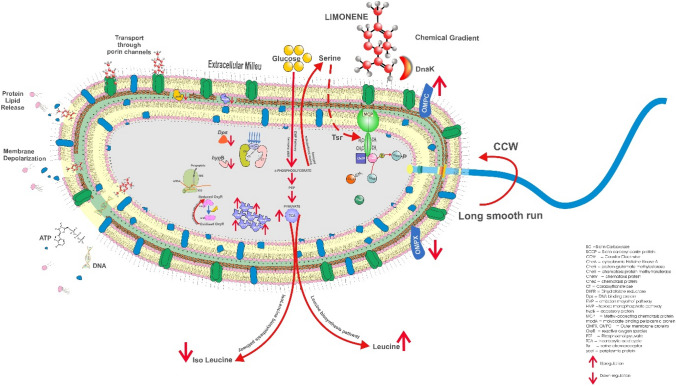
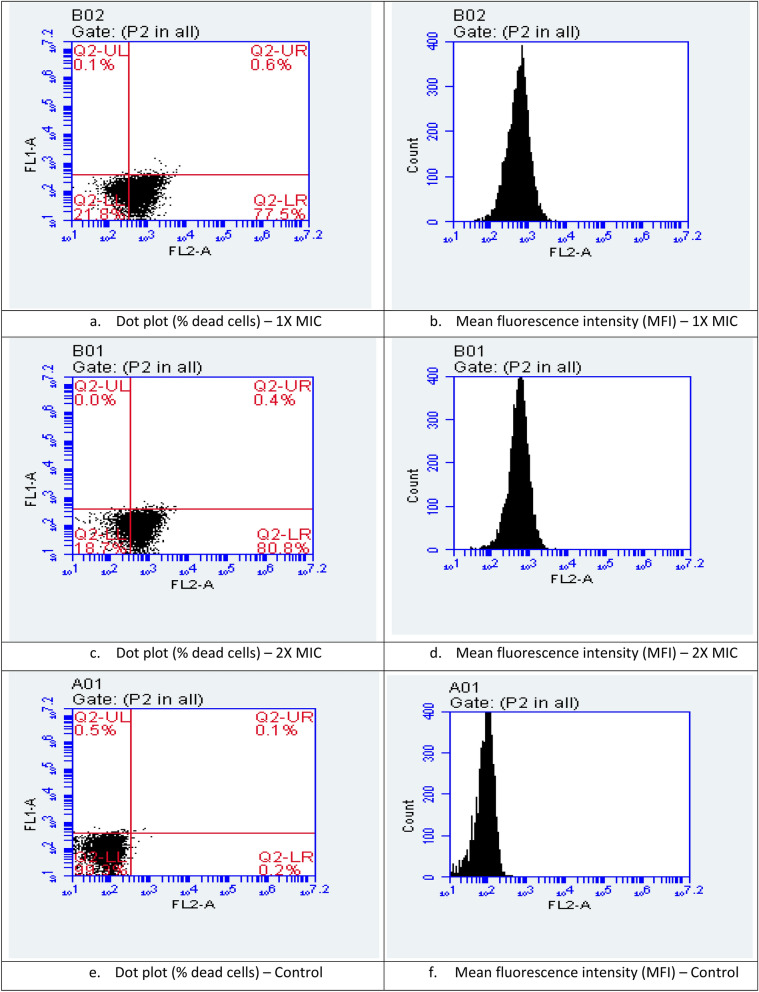
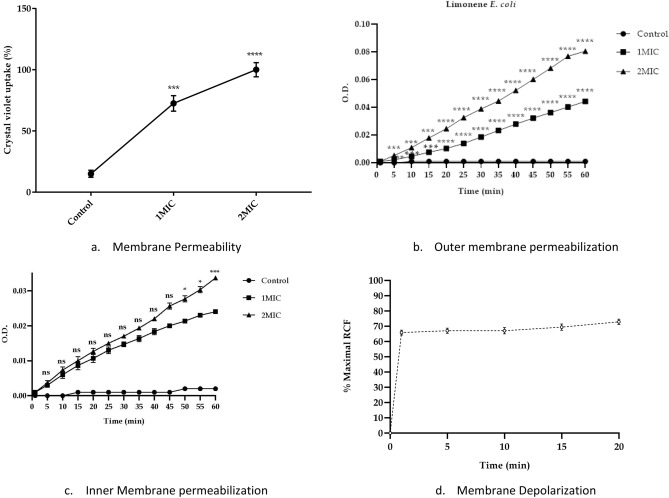
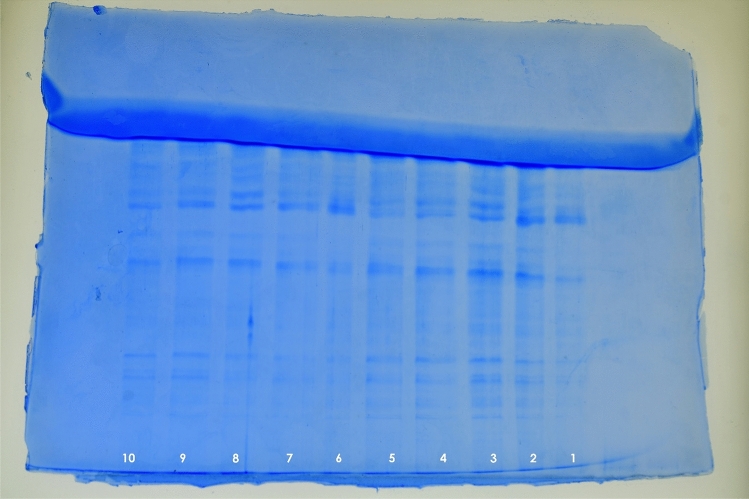
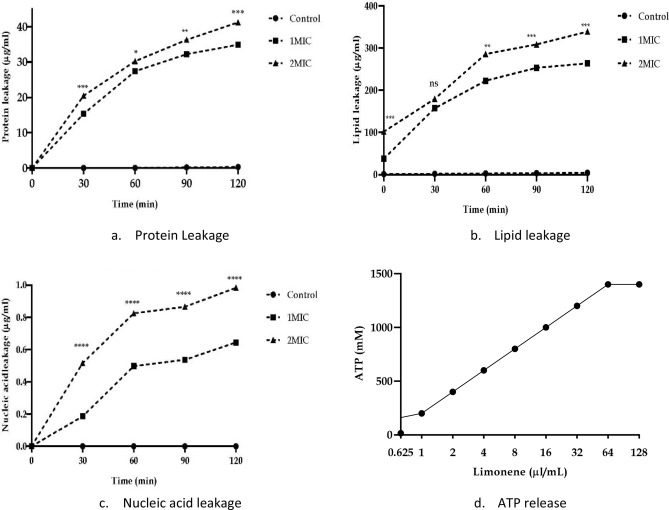
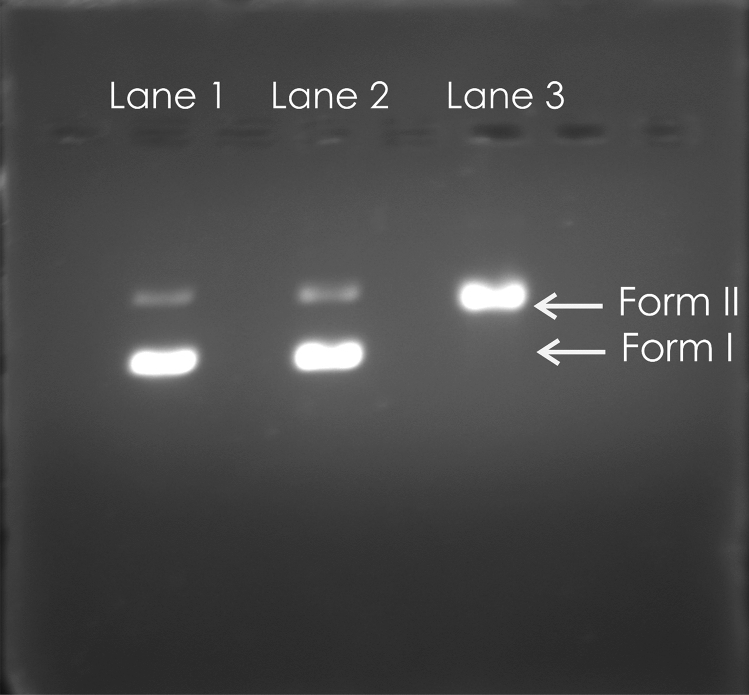
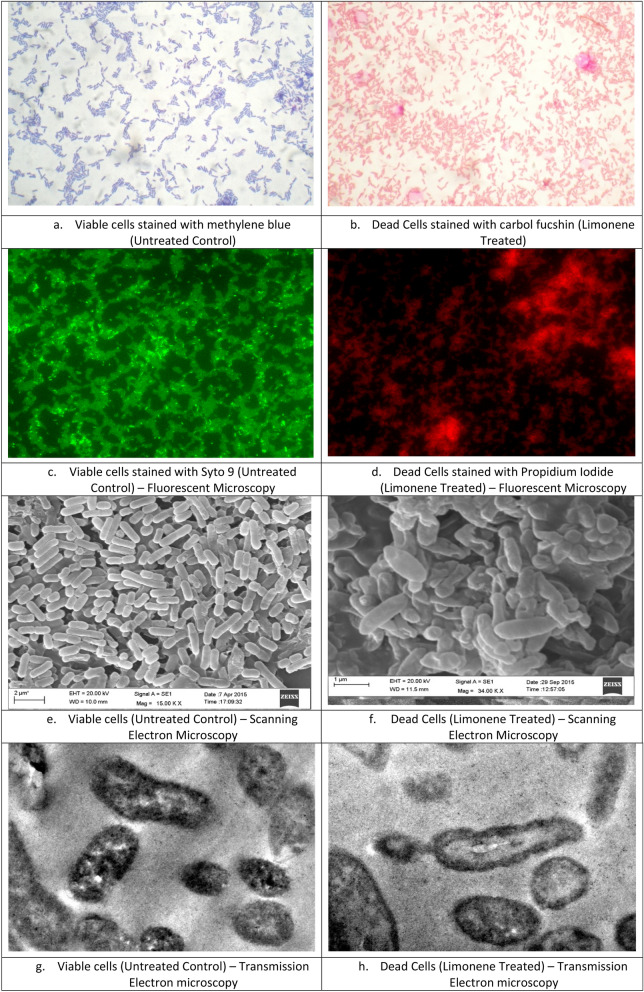
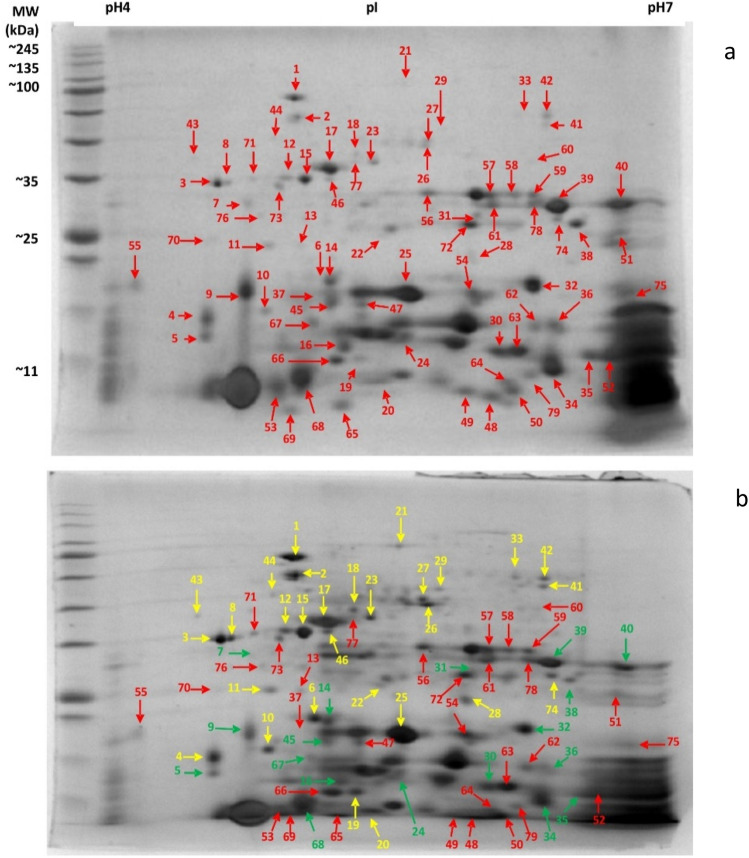
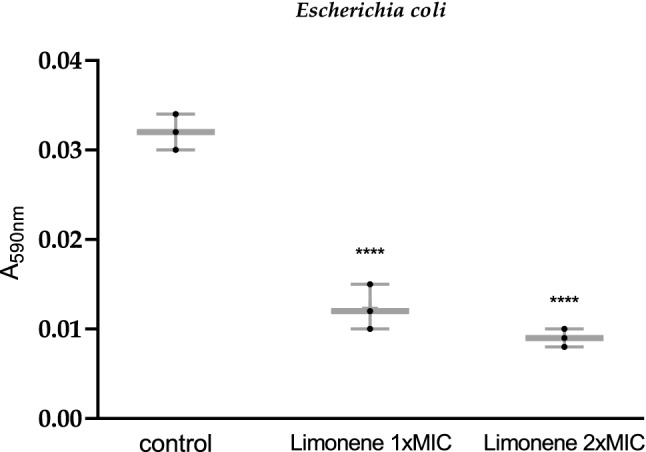
Antibacterial potential of Limonene against Multi Drug Resistant (MDR) pathogens was studied and mechanism explored. Microscopic techniques viz. Fluorescent Microscopy (FM), Scanning Electron Microscopy (SEM), and Transmission Electron Microscopy (TEM) indicated membrane disruption, cellular leakage and cell death of Escherichia coli (E. coli) cells when treated with limonene. Leakage of intracellular proteins, lipids and nucleic acid confirmed membrane damage and disruption of cell permeability barrier. Further, release of intracellular ATP, also suggested disruption of membrane barrier. Interaction of limonene with DNA revealed its capability in unwinding of plasmid, which could eventually inhibit DNA transcription and translation. Differential expression of various proteins and enzymes involved in transport, respiration, metabolism, chemotaxis, protein synthesis confirmed the mechanistic role of limonene on their functions. Limonene thus can be a potential candidate in drug development.
研究了柠檬烯对多药耐药(MDR)病原体的抗菌潜力,并探讨了其作用机制。荧光显微镜(FM)、扫描电子显微镜(SEM)和透射电子显微镜(TEM)等微观技术表明,柠檬烯处理大肠杆菌(E. coli)细胞时会导致细胞膜破裂、细胞内物质泄漏和细胞死亡。细胞内蛋白质、脂质和核酸的泄漏证实了细胞膜的损伤和细胞通透性屏障的破坏。此外,细胞内 ATP 的释放也表明了膜屏障的破坏。柠檬烯与 DNA 的相互作用表明其具有解开质粒的能力,这可能最终抑制 DNA 的转录和翻译。参与运输、呼吸、代谢、趋化性、蛋白质合成的各种蛋白质和酶的差异表达证实了柠檬烯对其功能的作用机制。因此,柠檬烯可能成为药物开发的潜在候选物。