Department of Biology and Department of Life and Nanopharmaceutical Sciences, Kyung Hee University, Dongdaemun-gu, Seoul, 02447, Republic of Korea.
Biological Resource Center, Korea Research Institute of Bioscience and Biotechnology, Jeongeup, Jeollabuk-do, 56212, Republic of Korea.
Microbiome. 2021 Jul 31;9(1):166. doi: 10.1186/s40168-021-01113-x.
Our understanding of the gut microbiota of animals is largely based on studies of mammals. To better understand the evolutionary basis of symbiotic relationships between animal hosts and indigenous microbes, it is necessary to investigate the gut microbiota of non-mammalian vertebrate species. In particular, fish have the highest species diversity among groups of vertebrates, with approximately 33,000 species. In this study, we comprehensively characterized gut bacterial communities in fish.
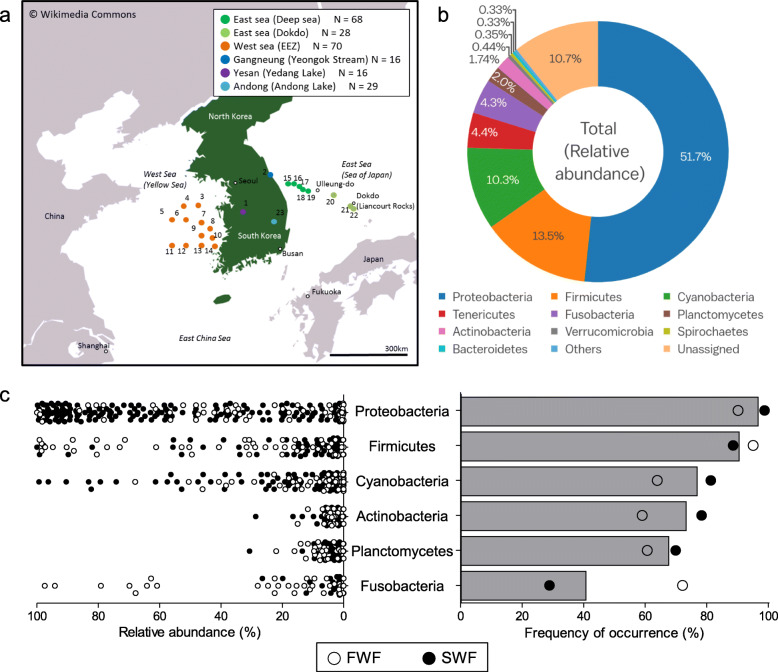
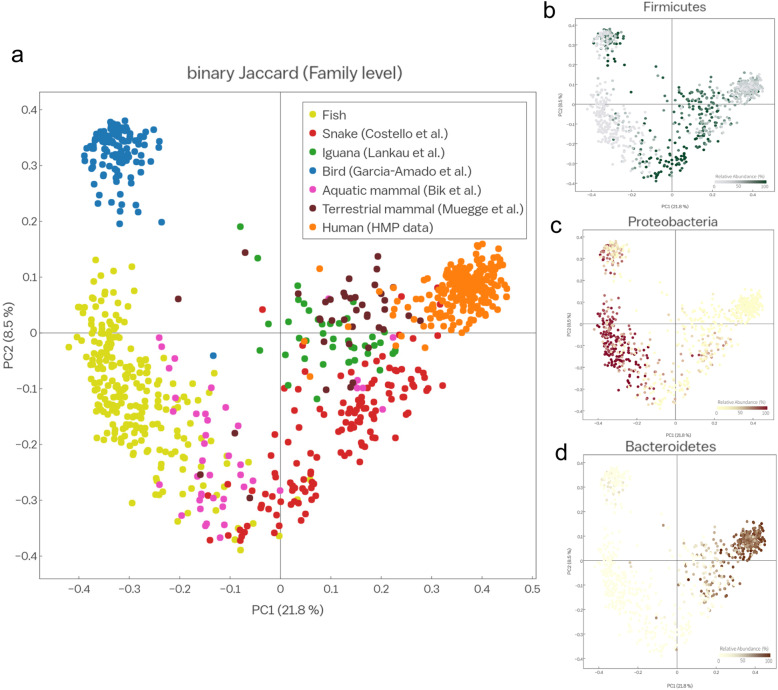
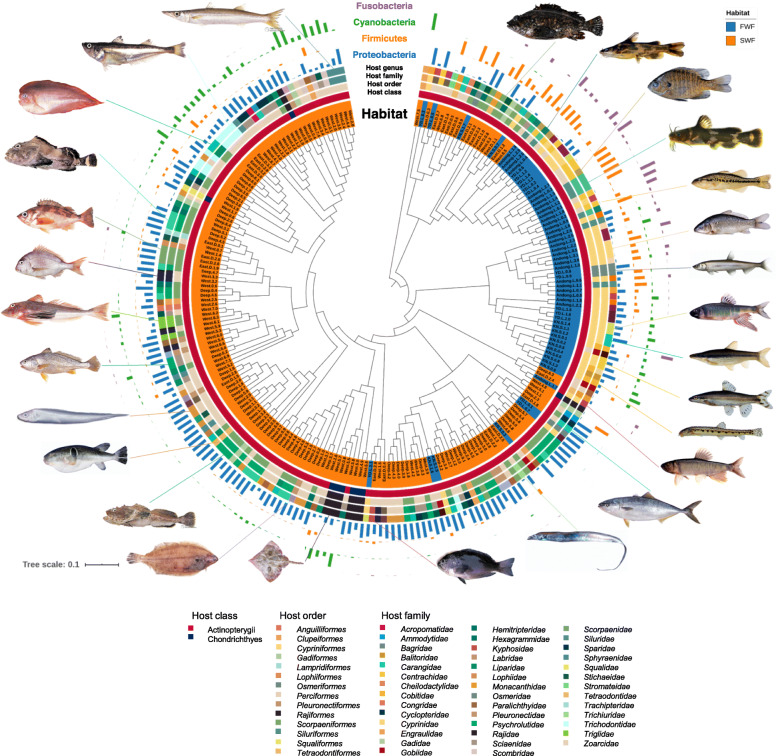
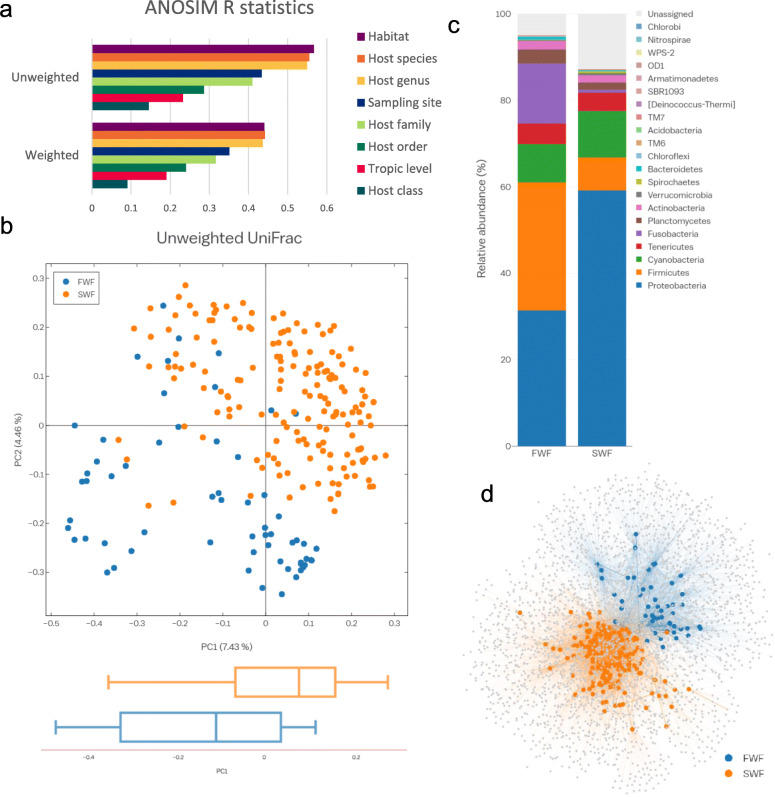
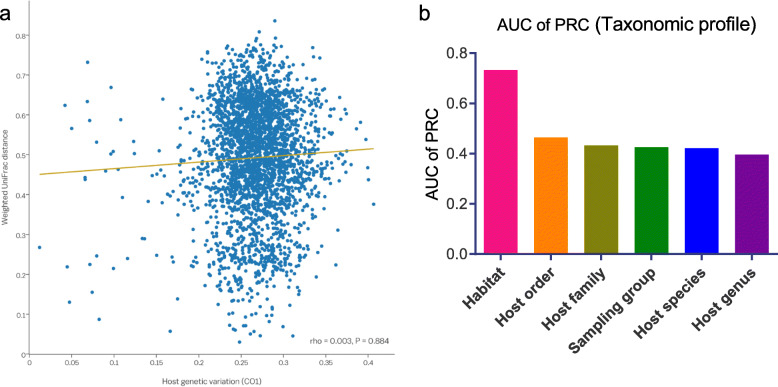
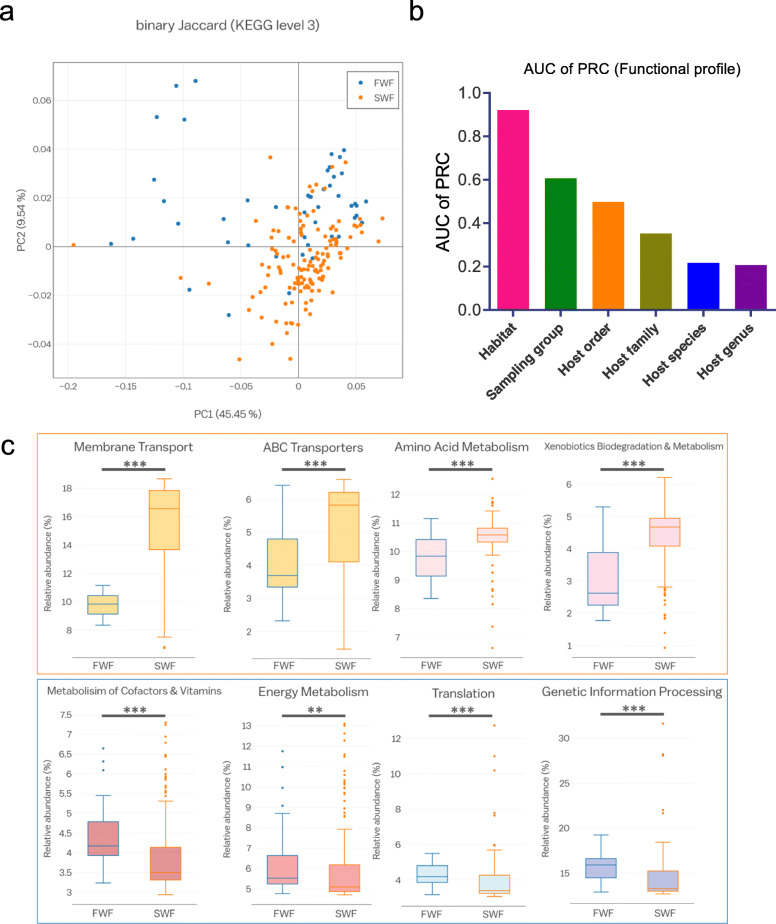
We analyzed 227 individual fish representing 14 orders, 42 families, 79 genera, and 85 species. The fish gut microbiota was dominated by Proteobacteria (51.7%) and Firmicutes (13.5%), different from the dominant taxa reported in terrestrial vertebrates (Firmicutes and Bacteroidetes). The gut microbial community in fish was more strongly shaped by host habitat than by host taxonomy or trophic level. Using a machine learning approach trained on the microbial community composition or predicted functional profiles, we found that the host habitat exhibited the highest classification accuracy. Principal coordinate analysis revealed that the gut bacterial community of fish differs significantly from those of other vertebrate classes (reptiles, birds, and mammals).
Collectively, these data provide a reference for future studies of the gut microbiome of aquatic animals as well as insights into the relationship between fish and their gut bacteria, including the key role of host habitat and the distinct compositions in comparison with those of mammals, reptiles, and birds. Video Abstract.
我们对动物肠道微生物组的了解主要基于哺乳动物的研究。为了更好地理解动物宿主与本土微生物之间共生关系的进化基础,有必要研究非哺乳动物脊椎动物物种的肠道微生物组。特别是,鱼类在脊椎动物群体中具有最高的物种多样性,约有 33000 种。在本研究中,我们全面描述了鱼类肠道细菌群落。
我们分析了代表 14 个目、42 个科、79 个属和 85 个种的 227 条单独的鱼。鱼类肠道微生物组主要由变形菌门(51.7%)和厚壁菌门(13.5%)组成,与陆地脊椎动物中报道的优势类群(厚壁菌门和拟杆菌门)不同。宿主生境比宿主分类或营养水平更能强烈影响鱼类肠道微生物群落。通过使用基于微生物群落组成或预测功能谱训练的机器学习方法,我们发现宿主生境表现出最高的分类准确性。主坐标分析表明,鱼类的肠道细菌群落与其他脊椎动物类群(爬行动物、鸟类和哺乳动物)有显著差异。
总的来说,这些数据为未来水生动物肠道微生物组的研究提供了参考,并深入了解了鱼类与其肠道细菌之间的关系,包括宿主生境的关键作用以及与哺乳动物、爬行动物和鸟类相比的明显组成差异。视频摘要。