Djernis Dorthe, O'Toole Mia S, Fjorback Lone O, Svenningsen Helle, Mehlsen Mimi Y, Stigsdotter Ulrika K, Dahlgaard Jesper
Department of Geosciences and Natural Resource Management, University of Copenhagen, DK-1958 Frederiksberg, Denmark.
Department of Psychology and Behavioural Sciences, Aarhus University, DK-8000 Aarhus, Denmark.
Healthcare (Basel). 2021 Jul 18;9(7):910. doi: 10.3390/healthcare9070910.
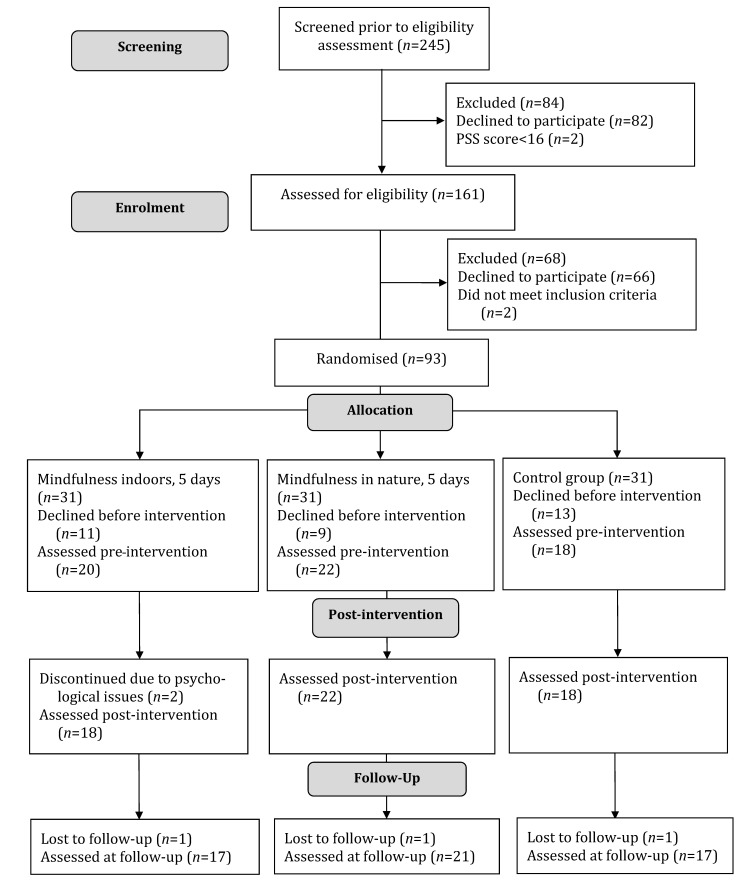
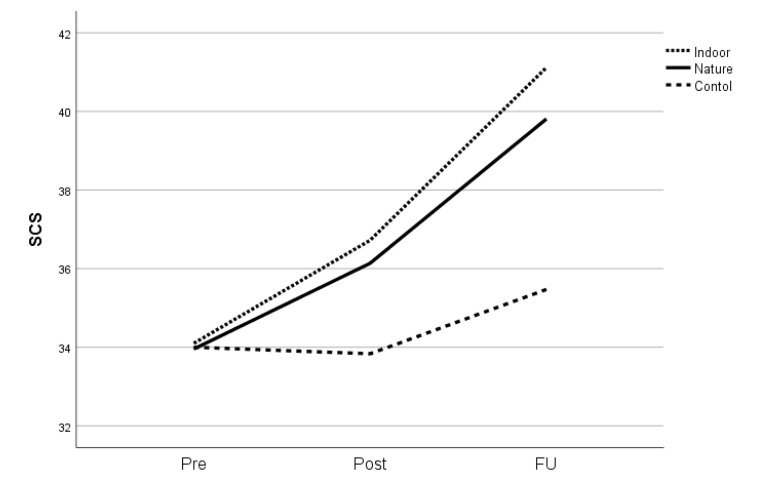
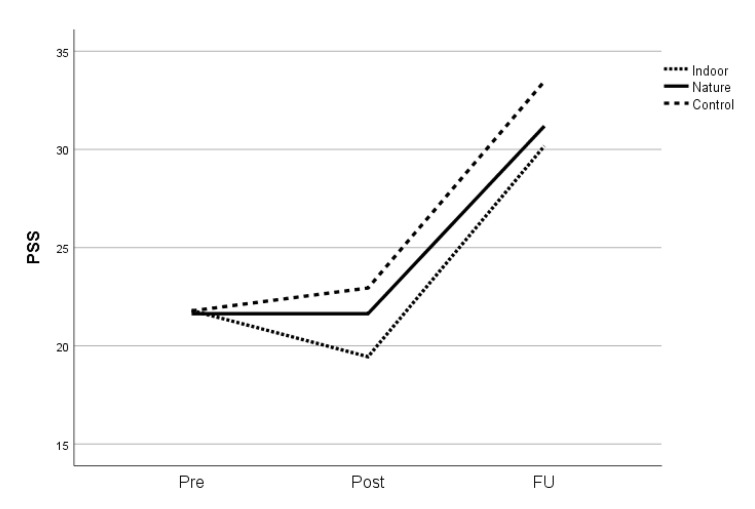
Here, we developed and examined a new way of disseminating mindfulness in nature to people without meditation experience, based on the finding that mindfulness conducted in natural settings may have added benefits. We evaluated a 5-day residential programme aiming to reduce stress and improve mental health outcomes. We compared an indoor and an outdoor version of the programme to a control group in a pilot randomised controlled trial (RCT). Sixty Danish university students experiencing moderate to high levels of stress were randomised into a residential mindfulness programme indoors ( = 20), in nature ( = 22), or a control group ( = 18). Participants completed the Perceived Stress Scale and the Self-Compassion Scale (primary outcomes) along with additional secondary outcome measures at the start and end of the program and 3 months after. Stress was decreased with small to medium effect sizes post-intervention, although not statistically significant. Self-compassion increased post-intervention, but effect sizes were small and not significant. At follow-up, changes in stress were not significant, however self-compassion increased for both interventions with medium-sized effects. For the intervention groups, medium- to large-sized positive effects on trait mindfulness after a behavioural task were found post-intervention, and small- to medium-sized effects in self-reported mindfulness were seen at follow-up. Connectedness to Nature was the only outcome measure with an incremental effect in nature, exceeding the control with a medium-sized effect at follow-up. All participants in the nature arm completed the intervention, and so did 97% of the participants in all three arms. Overall, the results encourage the conduct of a larger-scale RCT, but only after adjusting some elements of the programme to better fit and take advantage of the potential benefits of the natural environment.
在此,基于在自然环境中进行正念训练可能会带来额外益处这一发现,我们开发并检验了一种向没有冥想经验的人传播自然正念的新方法。我们评估了一个为期5天的住宿项目,旨在减轻压力并改善心理健康状况。在一项初步随机对照试验(RCT)中,我们将该项目的室内版和室外版与一个对照组进行了比较。60名经历中度至高度压力的丹麦大学生被随机分为室内正念住宿项目组(n = 20)、自然环境中的正念住宿项目组(n = 22)或对照组(n = 18)。参与者在项目开始和结束时以及3个月后完成了感知压力量表和自我同情量表(主要结果)以及其他次要结果测量。干预后压力有所降低,效应大小为小到中等,尽管在统计学上不显著。干预后自我同情有所增加,但效应大小较小且不显著。在随访时,压力变化不显著,然而两种干预措施的自我同情都有中等效应大小的增加。对于干预组,干预后在一项行为任务后对特质正念有中到大型的积极影响,随访时在自我报告的正念方面有小到中型的影响。与自然的联系是唯一在自然环境中有增量效应的结果测量指标,在随访时以中等效应大小超过对照组。自然组的所有参与者都完成了干预,所有三个组的参与者中有97%也完成了干预。总体而言,这些结果鼓励进行更大规模的RCT,但前提是要调整项目的一些要素,以更好地适应并利用自然环境的潜在益处。