Levakov Gidon, Faskowitz Joshua, Avidan Galia, Sporns Olaf
Department of Cognitive and Brain Sciences, Ben-Gurion University of the Negev, Israel; Zlotowski Center for Neuroscience, Ben-Gurion University of the Negev, Israel.
Department of Psychological and Brain Sciences, Indiana University, USA; Program in Neuroscience, Indiana University, USA.
Neuroimage. 2021 Nov 15;242:118469. doi: 10.1016/j.neuroimage.2021.118469. Epub 2021 Aug 11.
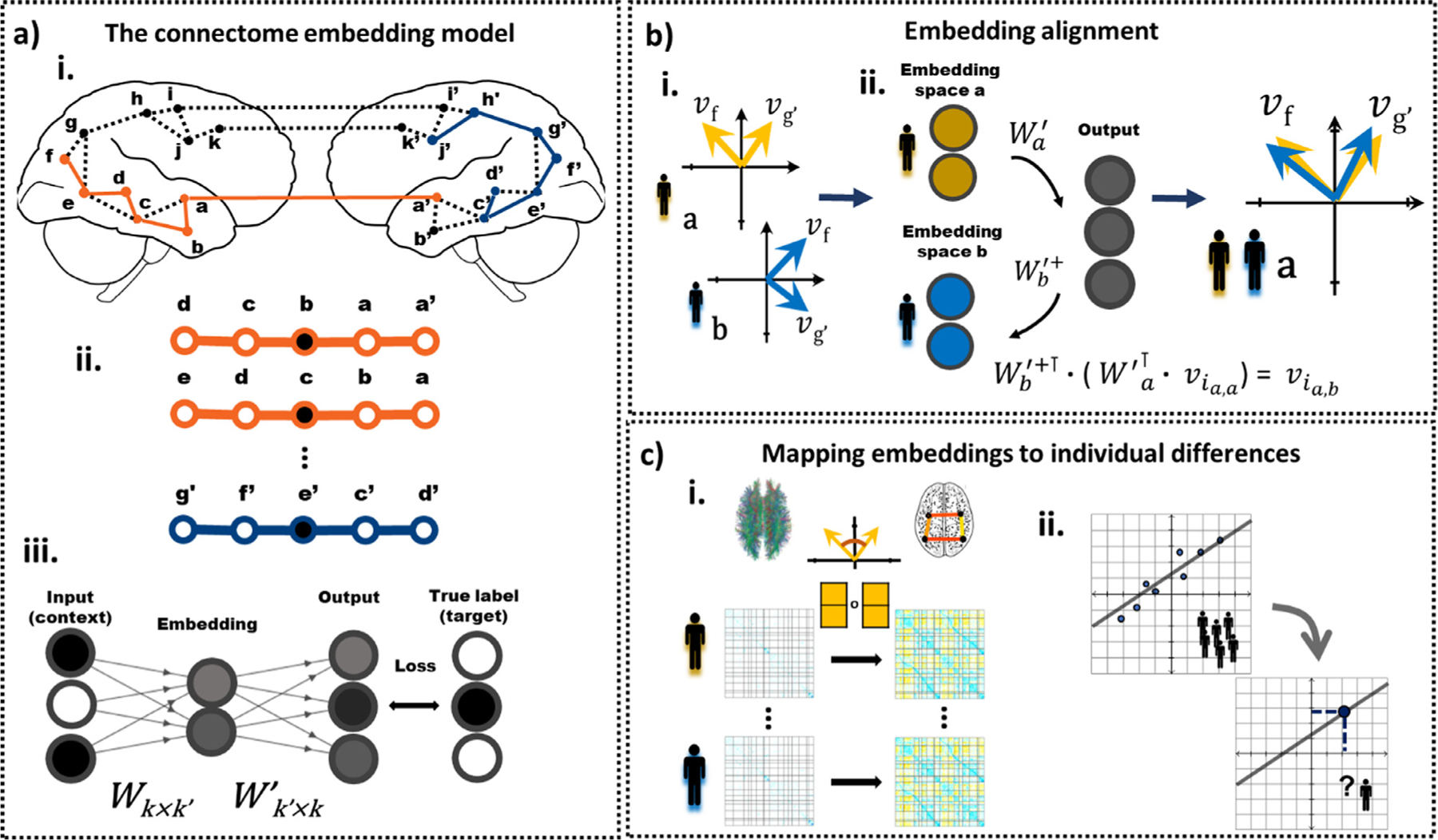
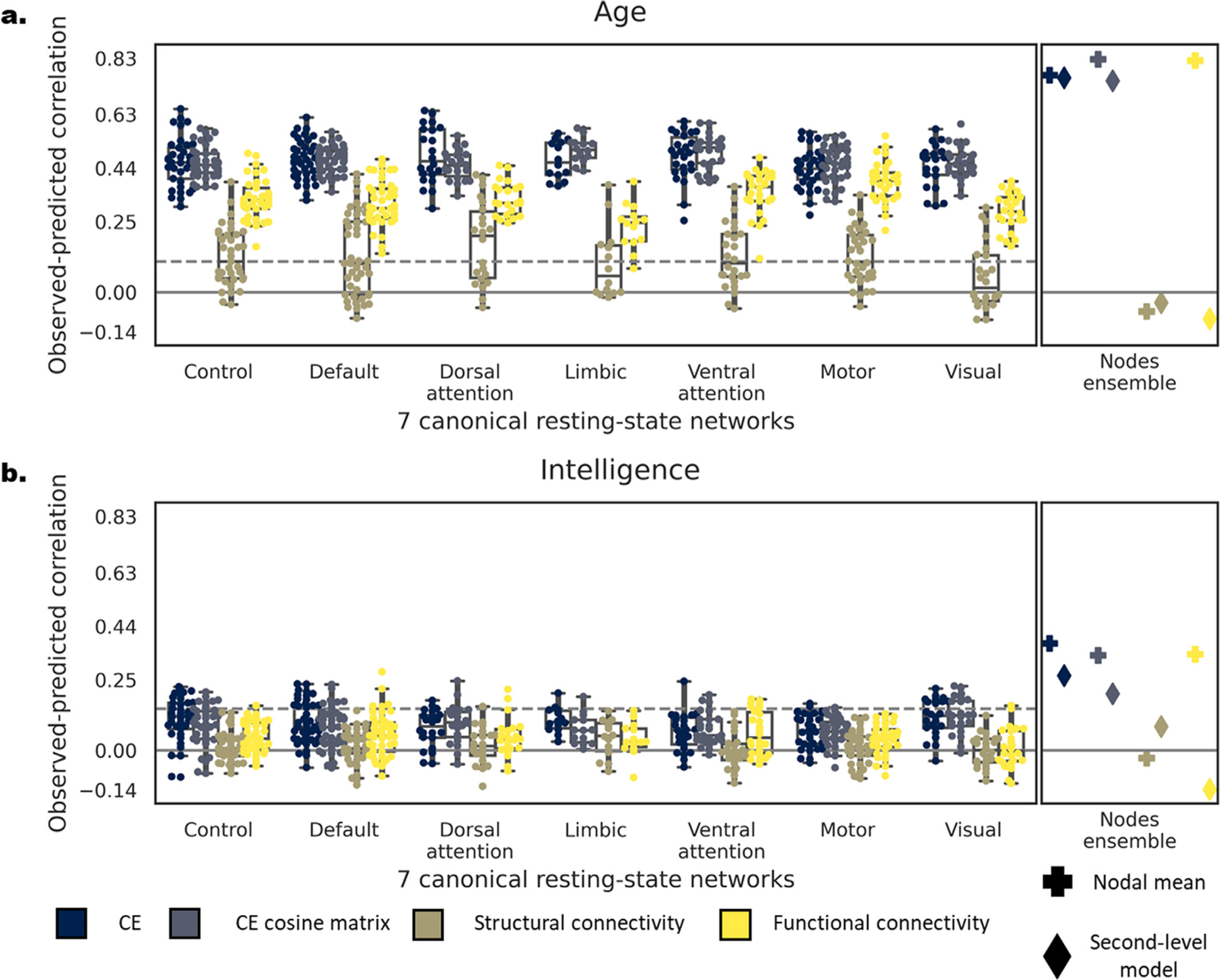
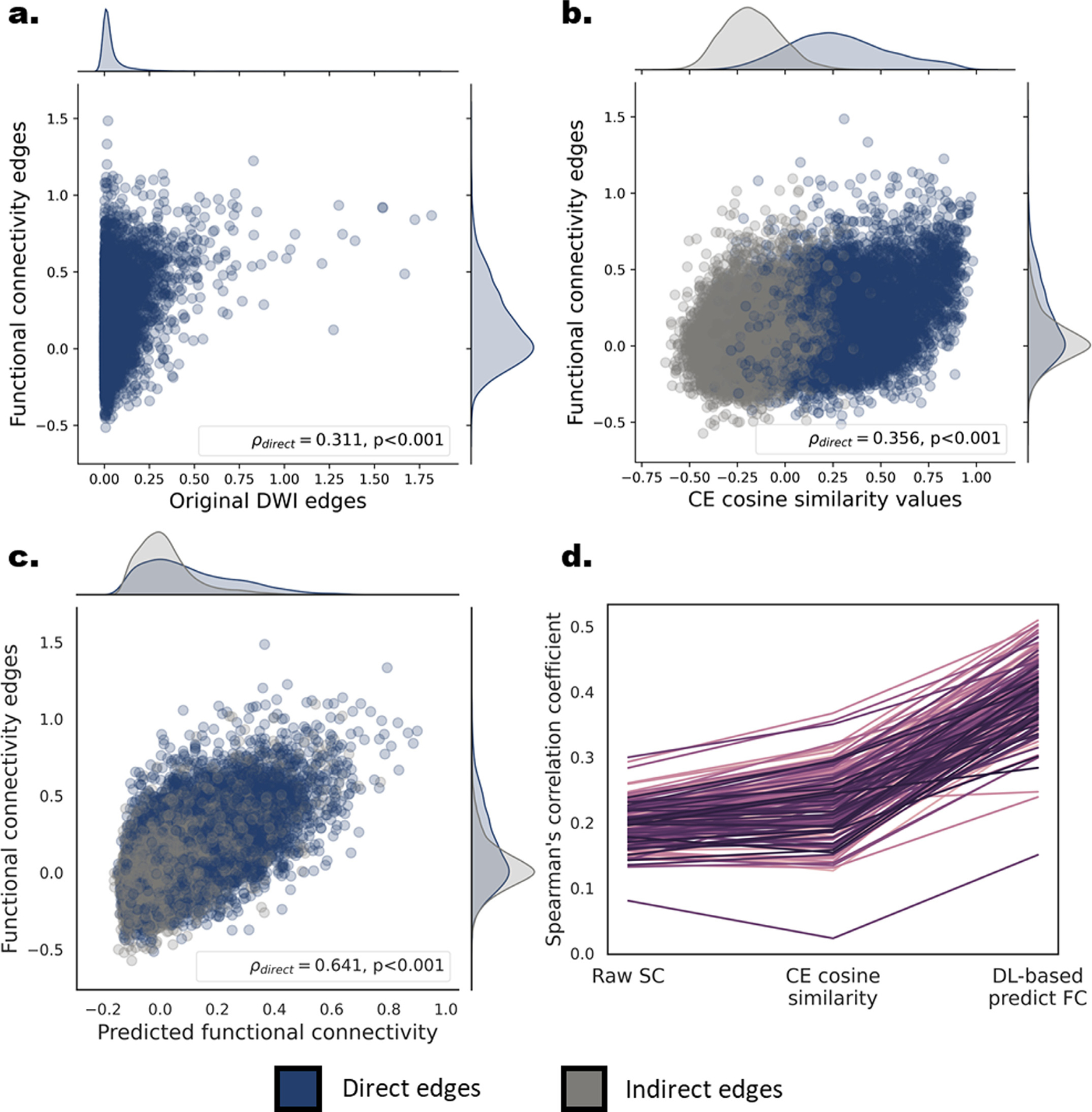
The connectome, a comprehensive map of the brain's anatomical connections, is often summarized as a matrix comprising all dyadic connections among pairs of brain regions. This representation cannot capture higher-order relations within the brain graph. Connectome embedding (CE) addresses this limitation by creating compact vectorized representations of brain nodes capturing their context in the global network topology. Here, nodes "context" is defined as random walks on the brain graph and as such, represents a generative model of diffusive communication around nodes. Applied to group-averaged structural connectivity, CE was previously shown to capture relations between inter-hemispheric homologous brain regions and uncover putative missing edges from the network reconstruction. Here we extend this framework to explore individual differences with a novel embedding alignment approach. We test this approach in two lifespan datasets (NKI: n = 542; Cam-CAN: n = 601) that include diffusion-weighted imaging, resting-state fMRI, demographics and behavioral measures. We demonstrate that modeling functional connectivity with CE substantially improves structural to functional connectivity mapping both at the group and subject level. Furthermore, age-related differences in this structure-function mapping, are preserved and enhanced. Importantly, CE captures individual differences by out-of-sample prediction of age and intelligence. The resulting predictive accuracy was higher compared to using structural connectivity and functional connectivity. We attribute these findings to the capacity of the CE to incorporate aspects of both anatomy (the structural graph) and function (diffusive communication). Our novel approach allows mapping individual differences in the connectome through structure to function and behavior.
连接组是大脑解剖连接的全面图谱,通常被概括为一个矩阵,该矩阵包含大脑区域对之间的所有二元连接。这种表示方式无法捕捉脑图谱中的高阶关系。连接组嵌入(CE)通过创建大脑节点的紧凑矢量化表示来解决这一局限性,这种表示捕捉了节点在全局网络拓扑中的上下文。在这里,节点的“上下文”被定义为在脑图谱上的随机游走,因此,它代表了节点周围扩散通信的生成模型。应用于组平均结构连接性时,CE先前已被证明能够捕捉半球间同源脑区之间的关系,并从网络重建中发现假定缺失的边。在这里,我们扩展了这个框架,用一种新颖的嵌入对齐方法来探索个体差异。我们在两个寿命数据集(NKI:n = 542;Cam-CAN:n = 601)中测试了这种方法,这些数据集包括扩散加权成像、静息态功能磁共振成像、人口统计学和行为测量。我们证明,用CE对功能连接性进行建模,在组水平和个体水平上都能显著改善结构到功能连接性的映射。此外,这种结构-功能映射中与年龄相关的差异得以保留并增强。重要的是,CE通过对年龄和智力的样本外预测来捕捉个体差异。与使用结构连接性和功能连接性相比,由此产生的预测准确性更高。我们将这些发现归因于CE结合解剖学(结构图)和功能(扩散通信)方面的能力。我们的新方法允许通过从结构到功能和行为来映射连接组中的个体差异。