Zhang Xiaohan, Liu Shenquan, Chen Zhe Sage
School of Mathematics, South China University of Technology, Guangzhou, China.
Department of Psychiatry, Department of Neuroscience and Physiology, Neuroscience Institute, New York University Grossman School of Medicine, New York City, NY, USA.
iScience. 2021 Jul 30;24(8):102919. doi: 10.1016/j.isci.2021.102919. eCollection 2021 Aug 20.
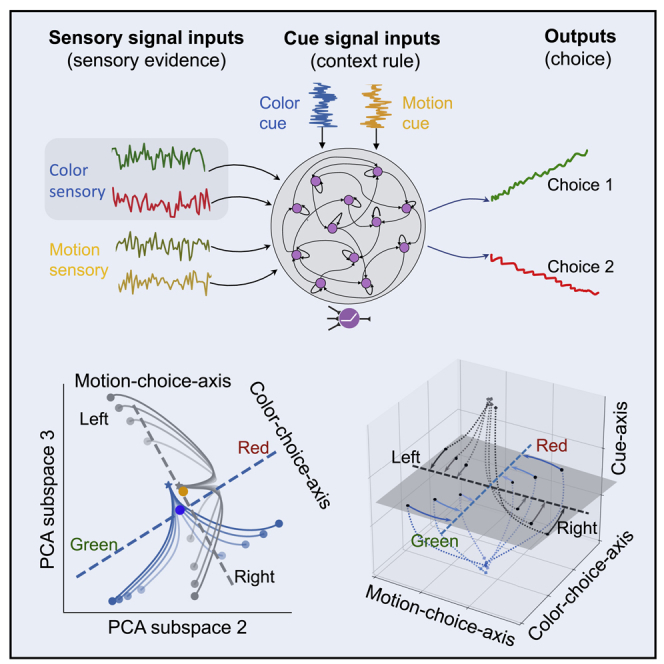
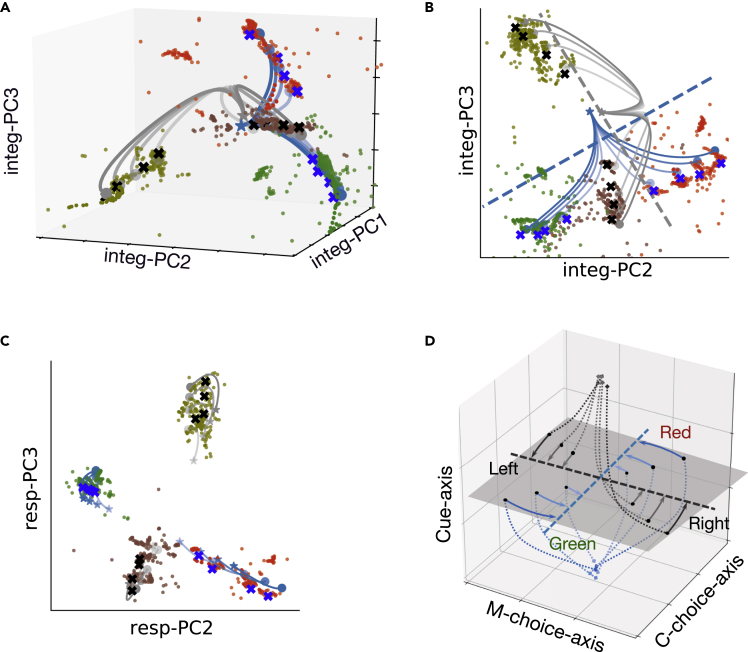
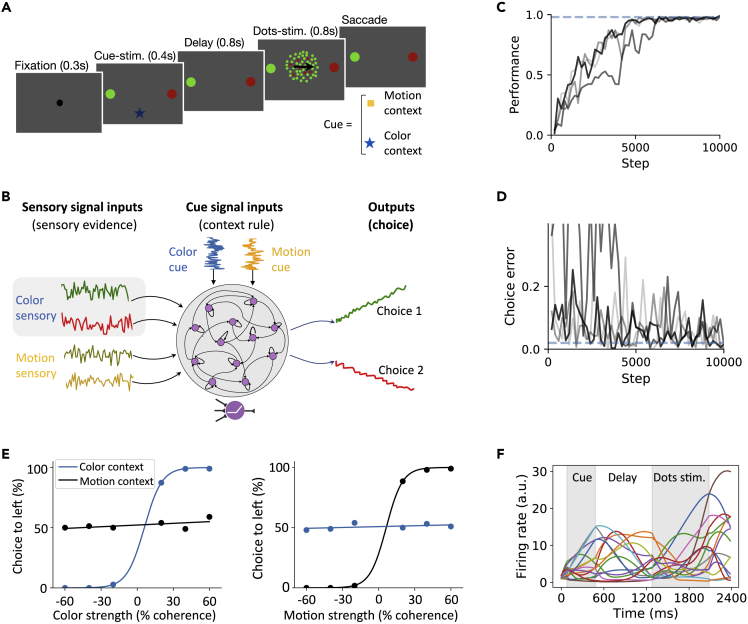
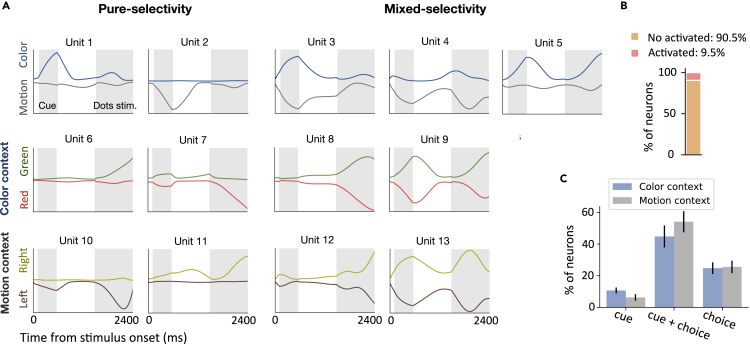
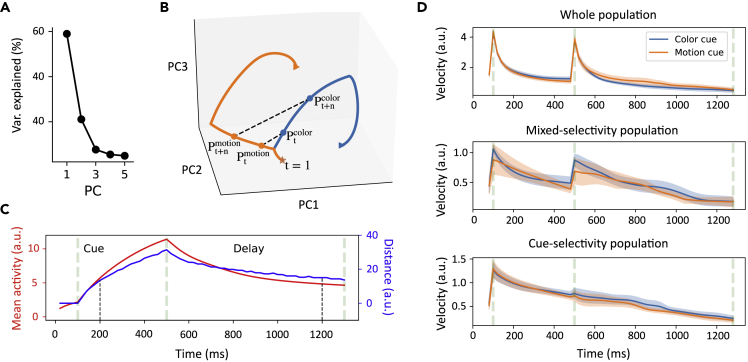
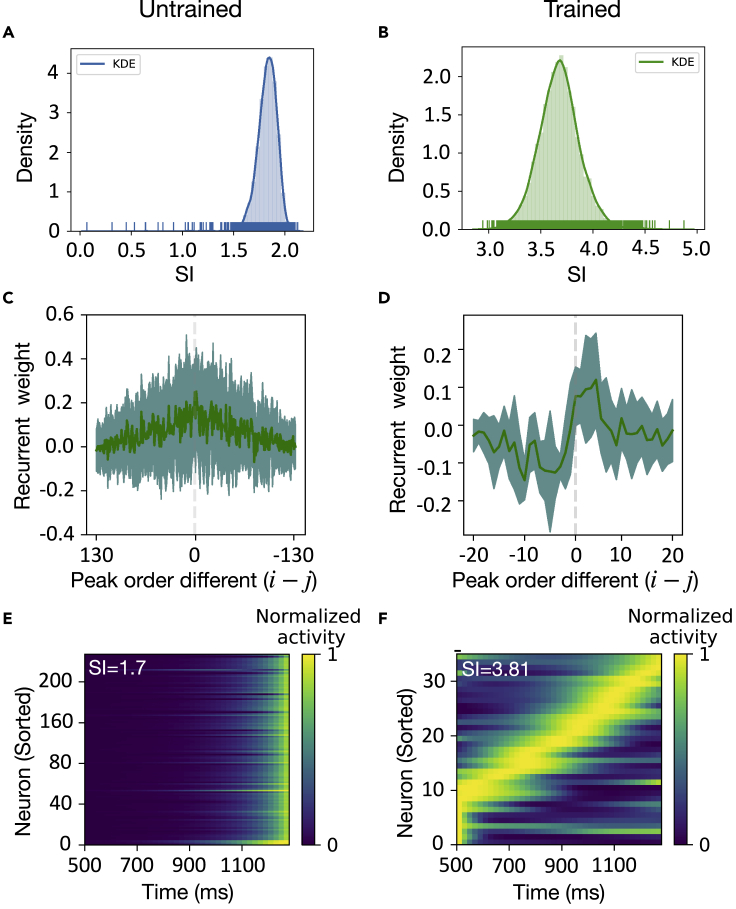
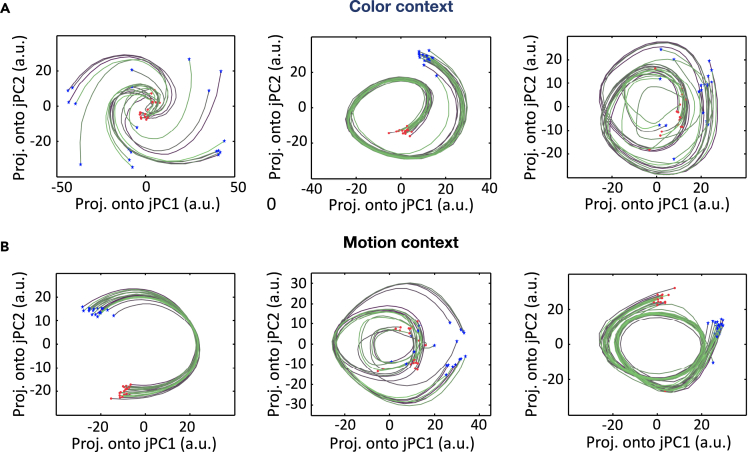
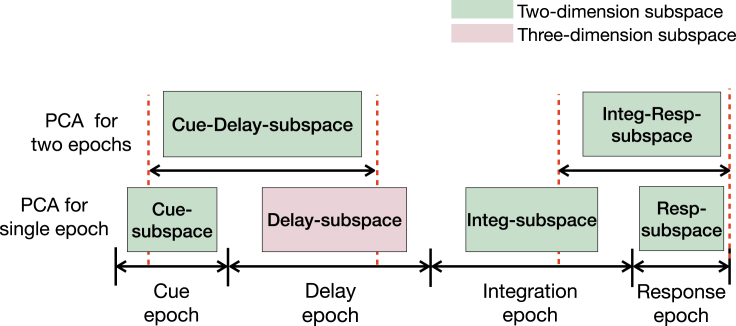
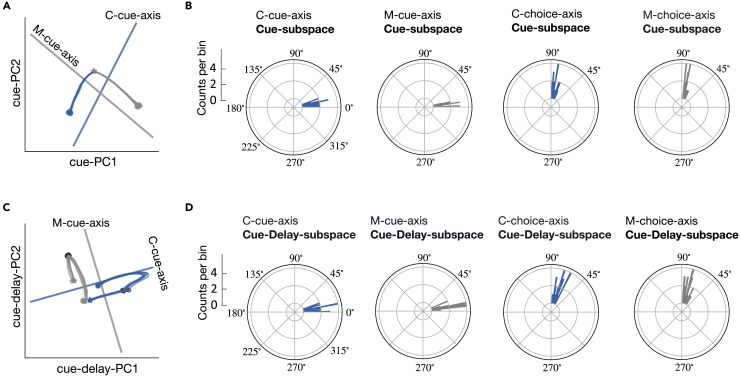
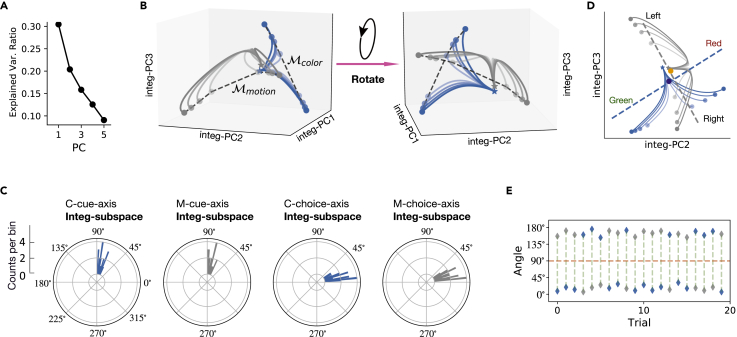
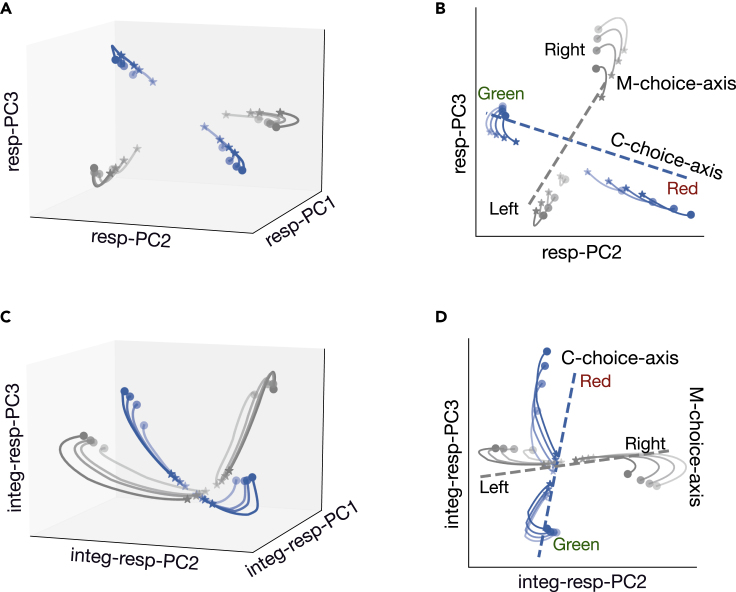
The prefrontal cortex (PFC) plays a prominent role in performing flexible cognitive functions and working memory, yet the underlying computational principle remains poorly understood. Here, we trained a rate-based recurrent neural network (RNN) to explore how the context rules are encoded, maintained across seconds-long mnemonic delay, and subsequently used in a context-dependent decision-making task. The trained networks replicated key experimentally observed features in the PFC of rodent and monkey experiments, such as mixed selectivity, neuronal sequential activity, and rotation dynamics. To uncover the high-dimensional neural dynamical system, we further proposed a geometric framework to quantify and visualize population coding and sensory integration in a temporally defined manner. We employed dynamic epoch-wise principal component analysis (PCA) to define multiple task-specific subspaces and task-related axes, and computed the angles between task-related axes and these subspaces. In low-dimensional neural representations, the trained RNN first encoded the context cues in a cue-specific subspace, and then maintained the cue information with a stable low-activity state persisting during the delay epoch, and further formed line attractors for sensor integration through low-dimensional neural trajectories to guide decision-making. We demonstrated via intensive computer simulations that the geometric manifolds encoding the context information were robust to varying degrees of weight perturbation in both space and time. Overall, our analysis framework provides clear geometric interpretations and quantification of information coding, maintenance, and integration, yielding new insight into the computational mechanisms of context-dependent computation.
前额叶皮层(PFC)在执行灵活的认知功能和工作记忆中起着重要作用,但其潜在的计算原理仍知之甚少。在这里,我们训练了一个基于速率的循环神经网络(RNN),以探索上下文规则是如何编码的,在长达数秒的记忆延迟中如何保持,以及随后如何用于上下文相关的决策任务。训练后的网络复制了啮齿动物和猴子实验中前额叶皮层关键的实验观察特征,如混合选择性、神经元序列活动和旋转动力学。为了揭示高维神经动力学系统,我们进一步提出了一个几何框架,以时间定义的方式量化和可视化群体编码和感觉整合。我们采用动态逐时段主成分分析(PCA)来定义多个特定任务的子空间和任务相关轴,并计算任务相关轴与这些子空间之间的夹角。在低维神经表征中,训练后的RNN首先在特定线索子空间中编码上下文线索,然后在延迟时段通过持续的稳定低活动状态保持线索信息,并通过低维神经轨迹进一步形成线吸引子用于感觉整合以指导决策。我们通过密集的计算机模拟证明,编码上下文信息的几何流形在空间和时间上对不同程度的权重扰动具有鲁棒性。总体而言,我们的分析框架为信息编码、保持和整合提供了清晰的几何解释和量化,为上下文相关计算的计算机制提供了新的见解。