Pietrobon Giacomo, Tagliabue Marta, Stringa Luigi Marco, De Berardinis Rita, Chu Francesco, Zocchi Jacopo, Carlotto Elena, Chiocca Susanna, Ansarin Mohssen
Division of Otolaryngology and Head and Neck Surgery, European Institute of Oncology IRCCS, 20142 Milan, Italy.
Department of Biomedical Sciences, University of Sassari, 07100 Sassari, Italy.
Cancers (Basel). 2021 Sep 3;13(17):4439. doi: 10.3390/cancers13174439.
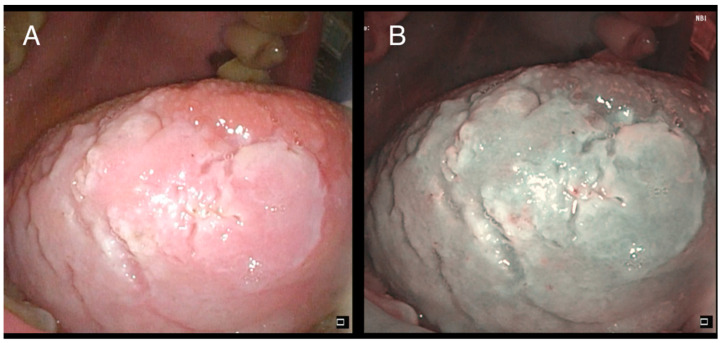
We reviewed the current published literature on the impact of oral microbiota on oral cavity leukoplakia (OLK), aiming at clarifying its role in disease transformation. The analysis unveiled that bacterial richness and diversity in the oral cavity tend to be decreased in OLK compared to healthy controls, with a reduction in the prevalent commensals, such as , and elevation of anaerobes. Moreover, , and are recurrent findings, and they already have been linked to periodontal disease. These microbial community changes may also represent a marker for the transition from OLK to oral squamous cell carcinoma. Unfortunately, the reviewed studies present several limitations, making an objective comparison difficult. To overcome these biases, longitudinal studies are necessary.
我们回顾了当前已发表的关于口腔微生物群对口腔白斑(OLK)影响的文献,旨在阐明其在疾病转变中的作用。分析表明,与健康对照相比,OLK患者口腔中的细菌丰富度和多样性往往会降低,常见共生菌数量减少,如 ,厌氧菌数量增加。此外, 、 和 是反复出现的发现,它们已经与牙周病有关。这些微生物群落变化也可能代表从OLK转变为口腔鳞状细胞癌的一个标志。不幸的是,所回顾的研究存在一些局限性,难以进行客观比较。为了克服这些偏差,有必要进行纵向研究。