Thammawithan Saengrawee, Siritongsuk Pawinee, Nasompag Sawinee, Daduang Sakda, Klaynongsruang Sompong, Prapasarakul Nuvee, Patramanon Rina
Department of Biochemistry, Faculty of Science, Khon Kaen University, Khon Kaen 40002, Thailand.
Protein and Proteomics Research Center for Commercial and Industrial Purposes (ProCCI), Faculty of Science, Khon Kaen University, Khon Kaen 40002, Thailand.
Vet Sci. 2021 Aug 31;8(9):177. doi: 10.3390/vetsci8090177.
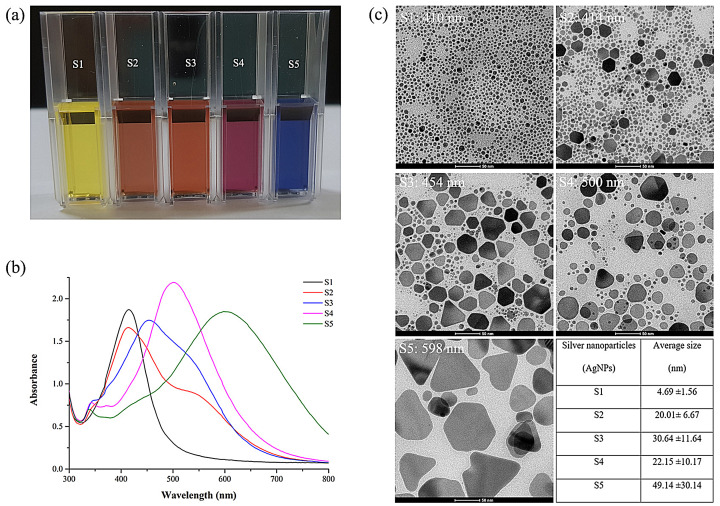
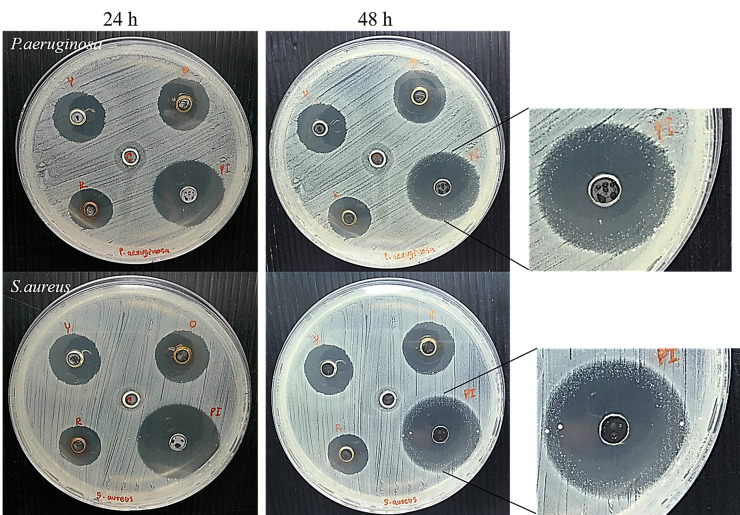
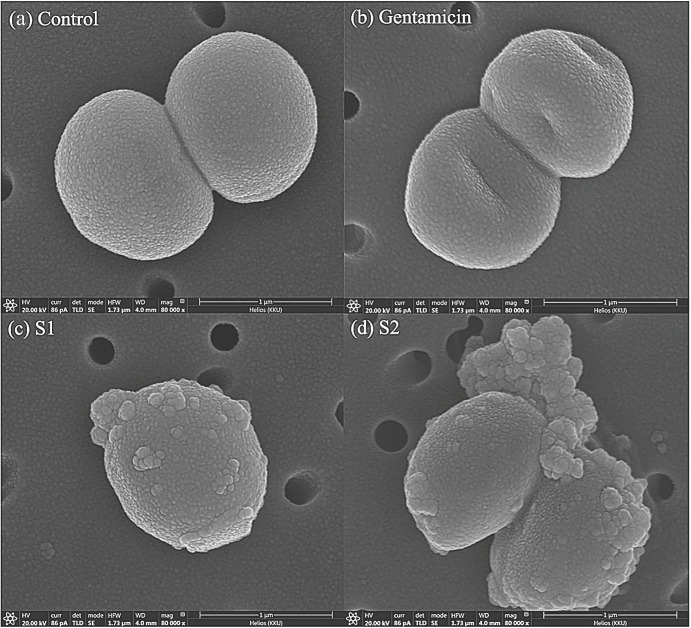
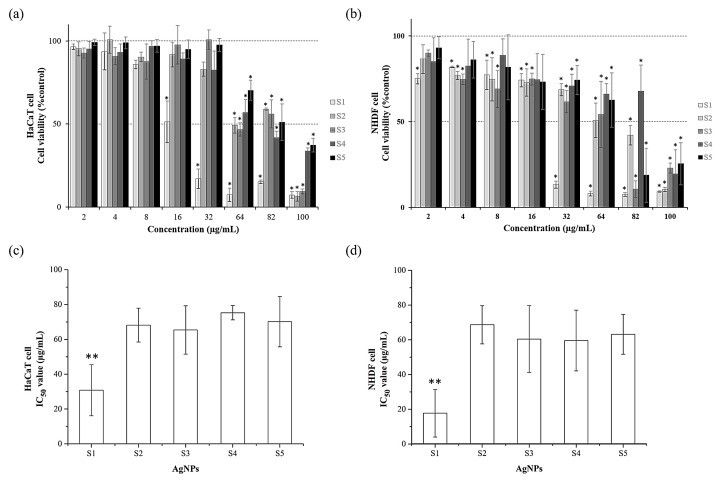
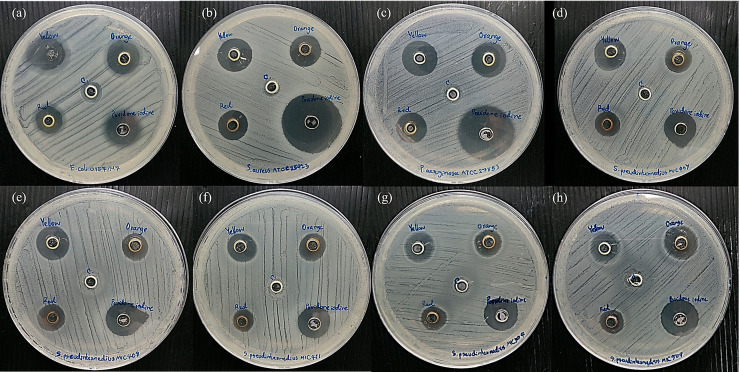
The excessive use of antibiotics in both human and veterinary medicine has contributed to the development and rapid spread of drug resistance in bacteria. Silver nanoparticles (AgNPs) have become a tool of choice that can be used to treat these resistant bacteria. Several studies have shown that AgNPs have antibacterial and wound healing properties. In this study, we evaluated the biological activity of anisotropic AgNPs to develop an antimicrobial gel formulation for treating wound infections. We showed that some anisotropic AgNPs (S2) have an effective antibacterial activity against bacterial pathogens and low cytotoxicity to keratinocytes and fibroblasts . The MIC and MBC values were in the range of 2-32 µg/mL, and cytotoxicity had IC values of 68.20 ± 9.71 µg/mL and 68.65 ± 10.97 µg/mL against human keratinocyte and normal human dermal fibroblast cells, respectively. The anisotropic AgNPs (S2) were used as a gel component and tested for antibacterial activity, including long-term protection, compared with povidone iodine, a common antiseptic agent. The results show that the anisotropic AgNPs can inhibit the growth of most tested bacterial pathogens and provide protection longer than 48 h, whereas povidone iodine only inhibits the growth of some bacteria. This study suggests that anisotropic AgNPs could be used as an alternative antimicrobial agent for treating bacterial skin infection and as a wound healing formulation.
人类医学和兽医学中抗生素的过度使用导致了细菌耐药性的产生和迅速传播。银纳米颗粒(AgNPs)已成为可用于治疗这些耐药细菌的首选工具。多项研究表明,AgNPs具有抗菌和伤口愈合特性。在本研究中,我们评估了各向异性AgNPs的生物活性,以开发一种用于治疗伤口感染的抗菌凝胶制剂。我们发现,一些各向异性AgNPs(S2)对细菌病原体具有有效的抗菌活性,对角质形成细胞和成纤维细胞的细胞毒性较低。其最低抑菌浓度(MIC)和最低杀菌浓度(MBC)值在2 - 32 µg/mL范围内,对人角质形成细胞和正常人皮肤成纤维细胞的细胞毒性IC值分别为68.20 ± 9.71 µg/mL和68.65 ± 10.97 µg/mL。将各向异性AgNPs(S2)用作凝胶成分,并与常见的防腐剂聚维酮碘相比,测试其抗菌活性,包括长期保护作用。结果表明,各向异性AgNPs可抑制大多数测试细菌病原体的生长,并提供超过48小时的保护,而聚维酮碘仅能抑制部分细菌的生长。本研究表明,各向异性AgNPs可作为治疗细菌性皮肤感染的替代抗菌剂和伤口愈合制剂。