Wang Xiao, Pecoraro Lorenzo
School of Pharmaceutical Science and Technology, Tianjin University, 92 Weijin Road, Tianjin 300072, China.
Biology (Basel). 2021 Sep 10;10(9):894. doi: 10.3390/biology10090894.
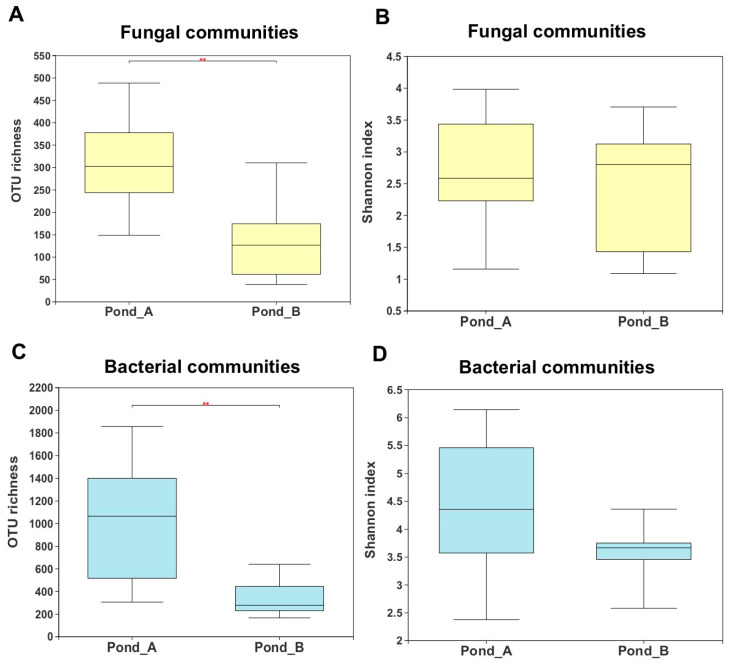
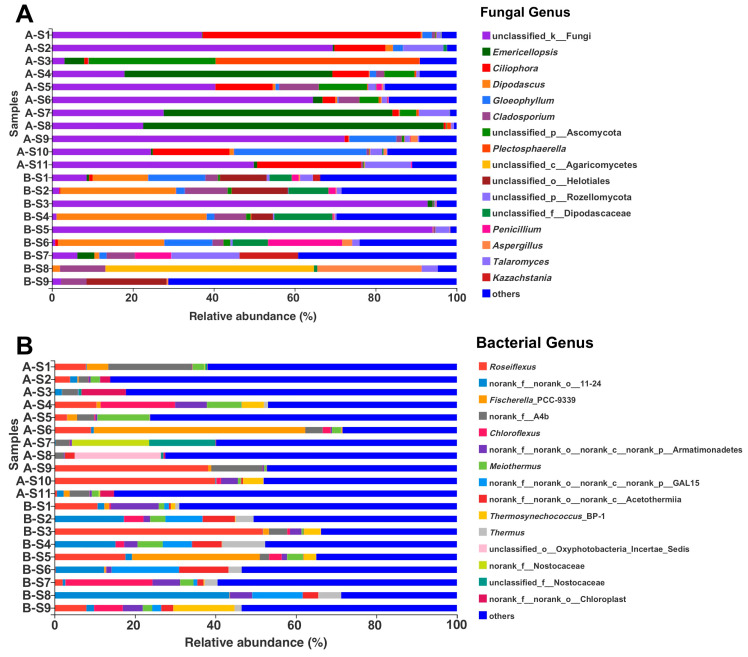
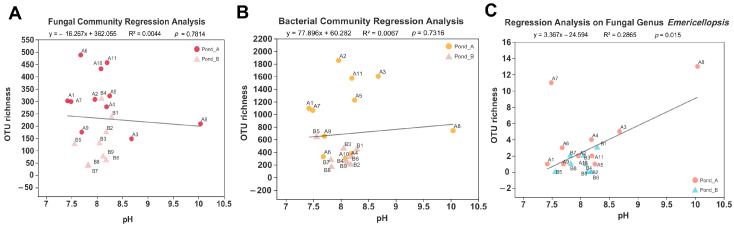
The Julong high-altitude volcanic hot springs in northeast China are of undeniable interest for microbiological studies due to their unique, extreme environmental conditions. The objective of this study was to provide a comprehensive analysis of the unexplored fungal and bacterial community composition, structure and networks in sediments and water from the Julong hot springs using a combination of culture-based methods and metabarcoding. A total of 65 fungal and 21 bacterial strains were isolated. Fungal genera and were dominant in sediments, while the most abundant fungi in hot spring water were and . Bacterial communities in sediments and water were dominated by the genera and , respectively. Metabarcoding analysis revealed significant differences in the microorganism communities from the two hot springs. Results suggested a strong influence of pH on the analyzed microbial diversity, at least when the environmental conditions became clearly alkaline. Our analyses indicated that mutualistic interactions may play an essential role in shaping stable microbial networks in the studied hot springs. The much more complicated bacterial than fungal networks described in our study may suggest that the more flexible trophic strategies of bacteria are beneficial for their survival and fitness under extreme conditions.
中国东北的巨龙高海拔火山温泉因其独特的极端环境条件,在微生物学研究方面具有不可否认的吸引力。本研究的目的是结合基于培养的方法和元条形码技术,对巨龙温泉沉积物和水中未被探索的真菌和细菌群落组成、结构及网络进行全面分析。共分离出65株真菌和21株细菌。沉积物中真菌属 和 占主导地位,而温泉水中最丰富的真菌是 和 。沉积物和水中的细菌群落分别以 属和 属为主。元条形码分析显示,两个温泉的微生物群落存在显著差异。结果表明,pH值对所分析的微生物多样性有很大影响,至少在环境条件明显呈碱性时如此。我们的分析表明,互利共生相互作用可能在塑造所研究温泉中稳定的微生物网络方面发挥重要作用。我们研究中描述的细菌网络比真菌网络复杂得多,这可能表明细菌更灵活的营养策略有利于它们在极端条件下的生存和适应性。