Department of Dermatology and Cutaneous Biology, Thomas Jefferson University, Philadelphia, PA 19107, USA.
Medicina (Kaunas). 2021 Sep 1;57(9):925. doi: 10.3390/medicina57090925.
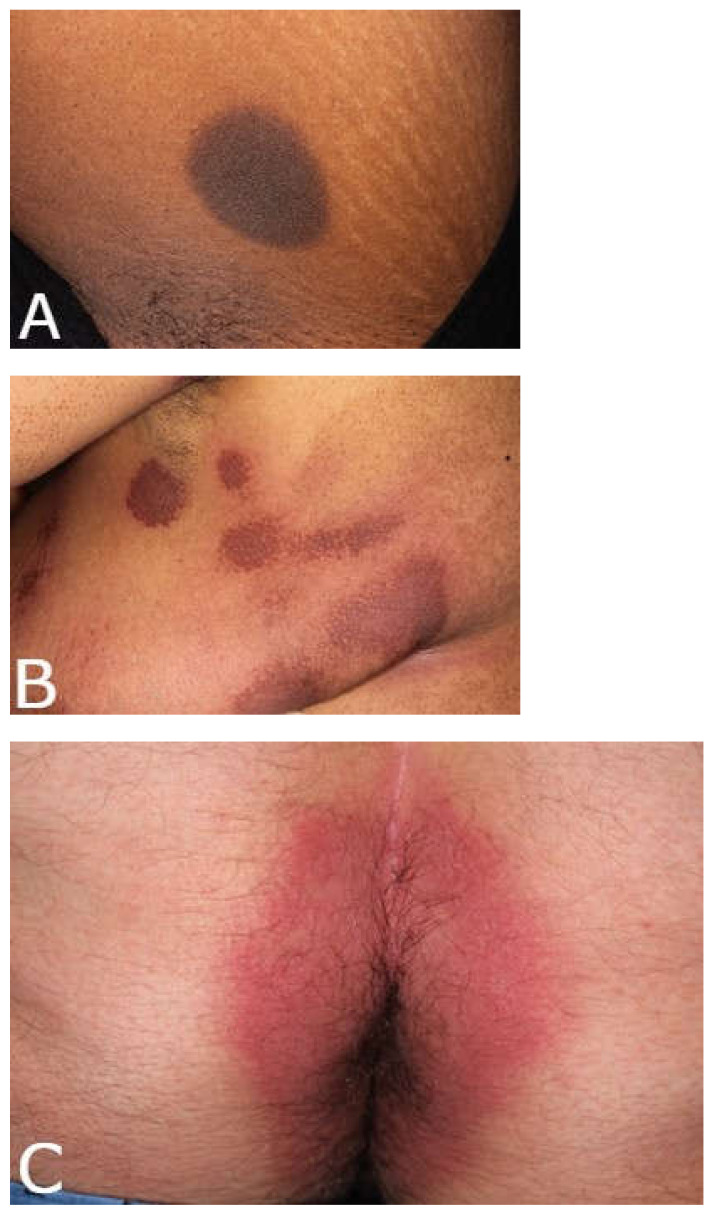
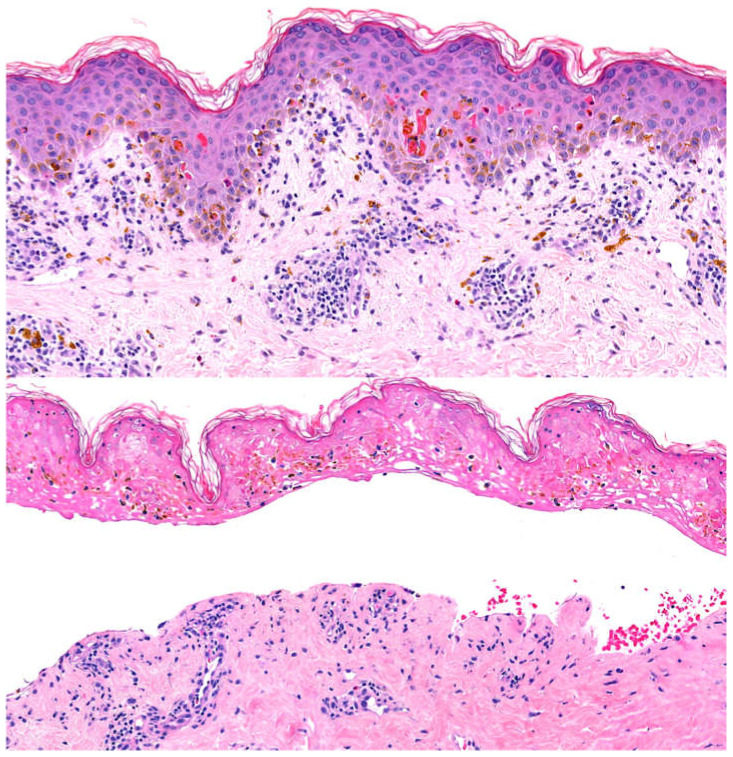
Fixed drug eruption (FDE) is a cutaneous adverse drug reaction characterized by the onset of rash at a fixed location on the body each time a specific medication is ingested. With each recurrence, the eruption can involve additional sites. Lesions can have overlying vesicles and/or bullae, and when they cover a significant percentage of body surface area, the eruption is referred to as generalized bullous fixed drug eruption (GBFDE). Due to the widespread skin denudation that can be seen in this condition, GBFDE may be confused clinically with Stevens-Johnson syndrome/toxic epidermal necrolysis (SJS/TEN). While treatments described for GBFDE include supportive care, topical and/or systemic steroids, and, recently, cyclosporine, the mainstay of management involves identifying and discontinuing the causative drug. This review article will provide an overview of FDE with an emphasis on its generalized bullous variant.
固定型药物疹(FDE)是一种药物引起的皮肤不良反应,其特征是每次摄入特定药物时,皮疹会在身体的固定位置发作。每次复发时,皮疹可能会累及其他部位。皮损上可有水疱和/或大疱,当它们覆盖身体表面积的很大比例时,就称为泛发性大疱性固定型药物疹(GBFDE)。由于这种情况下可能会出现广泛的皮肤剥脱,GBFDE 在临床上可能会与 Stevens-Johnson 综合征/中毒性表皮坏死松解症(SJS/TEN)相混淆。GBFDE 的治疗方法包括支持性护理、局部和/或全身类固醇,以及最近的环孢素,而治疗的主要方法包括确定并停用引起该病的药物。本文将重点介绍其泛发性大疱性变体,对 FDE 进行概述。