Kaur Sandeep, Kumari Anila, Kumari Negi Anjana, Galav Vikas, Thakur Shikha, Agrawal Manish, Sharma Vandana
Department of Food Science, Mehr Chand Mahajan DAV College for Women, Chandigarh, India.
Department of Biochemistry, Dr. Rajendra Prasad Government Medical College, Himachal Pradesh, India.
Front Pharmacol. 2021 Oct 5;12:699054. doi: 10.3389/fphar.2021.699054. eCollection 2021.
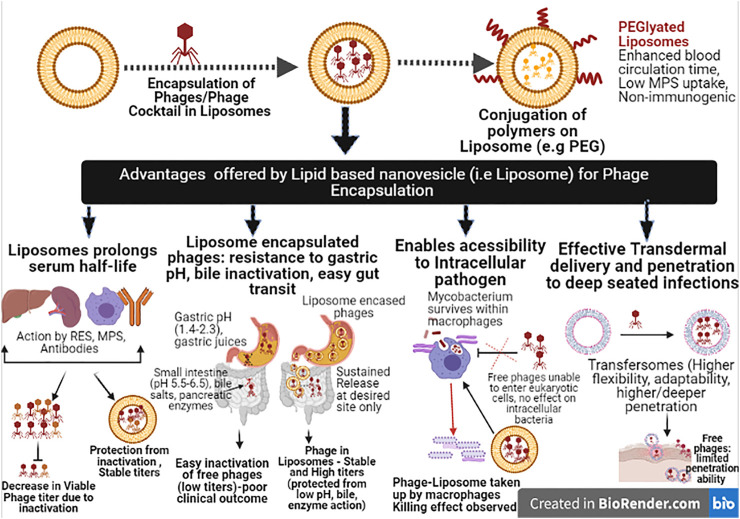
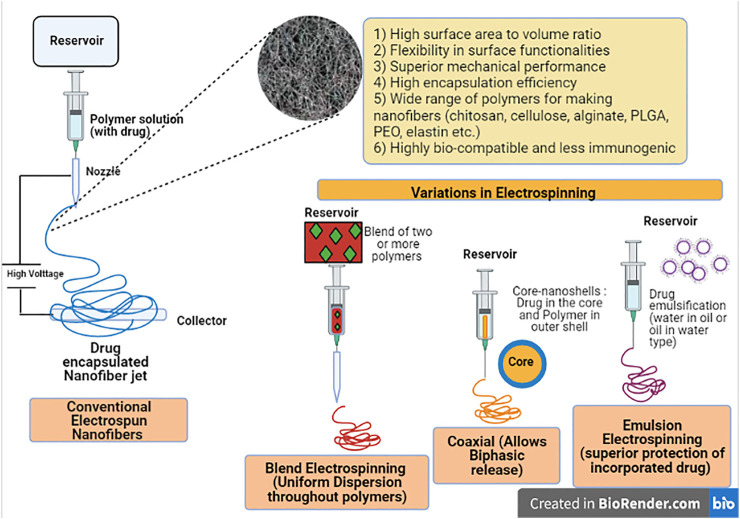
With the emergence and spread of global antibiotic resistance and the need for searching safer alternatives, there has been resurgence in exploring the use of bacteriophages in the treatment of bacterial infections referred as phage therapy. Although modern phage therapy has come a long way as demonstrated by numerous efficacy studies but the fact remains that till date, phage therapy has not received regulatory approval for human use (except for compassionate use).Thus, to hit the clinical market, the roadblocks need to be seriously addressed and gaps mended with modern solution based technologies. Nanotechnology represents one such ideal and powerful tool for overcoming the pharmacological barriers (low stability, poor in-vivo retention, targeted delivery, neutralisation by immune system etc.) of administered phage preparations.In literature, there are many review articles on nanotechnology and bacteriophages but these are primarily focussed on highlighting the use of lytic and temperate phages in different fields of nano-medicine such as nanoprobes, nanosensors, cancer diagnostics, cancer cell targeting, drug delivery through phage receptors, phage display etc. Reviews specifically focused on the use of nanotechnology driven techniques strictly to improve phage therapy are however limited. Moreover, these review if present have primarily focussed on discussing encapsulation as a primary method for improving the stability and retention of phage(s) in the body.With new advances made in the field of nanotechnology, approaches extend from mere encapsulation to recently adopted newer strategies. The present review gives a detailed insight into the more recent strategies which include 1) use of lipid based nano-carriers (liposomes, transfersomes etc.) 2) adopting microfluidic based approach, surface modification methods to further enhance the efficiency and stability of phage loaded liposomes 3) Nano- emulsification approach with integration of microfluidics for producing multiple emulsions (suitable for phage cocktails) with unique control over size, shape and drop morphology 4) Phage loaded nanofibers produced by electro-spinning and advanced core shell nanofibers for immediate, biphasic and delayed release systems and 5) Smart release drug delivery platforms that allow superior control over dosing and phage release as and when required. All these new advances are aimed at creating a suitable housing system for therapeutic bacteriophage preparations while targeting the multiple issues of phage therapy i.e., improving phage stability and titers, improving retention times, acting as suitable delivery systems for sustained release at target site of infection, improved penetration into biofilms and protection from immune cell attack. The present review thus aims at giving a complete insight into the recent advances (2010 onwards) related to various nanotechnology based approaches to address the issues pertaining to phage therapy. This is essential for improving the overall therapeutic index and success of phage therapy for future clinical approval.
随着全球抗生素耐药性的出现和传播,以及寻找更安全替代方案的需求,探索噬菌体在治疗细菌感染中的应用(即噬菌体疗法)再度兴起。尽管众多疗效研究表明现代噬菌体疗法已经取得了长足进展,但事实仍然是,迄今为止,噬菌体疗法尚未获得用于人类的监管批准(除了用于同情用药)。因此,为了进入临床市场,需要认真解决这些障碍,并用基于现代解决方案的技术弥补差距。纳米技术是克服所施用噬菌体制剂的药理学障碍(低稳定性、体内保留性差、靶向递送、被免疫系统中和等)的一种理想且强大的工具。在文献中,有许多关于纳米技术和噬菌体的综述文章,但这些主要集中在强调裂解性噬菌体和温和噬菌体在纳米医学不同领域的应用,如纳米探针、纳米传感器、癌症诊断、癌细胞靶向、通过噬菌体受体进行药物递送、噬菌体展示等。然而,专门聚焦于严格使用纳米技术驱动的技术来改善噬菌体疗法的综述有限。此外,即便有这些综述,也主要集中在讨论封装作为提高噬菌体在体内稳定性和保留率的主要方法。随着纳米技术领域取得新进展,方法已从单纯的封装扩展到最近采用的更新策略。本综述详细介绍了这些更新的策略,包括:1)使用基于脂质的纳米载体(脂质体、传递体等);2)采用基于微流体的方法、表面修饰方法来进一步提高负载噬菌体的脂质体的效率和稳定性;3)结合微流体的纳米乳化方法,用于生产具有独特尺寸、形状和液滴形态控制的多重乳液(适用于噬菌体鸡尾酒);4)通过静电纺丝制备负载噬菌体的纳米纤维以及先进的核壳纳米纤维,用于即时、双相和延迟释放系统;5)智能释放药物递送平台,可在需要时对给药和噬菌体释放进行卓越控制。所有这些新进展旨在为治疗性噬菌体制剂创建一个合适的容纳系统,同时解决噬菌体疗法的多个问题,即提高噬菌体稳定性和效价、延长保留时间、作为在感染靶位点持续释放的合适递送系统、改善对生物膜的穿透以及保护免受免疫细胞攻击。因此,本综述旨在全面深入了解最近(2010年起)与各种基于纳米技术的方法相关的进展,以解决与噬菌体疗法相关的问题。这对于提高噬菌体疗法的整体治疗指数和未来临床批准的成功率至关重要。