Department of Optical Nanoscopy, Max Planck Institute for Medical Research, Jahnstrasse 29, 69120 Heidelberg, Germany.
Department of NanoBiophotonics, Max Planck Institute for Biophysical Chemistry, Am Fassberg 11, 37077 Göttingen, Germany.
J Am Chem Soc. 2021 Nov 10;143(44):18388-18393. doi: 10.1021/jacs.1c09999. Epub 2021 Oct 29.
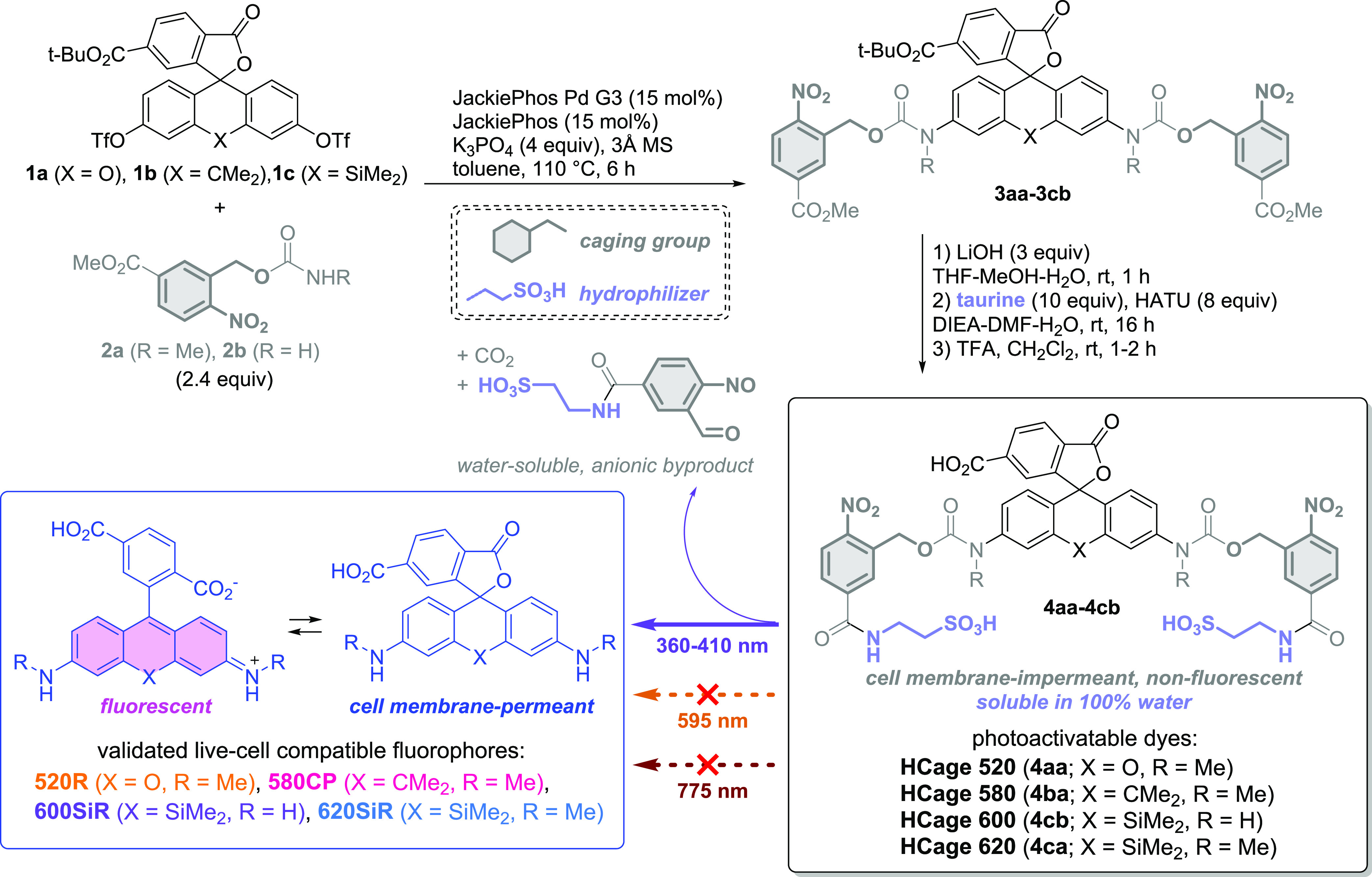
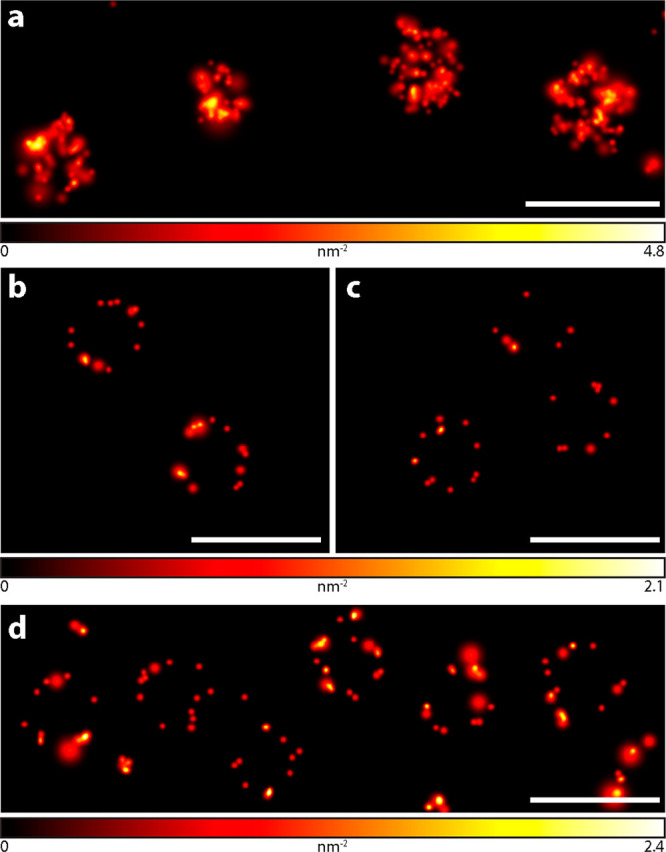
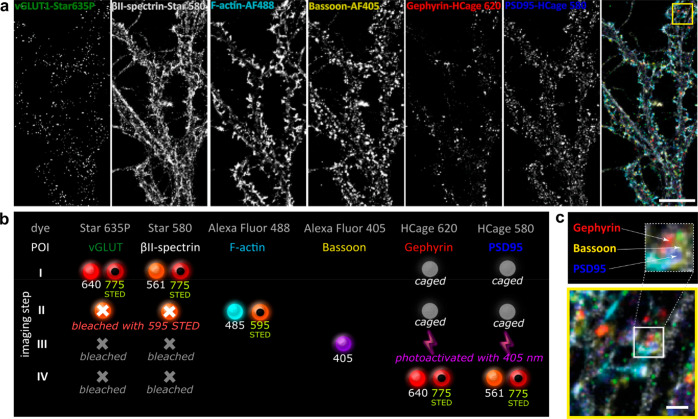
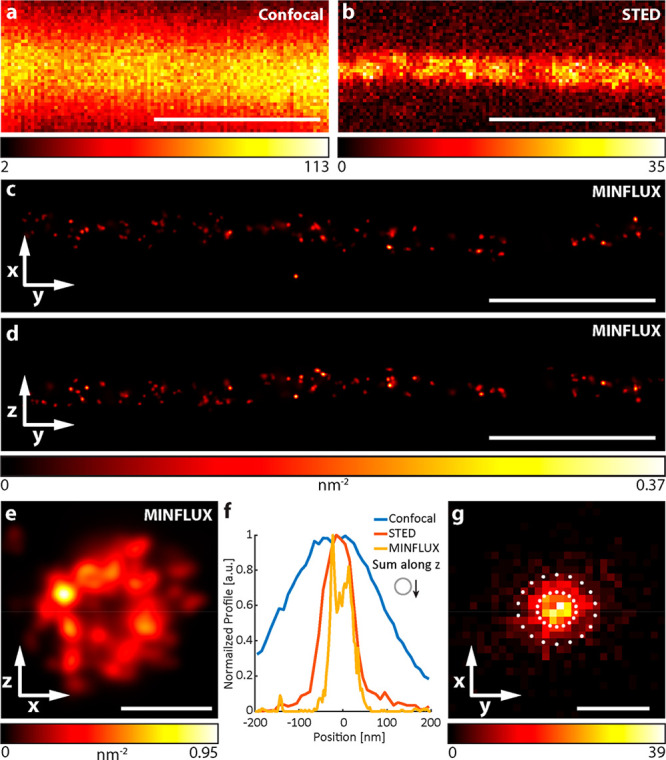
We propose a series of fluorescent dyes with hydrophilic carbamate caging groups that undergo rapid photoactivation under UV (≤400 nm) irradiation but do not undergo spurious two-photon activation with high-intensity (visible or infrared) light of about twice the wavelength. The caged fluorescent dyes and labels derived therefrom display high water solubility and convert upon photoactivation into validated super-resolution and live-cell-compatible fluorophores. In combination with popular fluorescent markers, multiple (up to six)-color images can be obtained with stimulated emission depletion nanoscopy. Moreover, individual fluorophores can be localized with precision <3 nm (standard deviation) using MINSTED and MINFLUX techniques.
我们提出了一系列带有亲水性氨基甲酸酯笼状基团的荧光染料,它们在 UV(≤400nm)照射下迅速光解,但不会在两倍波长的高强度(可见光或红外光)下发生虚假的双光子激活。这些被笼状的荧光染料及其衍生的标记物具有高水溶性,并在光解后转化为经过验证的超分辨率和活细胞兼容的荧光团。结合流行的荧光标记物,可以用受激发射损耗纳米显微镜获得多达六种颜色的图像。此外,使用 MINSTED 和 MINFLUX 技术,可以将单个荧光团精确定位到<3nm(标准差)。