Swiatlowska Pamela, Iskratsch Thomas
School of Engineering and Materials Science, Queen Mary University of London, London, UK.
Biophys Rev. 2021 Sep 5;13(5):611-623. doi: 10.1007/s12551-021-00837-2. eCollection 2021 Oct.
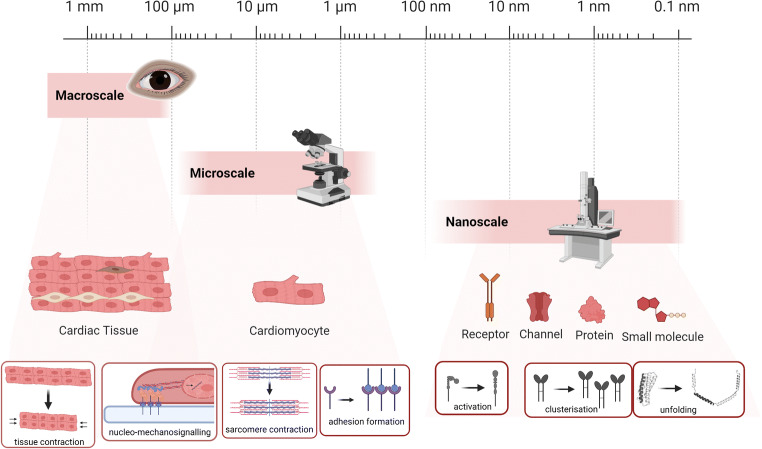
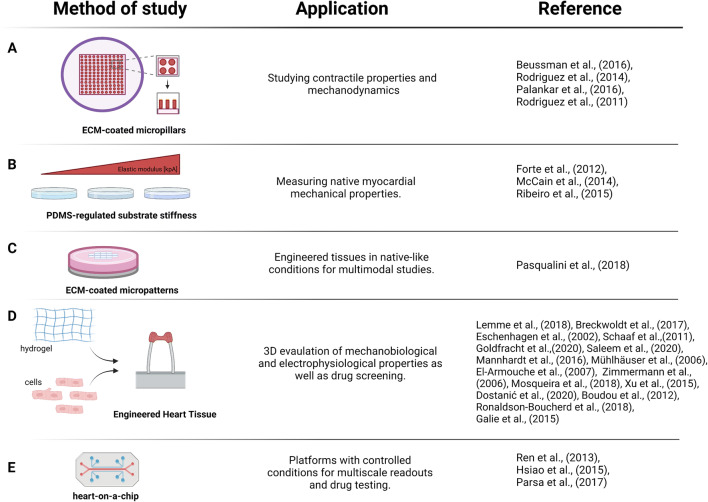
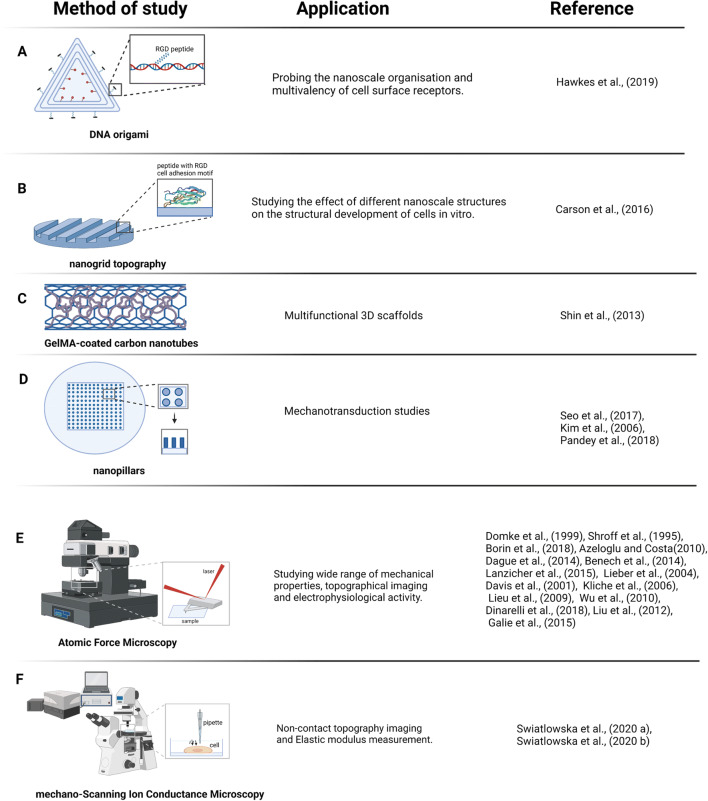
Cardiomyocytes generate force for the contraction of the heart to pump blood into the lungs and body. At the same time, they are exquisitely tuned to the mechanical environment and react to e.g. changes in cell and extracellular matrix stiffness or altered stretching due to reduced ejection fraction in heart disease, by adapting their cytoskeleton, force generation and cell mechanics. Both mechanical sensing and cell mechanical adaptations are multiscale processes. Receptor interactions with the extracellular matrix at the nanoscale will lead to clustering of receptors and modification of the cytoskeleton. This in turn alters mechanosensing, force generation, cell and nuclear stiffness and viscoelasticity at the microscale. Further, this affects cell shape, orientation, maturation and tissue integration at the microscale to macroscale. A variety of tools have been developed and adapted to measure cardiomyocyte receptor-ligand interactions and forces or mechanics at the different ranges, resulting in a wealth of new information about cardiomyocyte mechanobiology. Here, we take stock at the different tools for exploring cardiomyocyte mechanosensing and cell mechanics at the different scales from the nanoscale to microscale and macroscale.
心肌细胞产生力量,使心脏收缩,从而将血液泵入肺部和全身。与此同时,它们能精确地适应机械环境,并通过调整细胞骨架、力量产生和细胞力学,对例如细胞和细胞外基质硬度的变化,或由于心脏病中射血分数降低导致的拉伸改变做出反应。机械传感和细胞机械适应都是多尺度过程。纳米尺度上受体与细胞外基质的相互作用会导致受体聚集和细胞骨架的修饰。这反过来又会在微观尺度上改变机械传感、力量产生、细胞和细胞核的硬度以及粘弹性。此外,这会在微观尺度到宏观尺度上影响细胞形状、取向、成熟和组织整合。人们已经开发并改进了各种工具,用于测量心肌细胞受体 - 配体相互作用以及不同范围内的力或力学,从而产生了大量关于心肌细胞力学生物学的新信息。在这里,我们对从纳米尺度到微观尺度再到宏观尺度探索心肌细胞机械传感和细胞力学的不同工具进行总结。