Cardiology Department, Faculty of Medicine, Ovidius University of Constanţa, 900527 Constanţa, Romania.
Diabetes, Nutrition, and Metabolic Diseases Department, Faculty of Medicine, Carol Davila University, 050474 Bucharest, Romania.
Int J Mol Sci. 2021 Nov 3;22(21):11920. doi: 10.3390/ijms222111920.
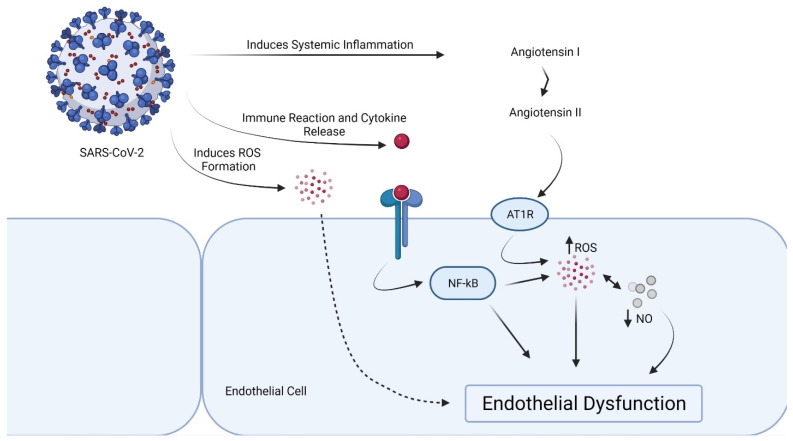
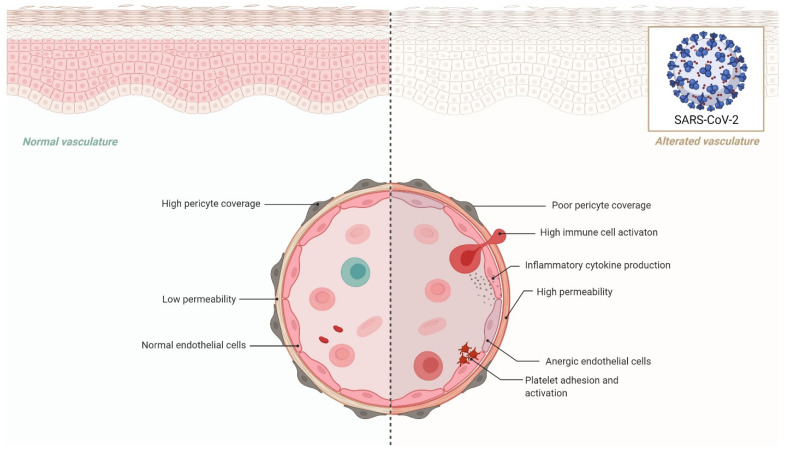
The 2019 novel coronavirus, known as severe acute respiratory syndrome-coronavirus 2 (SARS-CoV-2) or coronavirus disease 2019 (COVID-19), is causing a global pandemic. The virus primarily affects the upper and lower respiratory tracts and raises the risk of a variety of non-pulmonary consequences, the most severe and possibly fatal of which are cardiovascular problems. Data show that almost one-third of the patients with a moderate or severe form of COVID-19 had preexisting cardiovascular comorbidities such as diabetes mellitus, obesity, hypertension, heart failure, or coronary artery disease. SARS-CoV2 causes hyper inflammation, hypoxia, apoptosis, and a renin-angiotensin system imbalance in a variety of cell types, primarily endothelial cells. Profound endothelial dysfunction associated with COVID-19 can be the cause of impaired organ perfusion that may generate acute myocardial injury, renal failure, and a procoagulant state resulting in thromboembolic events. We discuss the most recent results on the involvement of endothelial dysfunction in the pathogenesis of COVID-19 in patients with cardiometabolic diseases in this review. We also provide insights on treatments that may reduce the severity of this viral infection.
2019 年新型冠状病毒,又称严重急性呼吸综合征冠状病毒 2(SARS-CoV-2)或 2019 年冠状病毒病(COVID-19),正在引发全球大流行。该病毒主要影响上呼吸道和下呼吸道,并增加了多种非肺部后果的风险,其中最严重且可能致命的是心血管问题。数据表明,几乎三分之一患有中度或重度 COVID-19 的患者存在先前存在的心血管合并症,如糖尿病、肥胖症、高血压、心力衰竭或冠状动脉疾病。SARS-CoV2 在多种细胞类型中引起过度炎症、缺氧、细胞凋亡和肾素-血管紧张素系统失衡,主要是内皮细胞。与 COVID-19 相关的严重内皮功能障碍可能是导致器官灌注受损的原因,从而导致急性心肌损伤、肾衰竭和促凝状态导致血栓栓塞事件。在本综述中,我们讨论了内皮功能障碍在患有代谢性心血管疾病的 COVID-19 患者发病机制中的最新研究结果。我们还提供了可能降低这种病毒感染严重程度的治疗方法的见解。