Fryburg David A
Envision Kindness, East Lyme, CT, USA.
J Patient Exp. 2021 Nov 29;8:23743735211049880. doi: 10.1177/23743735211049880. eCollection 2021.
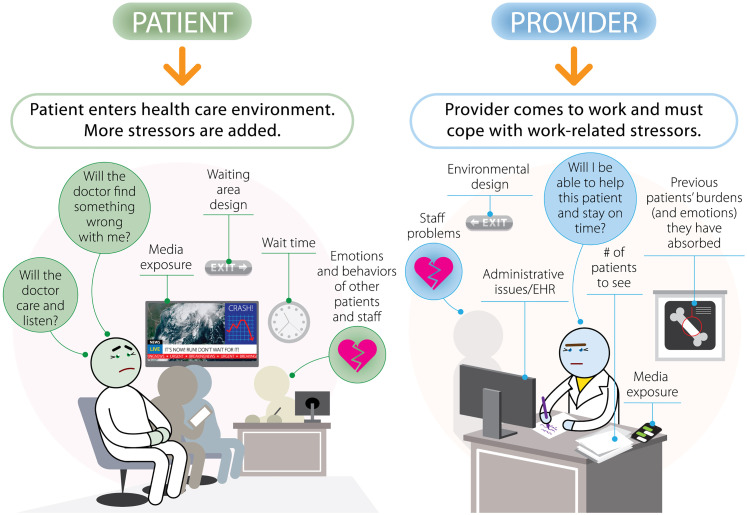
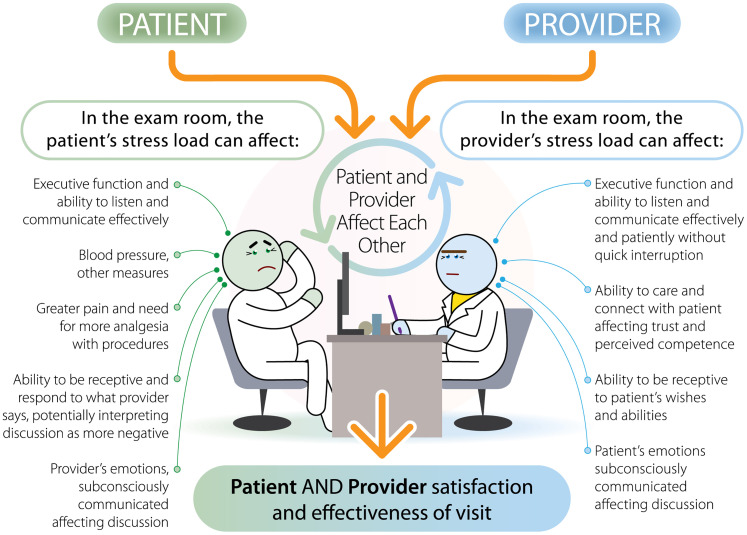
Patients enter the healthcare space shouldering a lot of personal stress. Concurrently, health care providers and staff are managing their own personalstressors as well as workplace stressors. As stress can negatively affect the patient-provider experience and cognitive function of both individuals, it is imperative to try to uplift the health care environment for all. Part of the healthcare environmental psychology strategy to reduce stress often includes televisions in waiting rooms, cafeterias, and elsewhere, with the intent to distract the viewer and make waiting easier. Although well-intentioned, many select programming which can induce stress (eg, news). In contrast, as positive media can induce desirable changes in mood, it is possible to use it to decrease stress and uplift viewers, including staff. Positive media includes both nature media, which can relax and calm viewers and kindness media, which uplifts viewers, induces calm, and promotes interpersonal connection and generosity. Careful consideration of waiting room media can affect the patient-provider experience.
进入医疗保健领域的患者承受着诸多个人压力。与此同时,医疗保健提供者和工作人员也在应对自身的个人压力源以及工作场所的压力源。由于压力会对患者与提供者之间的体验以及双方的认知功能产生负面影响,因此努力改善所有人的医疗保健环境势在必行。医疗保健环境心理学中减轻压力的策略部分通常包括在候诊室、食堂和其他地方设置电视,目的是分散观看者的注意力,让等待变得更容易。尽管出发点是好的,但许多人选择的节目可能会引发压力(如新闻)。相比之下,由于积极的媒体可以引发情绪上的理想变化,因此有可能利用它来减轻压力并提升观看者的情绪,包括工作人员。积极的媒体包括自然媒体,它可以让观看者放松和平静;还有善意媒体,它能提升观看者的情绪、带来平静,并促进人际关系和慷慨行为。仔细考虑候诊室的媒体内容会影响患者与提供者之间的体验。