Department of Medical Oncology, Hamad Medical Corporation, Doha, Qatar
Department of BioMedical Research, University of Bern, Bern, Switzerland.
J Immunother Cancer. 2022 Jan;10(1). doi: 10.1136/jitc-2021-002927.
Harnessing the immune system to purposely recognize and destroy tumors represents a significant breakthrough in clinical oncology. Non-synonymous mutations (neoantigenic peptides) were identified as powerful cancer targets. This knowledge can be exploited for further improvements of active immunotherapies, including cancer vaccines, as T cells specific for neoantigens are not attenuated by immune tolerance mechanism and do not harm healthy tissues. The current study aimed at developing an optimized multitarget vaccine using short or long neoantigenic peptides utilizing virus-like particles (VLPs) as an efficient vaccine platform.
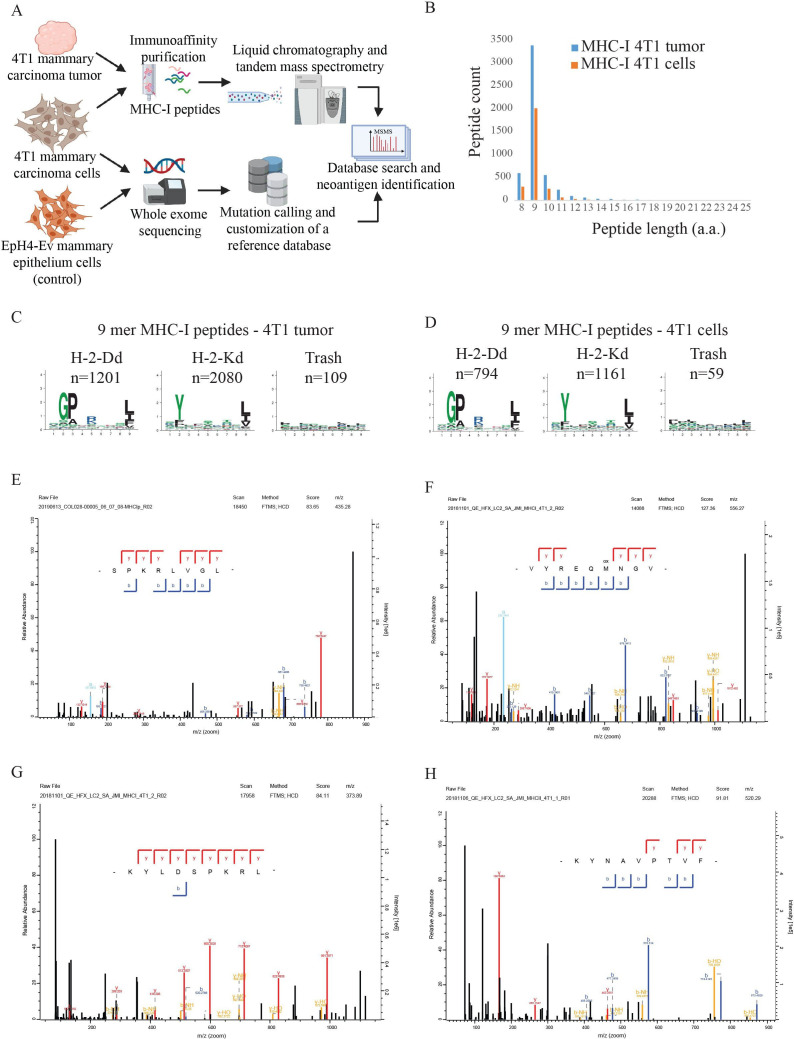
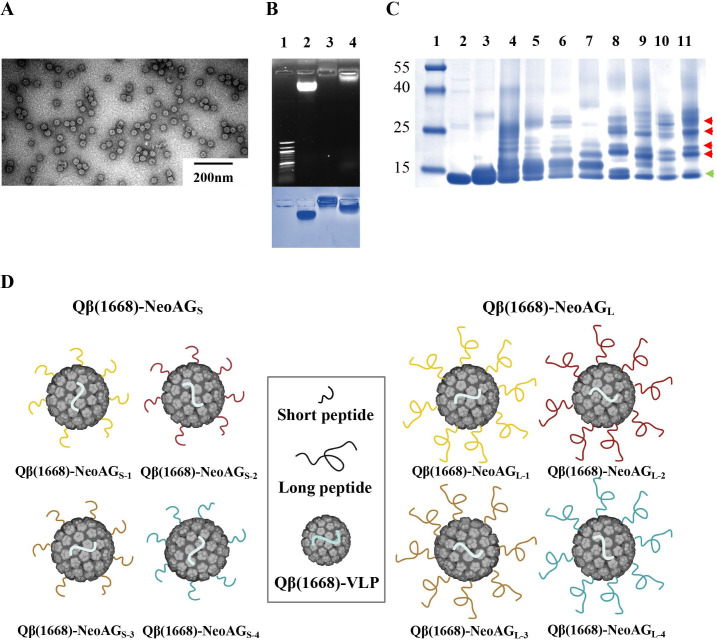
Mutations of murine mammary carcinoma cells were identified by integrating mass spectrometry-based immunopeptidomics and whole exome sequencing. Neoantigenic peptides were synthesized and covalently linked to virus-like nanoparticles using a Cu-free click chemistry method for easy preparation of vaccines against mouse mammary carcinoma.
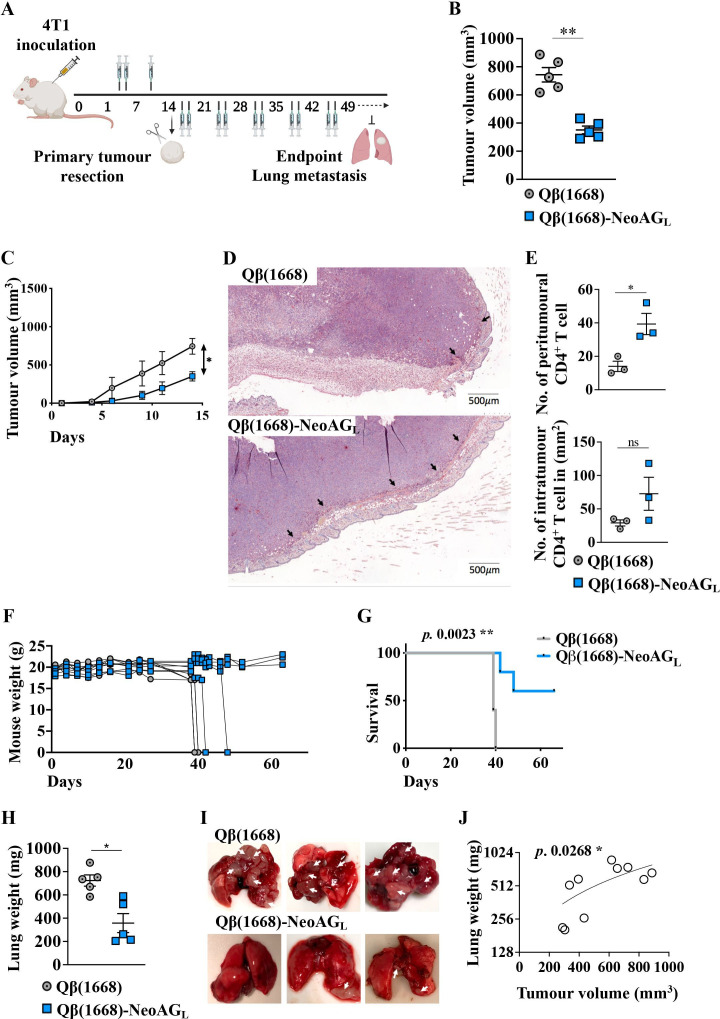
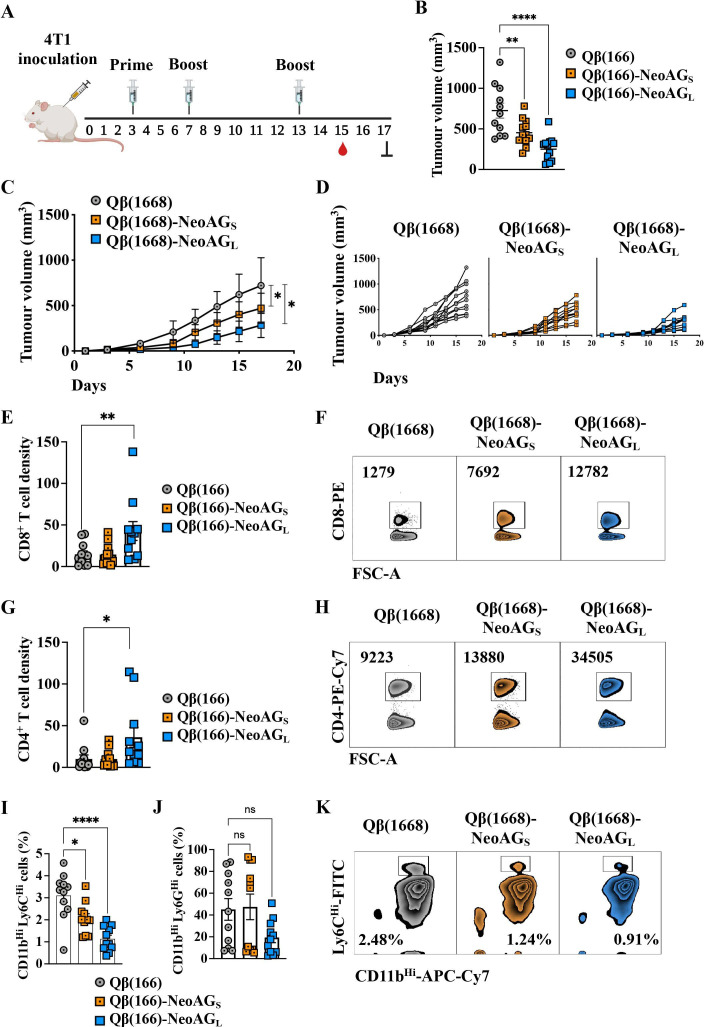
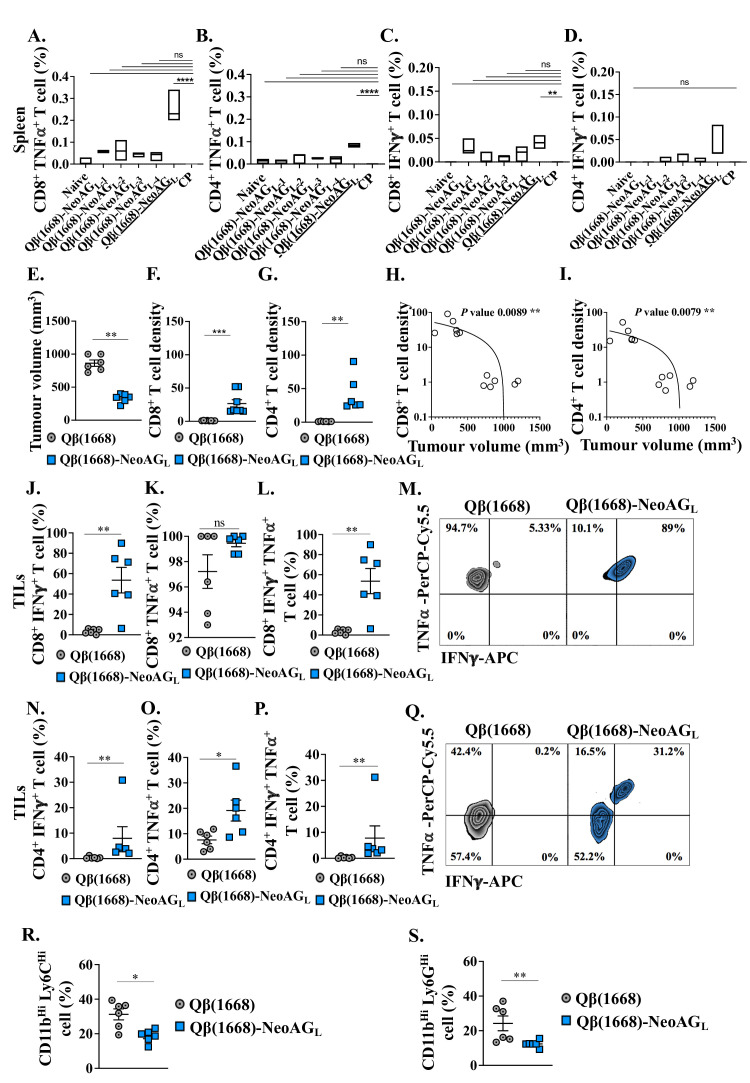
As compared with short peptides, vaccination with long peptides was superior in the generation of neoantigen-specific CD4 and CD8 T cells, which readily produced interferon gamma (IFN-γ) and tumor-necrosis factor α (TNF-α). The resulting anti-tumor effect was associated with favorable immune re-polarization in the tumor microenvironment through reduction of myeloid-derived suppressor cells. Vaccination with long neoantigenic peptides also decreased post-surgical tumor recurrence and metastases, and prolonged mouse survival, despite the tumor's low mutational burden.
Integrating mass spectrometry-based immunopeptidomics and whole exome sequencing is an efficient approach for identifying neoantigenic peptides. Our multitarget VLP-based vaccine shows a promising anti-tumor effect in an aggressive murine mammary carcinoma model. Future clinical application using this strategy is readily feasible and practical, as click chemistry coupling of personalized synthetic peptides to the nanoparticles can be done at the bedside directly before injection.
利用免疫系统有目的地识别和破坏肿瘤是临床肿瘤学的重大突破。非同义突变(新抗原肽)被鉴定为强大的癌症靶点。这一知识可用于进一步改进主动免疫疗法,包括癌症疫苗,因为针对新抗原的 T 细胞不受免疫耐受机制的削弱,并且不会伤害健康组织。本研究旨在利用病毒样颗粒(VLPs)作为有效的疫苗平台,开发使用短肽或长肽的优化多靶点疫苗。
通过整合基于质谱的免疫肽组学和全外显子测序,鉴定鼠乳腺癌细胞的突变。使用无铜点击化学方法将新抗原肽合成并共价连接到病毒样纳米颗粒上,以方便制备针对鼠乳腺癌的疫苗。
与短肽相比,长肽疫苗在产生新抗原特异性 CD4 和 CD8 T 细胞方面更具优势,这些细胞容易产生干扰素γ(IFN-γ)和肿瘤坏死因子α(TNF-α)。这种抗肿瘤作用与肿瘤微环境中免疫重新极化有关,通过减少髓样来源的抑制细胞。长新抗原肽疫苗接种还降低了手术后肿瘤复发和转移的风险,延长了小鼠的存活时间,尽管肿瘤的突变负担较低。
整合基于质谱的免疫肽组学和全外显子测序是鉴定新抗原肽的有效方法。我们的多靶点 VLP 疫苗在侵袭性鼠乳腺癌模型中显示出有希望的抗肿瘤效果。未来使用这种策略的临床应用是可行的和实用的,因为可以在床边直接在注射前将个性化合成肽通过点击化学偶联到纳米颗粒上。