Appel Lora, Ali Suad, Narag Tanya, Mozeson Krystyna, Pasat Zain, Orchanian-Cheff Ani, Campos Jennifer L
School of Health Policy and Management, Faculty of Health, York University, Toronto, ON, Canada.
University Health Network, Toronto, ON, Canada.
J Rehabil Assist Technol Eng. 2021 Dec 21;8:20556683211053952. doi: 10.1177/20556683211053952. eCollection 2021 Jan-Dec.
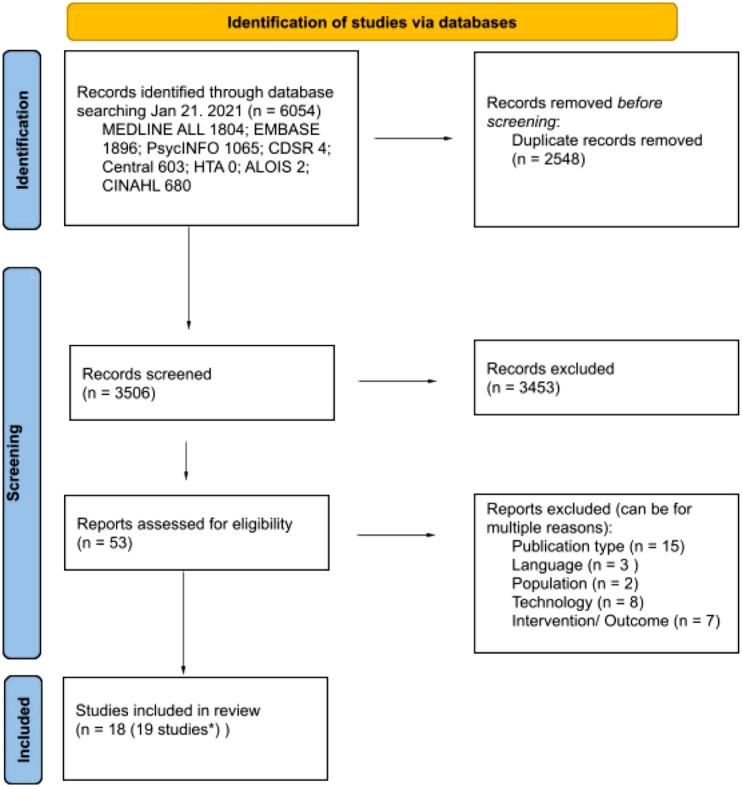
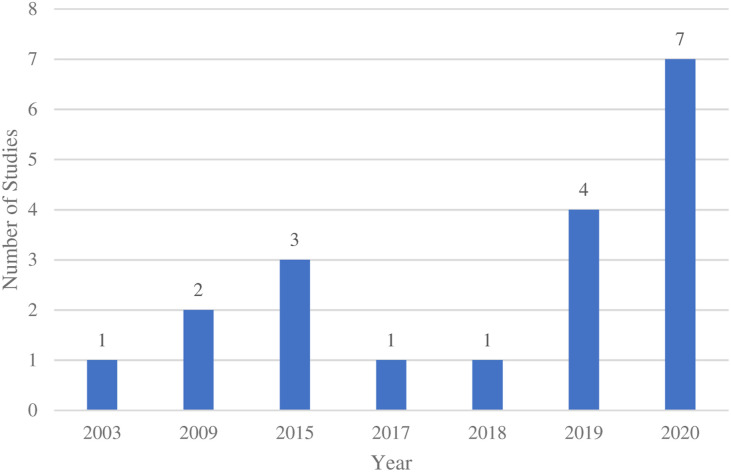
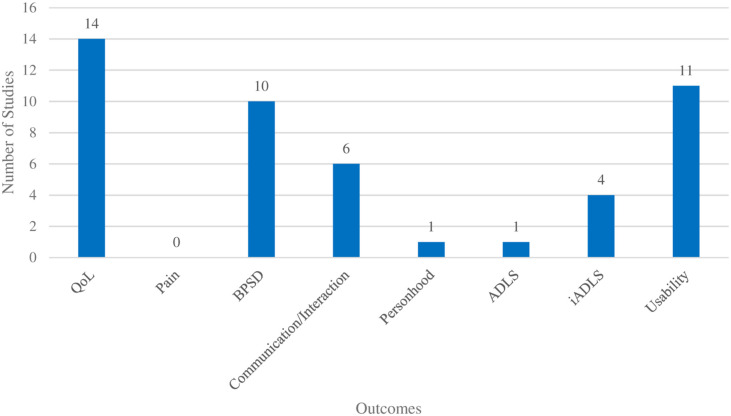
Virtual Reality (VR) technologies have increasingly been considered potentially valuable tools in dementia-related research and could serve as non-pharmacological therapy to improve quality of life (QoL) and wellbeing for persons with dementia (PwD). In this scoping review, we summarize peer-reviewed articles published up to Jan-21, 2021, on the use of VR to promote wellbeing in PwD. Eighteen manuscripts (reporting on 19 studies) met the inclusion criteria, with a majority published in the past 2 years. Two reviewers independently coded the articles regarding A) intended clinical outcomes and effectiveness of the interventions, B) study sample (characteristics of the participants), C) intervention administration (by whom, what setting), D) experimental methods (design/instruments), and E) technical properties of the VR-systems (hardware/devices and software/content). Emotional outcomes were by far the most common objectives of the interventions, reported in seventeen (89.5%) of the included articles. Outcomes addressing social engagement and personhood in PwD have not been thoroughly explored using VR. Based on the positive impact of VR, future opportunities lie in identifying special features and customization of the hardware/software to afford the most benefit to different sub-groups of the target population. Overall, this review found that VR represents a promising tool for promoting wellbeing in PwD, with positive or neutral impact reported on emotional, social, and functional aspects of wellbeing.
虚拟现实(VR)技术越来越被视为痴呆症相关研究中具有潜在价值的工具,并可作为非药物疗法来提高痴呆症患者(PwD)的生活质量(QoL)和幸福感。在本范围综述中,我们总结了截至2021年1月21日发表的关于使用VR促进痴呆症患者幸福感的同行评审文章。18篇手稿(报告了19项研究)符合纳入标准,其中大多数是在过去两年发表的。两位评审员独立对文章进行编码,内容涉及:A)干预措施的预期临床结果和有效性;B)研究样本(参与者特征);C)干预措施的实施(实施者、实施环境);D)实验方法(设计/工具);E)VR系统的技术特性(硬件/设备和软件/内容)。情感结果是迄今为止干预措施最常见的目标,在所纳入的17篇(89.5%)文章中有所报告。尚未使用VR对痴呆症患者的社会参与和人格方面的结果进行深入探讨。基于VR的积极影响,未来的机会在于确定硬件/软件的特殊功能并进行定制,以便为目标人群的不同亚组带来最大益处。总体而言,本综述发现VR是促进痴呆症患者幸福感的一种有前景的工具,在幸福感的情感、社会和功能方面报告了积极或中性的影响。