Nunez do Rio Joan M, Nderitu Paul, Bergeles Christos, Sivaprasad Sobha, Tan Gavin S W, Raman Rajiv
Institute of Ophthalmology, University College London, London EC1V 9EL, UK.
Section of Ophthalmology, King's College London, London WC2R 2LS, UK.
J Clin Med. 2022 Jan 26;11(3):614. doi: 10.3390/jcm11030614.
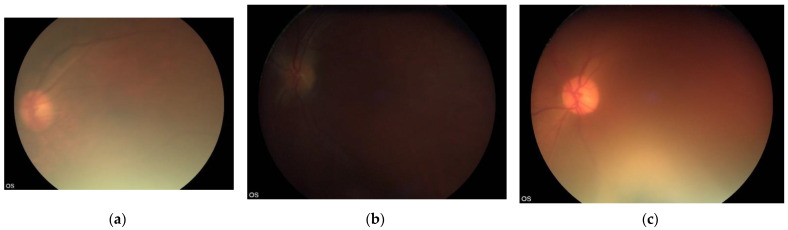
Artificial Intelligence has showcased clear capabilities to automatically grade diabetic retinopathy (DR) on mydriatic retinal images captured by clinical experts on fixed table-top retinal cameras within hospital settings. However, in many low- and middle-income countries, screening for DR revolves around minimally trained field workers using handheld non-mydriatic cameras in community settings. This prospective study evaluated the diagnostic accuracy of a deep learning algorithm developed using mydriatic retinal images by the Singapore Eye Research Institute, commercially available as Zeiss VISUHEALTH-AI DR, on images captured by field workers on a Zeiss Visuscout 100 non-mydriatic handheld camera from people with diabetes in a house-to-house cross-sectional study across 20 regions in India. A total of 20,489 patient eyes from 11,199 patients were used to evaluate algorithm performance in identifying referable DR, non-referable DR, and gradability. For each category, the algorithm achieved precision values of 29.60 (95% CI 27.40, 31.88), 92.56 (92.13, 92.97), and 58.58 (56.97, 60.19), recall values of 62.69 (59.17, 66.12), 85.65 (85.11, 86.18), and 65.06 (63.40, 66.69), and F-score values of 40.22 (38.25, 42.21), 88.97 (88.62, 89.31), and 61.65 (60.50, 62.80), respectively. Model performance reached 91.22 (90.79, 91.64) sensitivity and 65.06 (63.40, 66.69) specificity at detecting gradability and 72.08 (70.68, 73.46) sensitivity and 85.65 (85.11, 86.18) specificity for the detection of all referable eyes. Algorithm accuracy is dependent on the quality of acquired retinal images, and this is a major limiting step for its global implementation in community non-mydriatic DR screening using handheld cameras. This study highlights the need to develop and train deep learning-based screening tools in such conditions before implementation.
人工智能已展现出明确的能力,能够在医院环境中,对临床专家使用固定台式视网膜相机拍摄的散瞳视网膜图像自动进行糖尿病视网膜病变(DR)分级。然而,在许多低收入和中等收入国家,DR筛查主要依靠在社区环境中使用手持非散瞳相机、接受过最低限度培训的现场工作人员。这项前瞻性研究评估了新加坡眼科研究所利用散瞳视网膜图像开发的一种深度学习算法(商业名称为蔡司VISUHEALTH-AI DR)在印度20个地区逐户横断面研究中,对现场工作人员使用蔡司Visuscout 100非散瞳手持相机为糖尿病患者拍摄的图像的诊断准确性。总共11199名患者的20489只患眼用于评估该算法在识别可转诊DR、不可转诊DR和可分级性方面的性能。对于每个类别,该算法的精确率分别为29.60(95%CI 27.40,31.88)、92.56(92.13,92.97)和58.58(56.97,60.19),召回率分别为62.69(59.17,66.12)、85.65(85.11,86.18)和65.06(63.40,66.69),F1分数分别为40.22(38.25,42.21)、88.97(88.62,89.31)和61.65(60.50,62.80)。在检测可分级性方面,模型性能的灵敏度达到91.22(90.79,91.64),特异性为65.06(63.40,66.69);在检测所有可转诊眼方面,灵敏度为72.08(70.68,73.46),特异性为85.65(85.11,86.18)。算法准确性取决于所获取视网膜图像的质量,这是其在使用手持相机进行社区非散瞳DR筛查中全球推广的一个主要限制步骤。本研究强调在实施之前,需要在这种条件下开发和训练基于深度学习的筛查工具。