Agrawal Shelesh, Orschler Laura, Schubert Selina, Zachmann Kira, Heijnen Leo, Tavazzi Simona, Gawlik Bernd Manfred, de Graaf Miranda, Medema Gertjan, Lackner Susanne
Department of Civil and Environmental Engineering Sciences, Institute IWAR, Chair of Water and Environmental Biotechnology, Technical University of Darmstadt, Darmstadt, Germany.
Department of Civil and Environmental Engineering Sciences, Institute IWAR, Chair of Water and Environmental Biotechnology, Technical University of Darmstadt, Darmstadt, Germany.
Water Res. 2022 May 1;214:118162. doi: 10.1016/j.watres.2022.118162. Epub 2022 Feb 5.
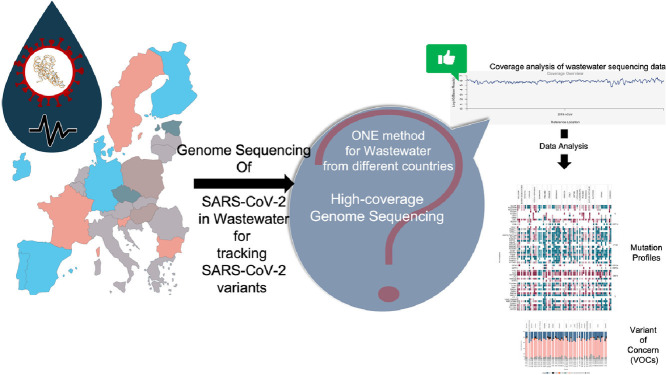
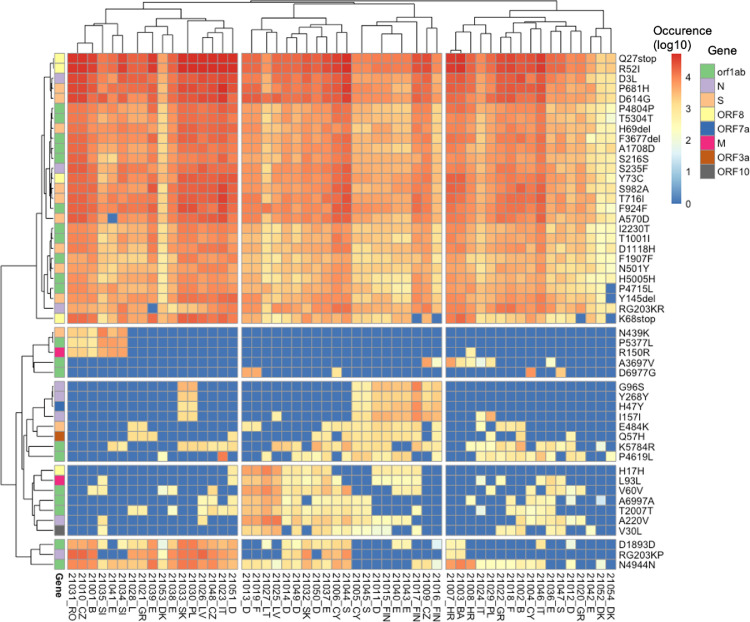
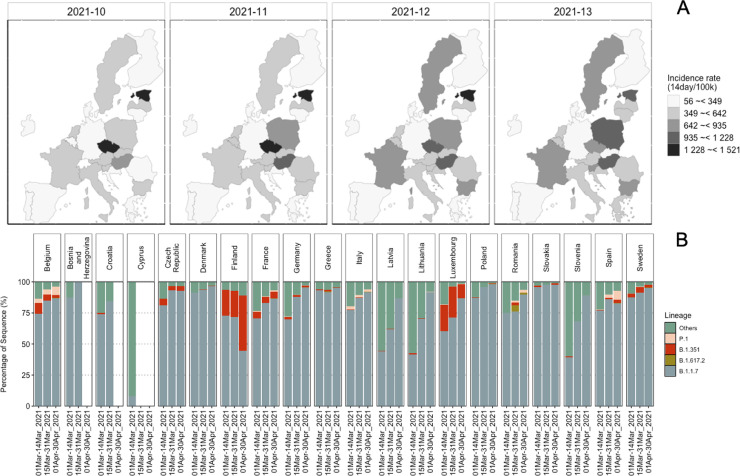
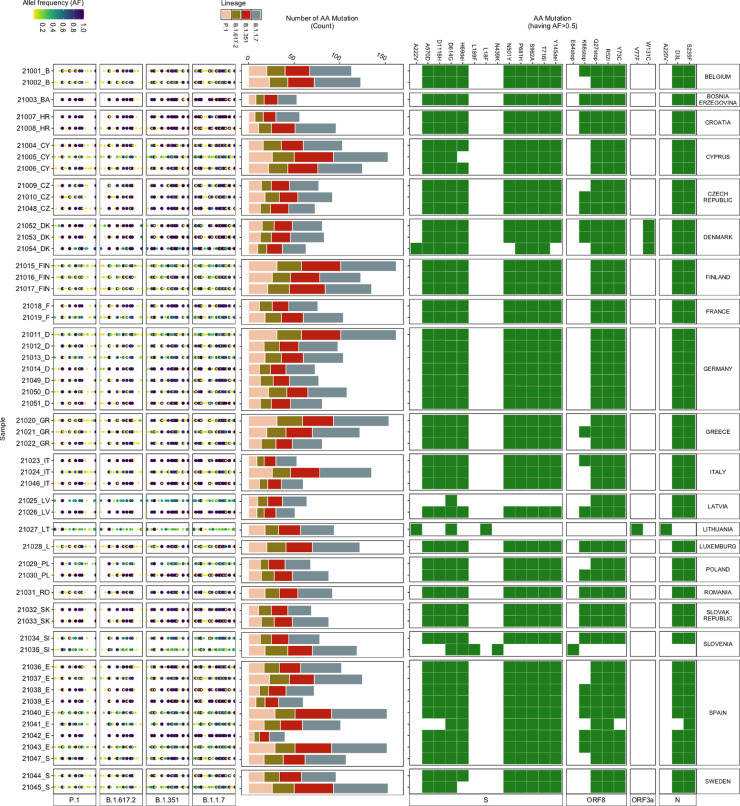
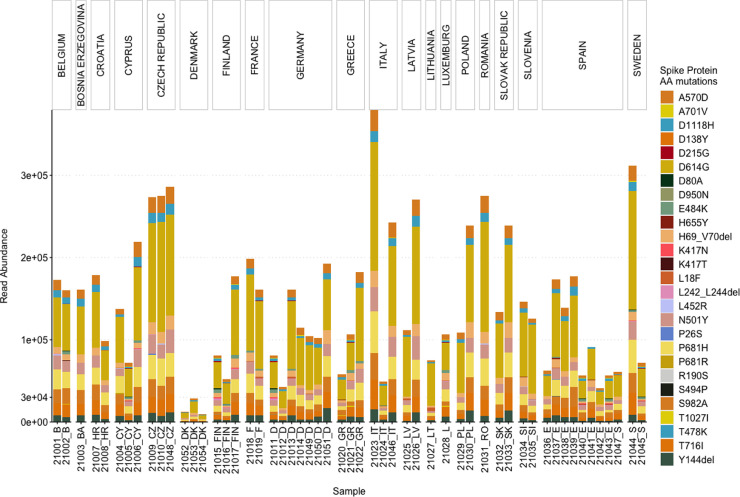
For community-level monitoring, the European Commission under the EU Sewage Sentinel System recommends wastewater-based SARS-CoV-2 surveillance. Tracking SARS-CoV-2 variants in a community is pivotal for appropriate public health response. Genome sequencing of SARS-CoV-2 in wastewater samples for tracking variants is challenging, often resulting in low coverage genome sequences, thereby impeding the detection of the SARS-CoV-2 mutations. Therefore, we aimed at high-coverage SARS-CoV-2 genome sequences from sewage samples which we successfully accomplished. This first pan-European surveillance compared the mutation profiles associated with the variants of concerns: B.1.1.7, P.1, B.1.351 and B.1.617.2 across 20 European countries, including 54 municipalities. The results highlight that SARS-CoV-2 variants detected in the wastewater samples mirror the variants profiles reported in clinical data. This study demonstrated that >98% coverage of SARS-CoV-2 genomic sequences is possible and can be used to track SARS-CoV-2 mutations in wastewater to support identifying variants circulating in a city at the community level.
对于社区层面的监测,欧盟污水监测系统下的欧盟委员会建议开展基于废水的新冠病毒监测。在社区中追踪新冠病毒变异株对于采取适当的公共卫生应对措施至关重要。对废水样本中的新冠病毒进行基因组测序以追踪变异株具有挑战性,常常导致基因组序列覆盖度低,从而妨碍对新冠病毒突变的检测。因此,我们旨在从污水样本中获取高覆盖度的新冠病毒基因组序列,并成功实现了这一目标。这项首次泛欧监测比较了与关注变异株(B.1.1.7、P.1、B.1.351和B.1.617.2)相关的突变谱,涉及20个欧洲国家的54个城市。结果表明,在废水样本中检测到的新冠病毒变异株反映了临床数据中报告的变异株情况。这项研究表明,新冠病毒基因组序列的覆盖度可以达到98%以上,可用于追踪废水中的新冠病毒突变,以支持在社区层面识别城市中传播的变异株。