Chutipongtanate Somchai, Morrow Ardythe L, Newburg David S
Pediatric Translational Research Unit, Department of Pediatrics, Faculty of Medicine Ramathibodi Hospital, Mahidol University, Bangkok 10400, Thailand.
Department of Clinical Epidemiology and Biostatistics, Faculty of Medicine Ramathibodi Hospital, Mahidol University, Bangkok 10400, Thailand.
Biomedicines. 2022 Feb 1;10(2):346. doi: 10.3390/biomedicines10020346.
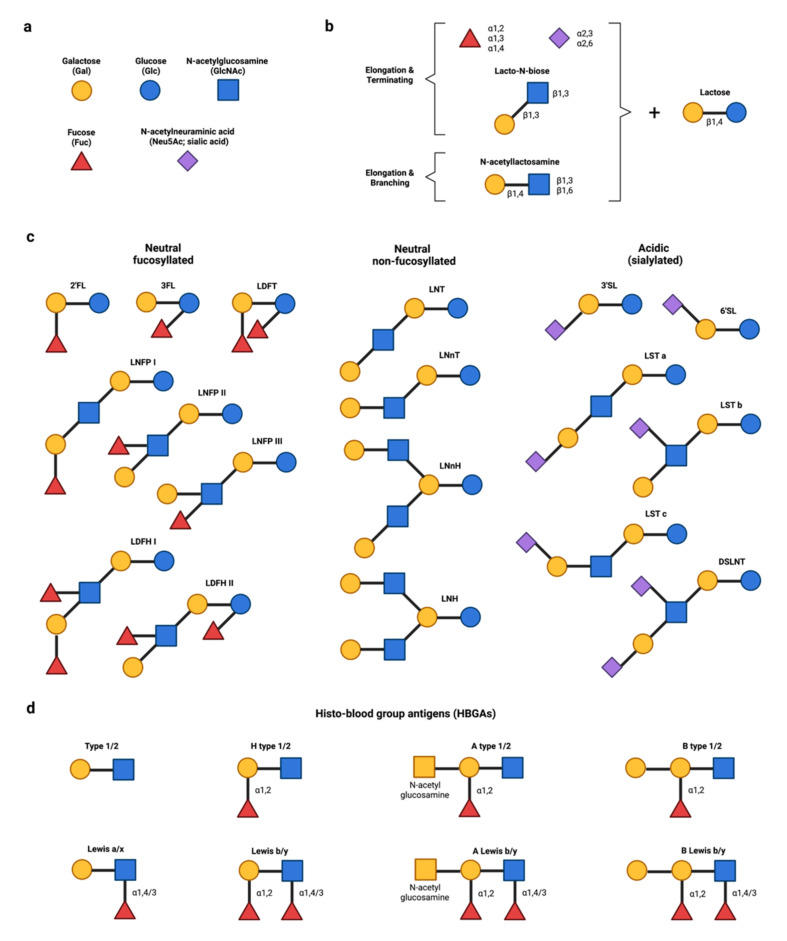
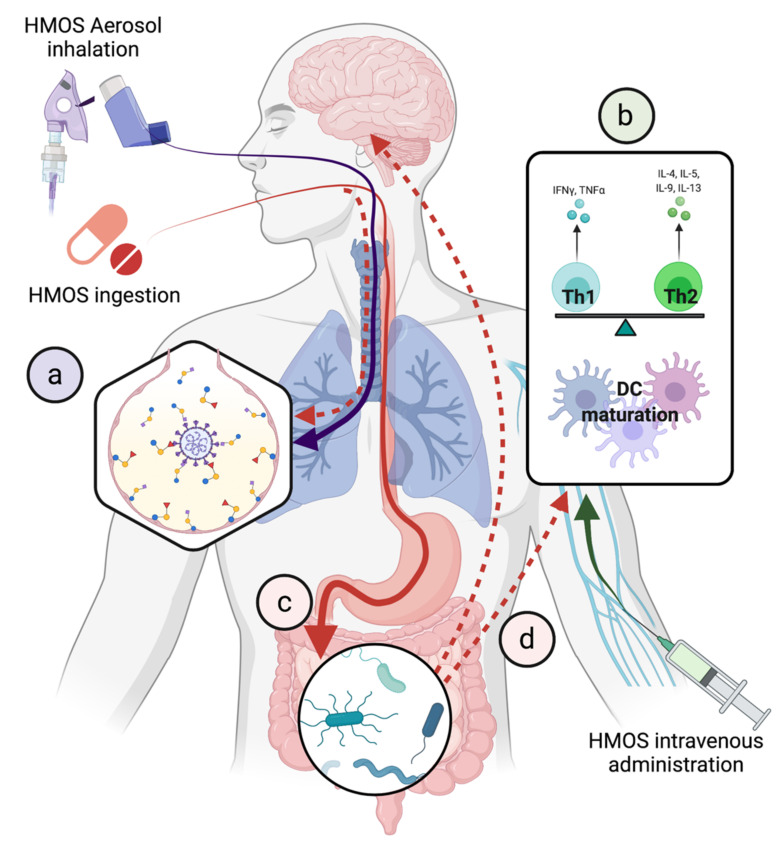
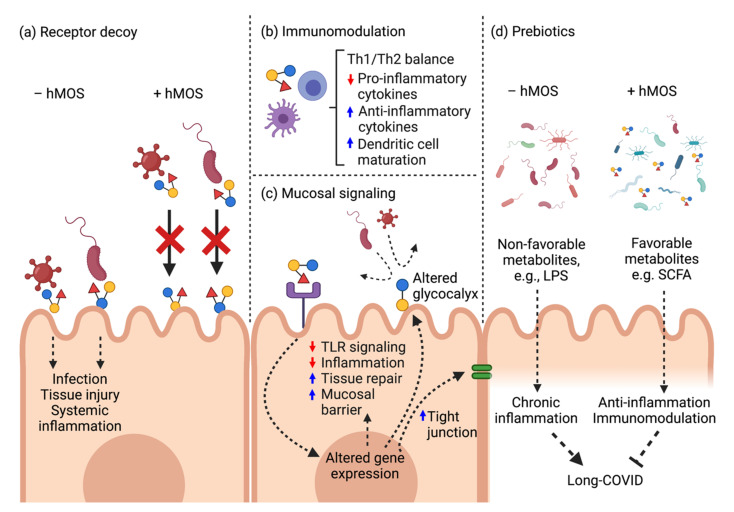
Coronavirus disease 2019 (COVID-19) pandemic caused by severe acute respiratory syndrome-coronavirus-2 (SARS-CoV-2) has become a global health crisis with more than four million deaths worldwide. A substantial number of COVID-19 survivors continue suffering from long-COVID syndrome, a long-term complication exhibiting chronic inflammation and gut dysbiosis. Much effort is being expended to improve therapeutic outcomes. Human milk oligosaccharides (hMOS) are non-digestible carbohydrates known to exert health benefits in breastfed infants by preventing infection, maintaining immune homeostasis and nurturing healthy gut microbiota. These beneficial effects suggest the hypothesis that hMOS might have applications in COVID-19 as receptor decoys, immunomodulators, mucosal signaling agents, and prebiotics. This review summarizes hMOS biogenesis and classification, describes the possible mechanisms of action of hMOS upon different phases of SARS-CoV-2 infection, and discusses the challenges and opportunities of hMOS research for clinical applications in COVID-19.
由严重急性呼吸综合征冠状病毒2(SARS-CoV-2)引起的2019冠状病毒病(COVID-19)大流行已成为一场全球健康危机,全球死亡人数超过400万。相当数量的COVID-19幸存者继续遭受长期COVID综合征的折磨,这是一种表现为慢性炎症和肠道生态失调的长期并发症。人们正在付出巨大努力来改善治疗效果。人乳寡糖(hMOS)是一种不可消化的碳水化合物,已知可通过预防感染、维持免疫稳态和培育健康的肠道微生物群对母乳喂养的婴儿产生健康益处。这些有益作用提出了一个假设,即hMOS可能作为受体诱饵、免疫调节剂、粘膜信号传导剂和益生元应用于COVID-19。本综述总结了hMOS的生物合成和分类,描述了hMOS在SARS-CoV-2感染不同阶段可能的作用机制,并讨论了hMOS研究在COVID-19临床应用中的挑战和机遇。