Maternofetal and Embryo (MatE) Research Group, Faculty of Medicine, Universiti Teknologi MARA (UiTM), Sungai Buloh Campus, Sungai Buloh, Selangor, Malaysia.
Department of Obstetrics and Gynaecology, Faculty of Medicine, Universiti Teknologi MARA (UiTM), Sungai Buloh Campus, Sungai Buloh, Selangor, Malaysia.
BMC Pregnancy Childbirth. 2022 Feb 24;22(1):152. doi: 10.1186/s12884-022-04472-x.
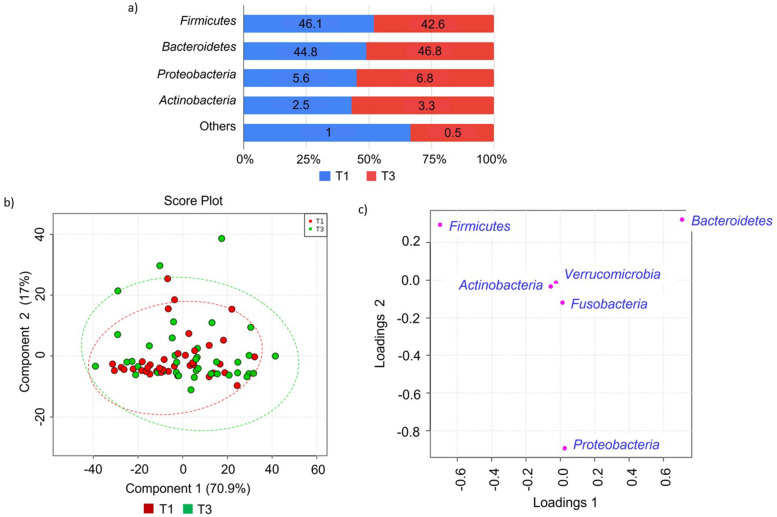
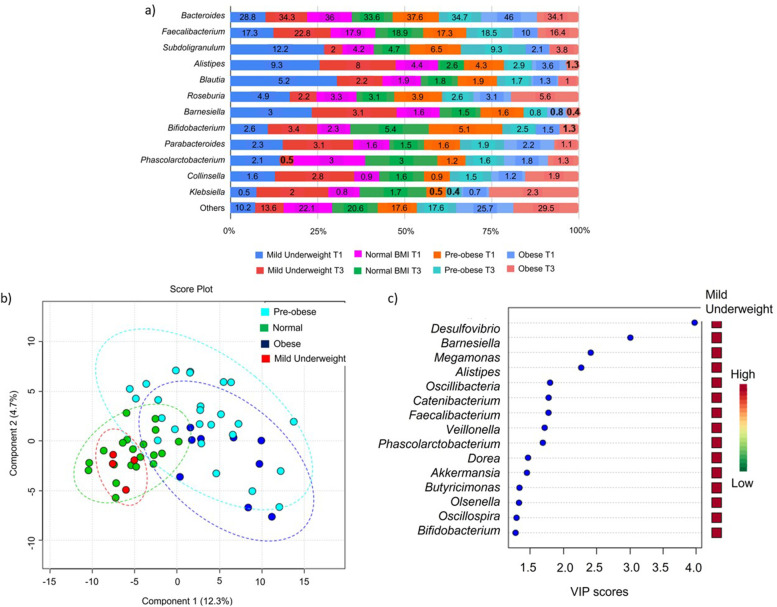
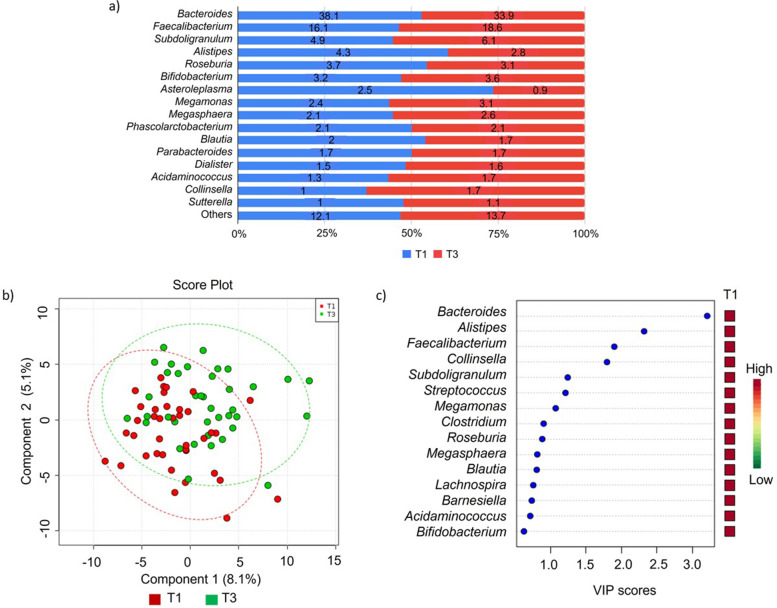
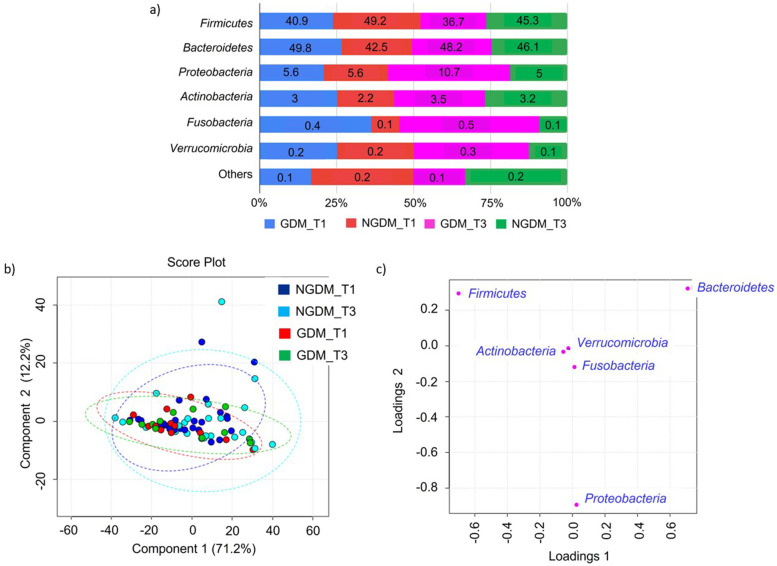
The primary purpose of the study is to determine the variation of gut microbiota composition between first (T1) and third trimester (T3); gestational diabetes mellitus (GDM) and non-gestational diabetes mellitus (NGDM); and also within a different category of Body Mass Index (BMI) of selected pregnant Malaysian women.
A prospective observational study on selected 38 pregnant Malaysian women attending a tertiary medical centre was carried out. Those with preexisting diabetes, metabolic syndrome or any other endocrine disorders were excluded. GDM was determined using oral glucose tolerance test (OGTT) while BMI was stratified as underweight, normal, pre-obese and obese. Fecal samples were then collected during the first trimester (T1) and the third trimester (T3). The V3-V4 region of 16S rRNA gene amplicon libraries were sequenced and analyzed using QIIME (version 1.9.1) and METAGENassist.
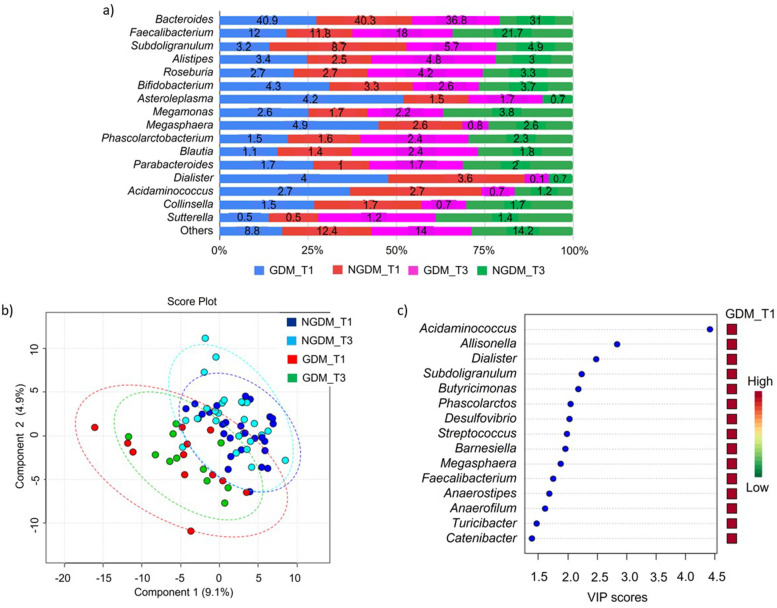
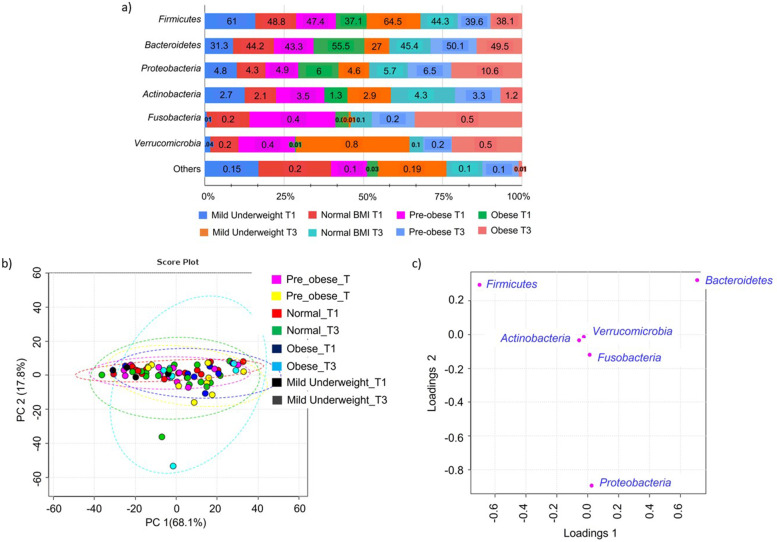
Twelve women (31.6%) were diagnosed as GDM. A trend of lower α-diversity indices in GDM, pre-obese and obese pregnant women were observed. Partial Least Squares Discriminant Analysis (PLS-DA) shows a clustering of gut microbiota according to GDM status and BMI, but not by trimester. Genera Acidaminococcus, Clostridium, Megasphaera and Allisonella were higher, and Barnesiella and Blautia were lower in GDM group (P < 0.005). Obese patients had gut microbiota that was enriched with bacteria of Negativicutes and Proteobacteria class such as Megamonas, Succinatimonas and Dialister (P < 0.005). The normal and mild underweight profiles on the other hand had a higher bacteria from the class of Clostridia (Papillibacter, Oscillibacter, Oscillospira, Blautia, Dorea) and Bacteroidia (Alistipes, Prevotella, Paraprevotella) (P < 0.005).
The prevalence and variation of several key bacteria from classes of Negativicutes, Clostridia and Proteobacteria has potential metabolic links with GDM and body weight during pregnancy which require further functional validation.
本研究的主要目的是确定肠道微生物组成在第一(T1)和第三(T3)孕期、妊娠糖尿病(GDM)和非妊娠糖尿病(NGDM)之间的变化;以及在选定的马来西亚孕妇不同体重指数(BMI)类别内的变化。
对在一家三级医疗中心就诊的 38 名选定的马来西亚孕妇进行了一项前瞻性观察研究。排除了患有先前存在的糖尿病、代谢综合征或任何其他内分泌疾病的孕妇。GDM 通过口服葡萄糖耐量试验(OGTT)确定,而 BMI 则分为体重不足、正常、超重和肥胖。然后在第一孕期(T1)和第三孕期(T3)采集粪便样本。使用 QIIME(版本 1.9.1)和 METAGENassist 对 16S rRNA 基因扩增子文库的 V3-V4 区进行测序和分析。
12 名女性(31.6%)被诊断为 GDM。在 GDM、超重和肥胖孕妇中,α多样性指数呈下降趋势。偏最小二乘判别分析(PLS-DA)显示,肠道微生物群根据 GDM 状态和 BMI 聚类,但不以孕期聚类。属 Acidaminococcus、Clostridium、Megasphaera 和 Allisonella 在 GDM 组中较高,Barnesiella 和 Blautia 较低(P<0.005)。肥胖患者的肠道微生物群富含 Negativicutes 和 Proteobacteria 类的细菌,如 Megamonas、Succinatimonas 和 Dialister(P<0.005)。另一方面,正常和轻度体重不足的患者具有更高的 Clostridia 类细菌(Papillibacter、Oscillibacter、Oscillospira、Blautia、Dorea)和 Bacteroidia 类细菌(Alistipes、Prevotella、Paraprevotella)(P<0.005)。
几种关键细菌从 Negativicutes、Clostridia 和 Proteobacteria 类的患病率和变化与 GDM 和孕期体重有潜在的代谢联系,这需要进一步的功能验证。