Athinoula A. Martinos Center for Biomedical Imaging, Massachusetts General Hospital, 149 13th Street, Charlestown, MA 02129, United States; Department of Radiology, Harvard Medical School, Boston, MA, United States.
Department of Biomedical Engineering, Tsinghua University, Beijing, PR China.
Neuroimage. 2022 Jun;253:119033. doi: 10.1016/j.neuroimage.2022.119033. Epub 2022 Mar 1.
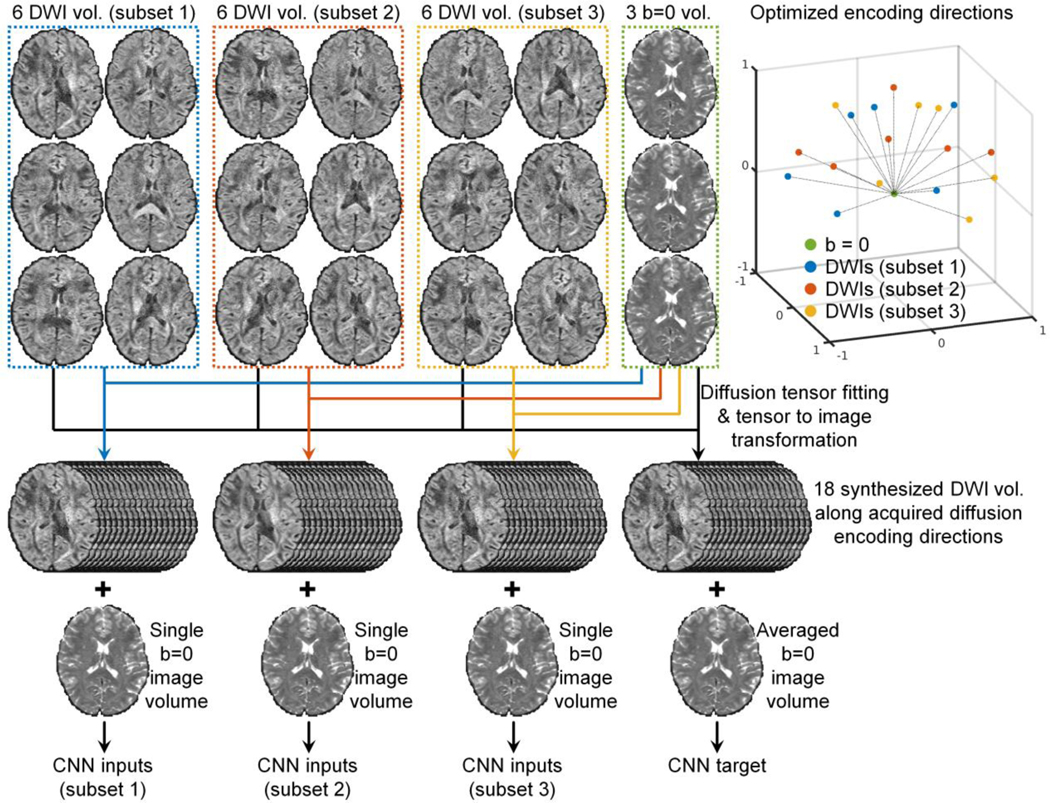
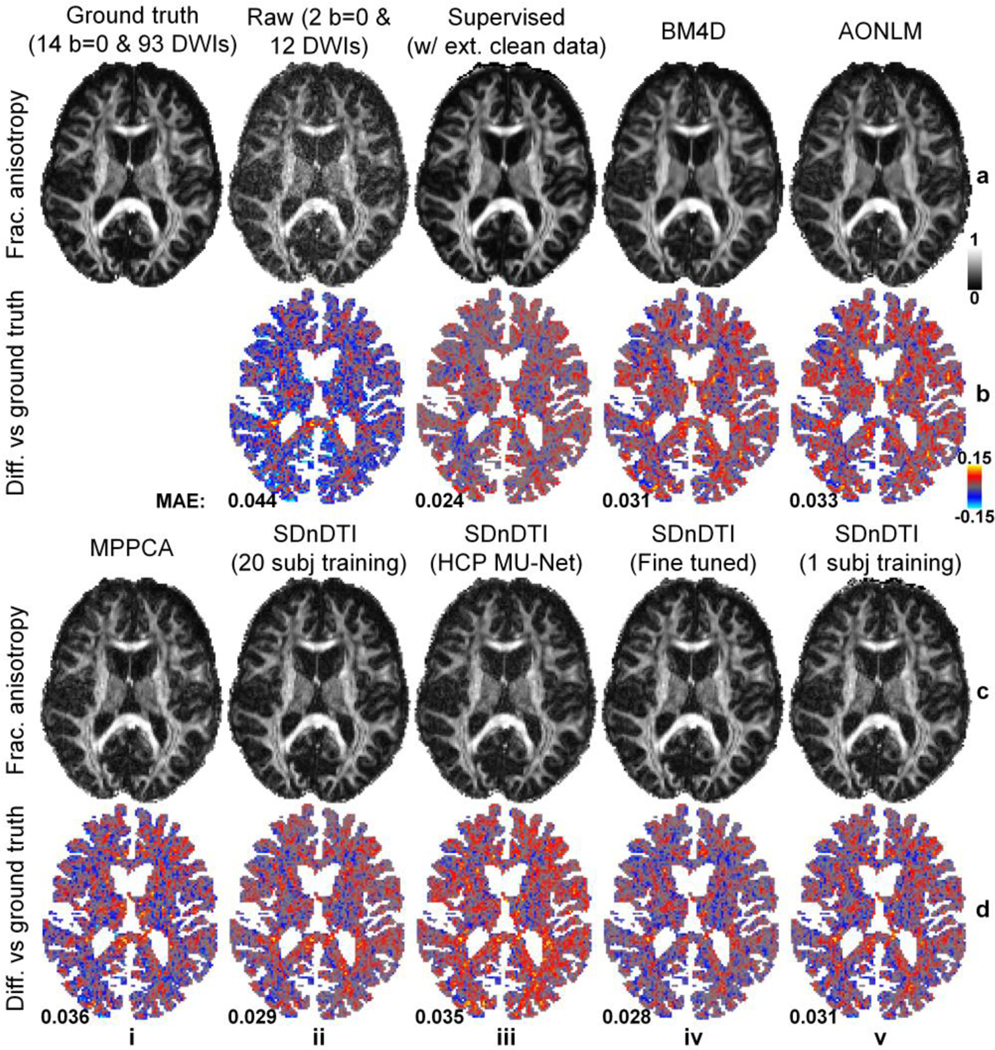
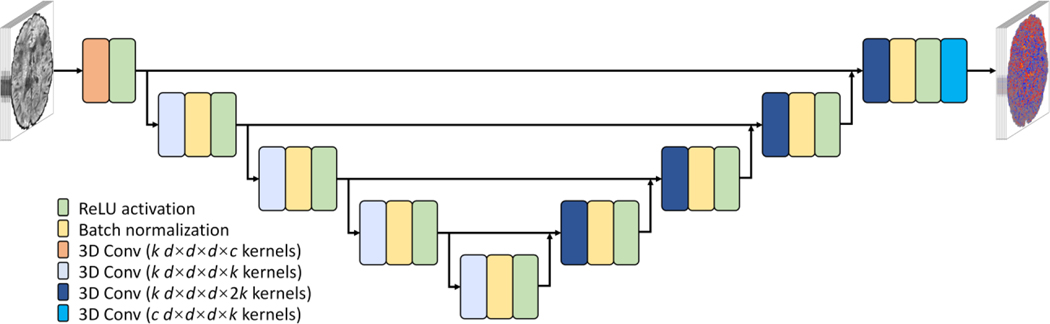
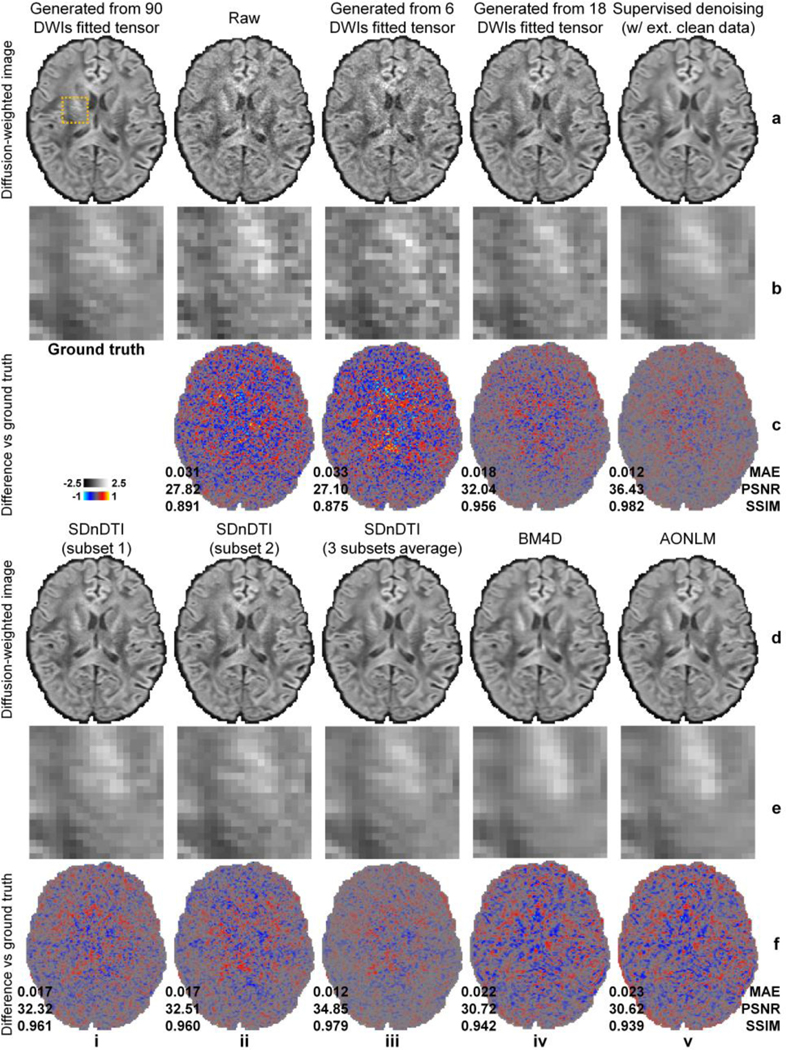
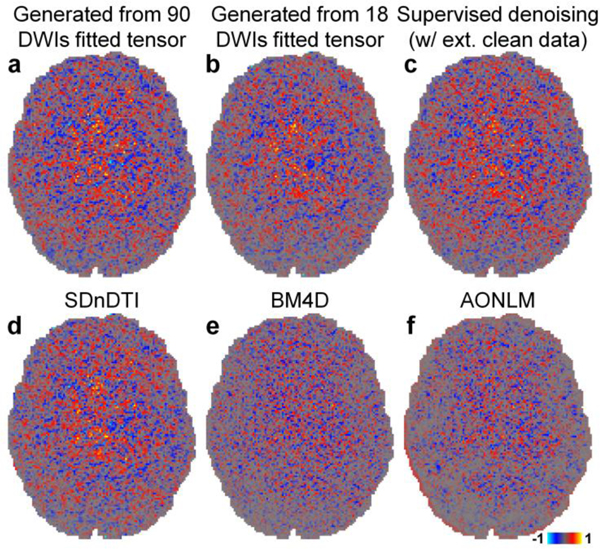
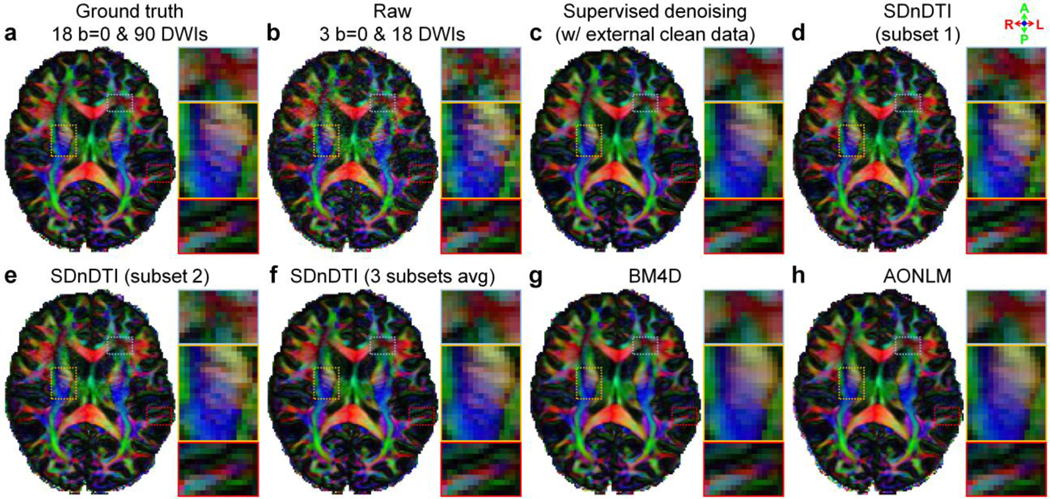
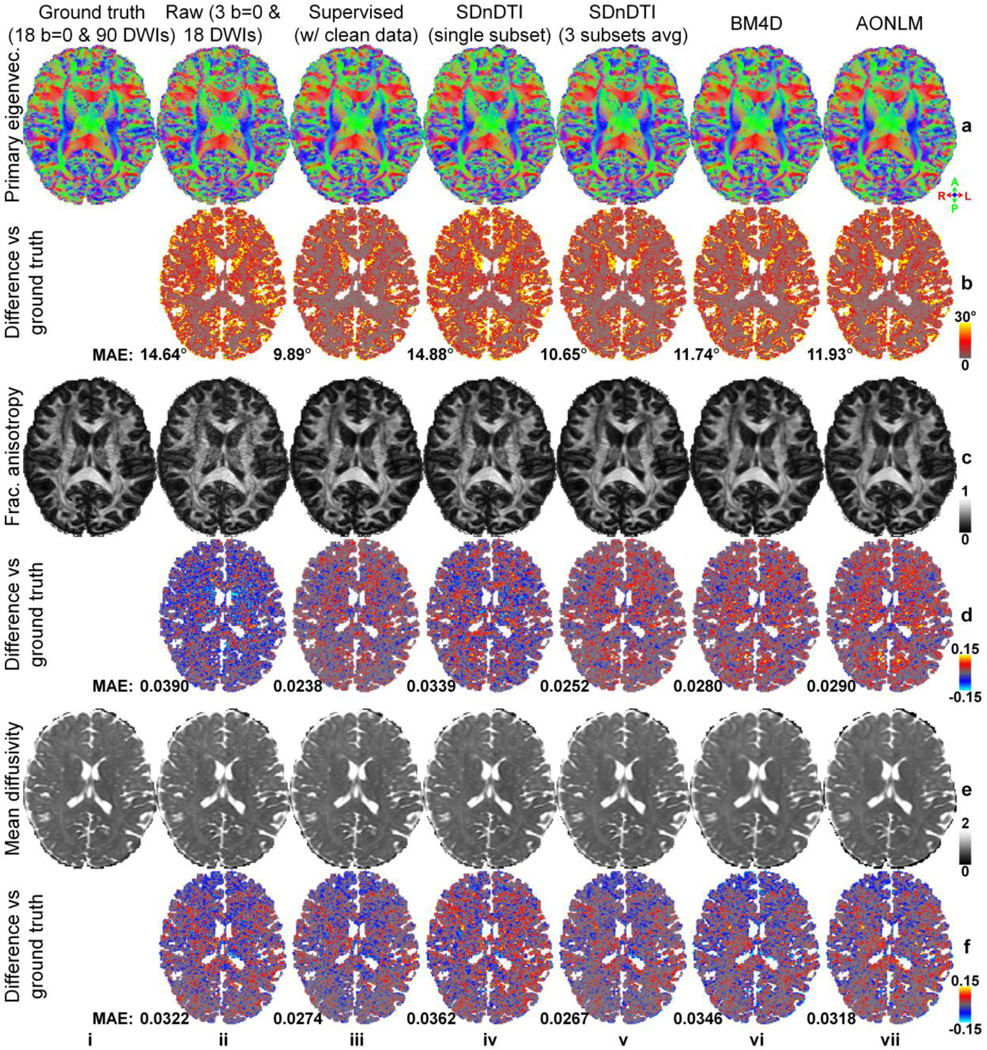
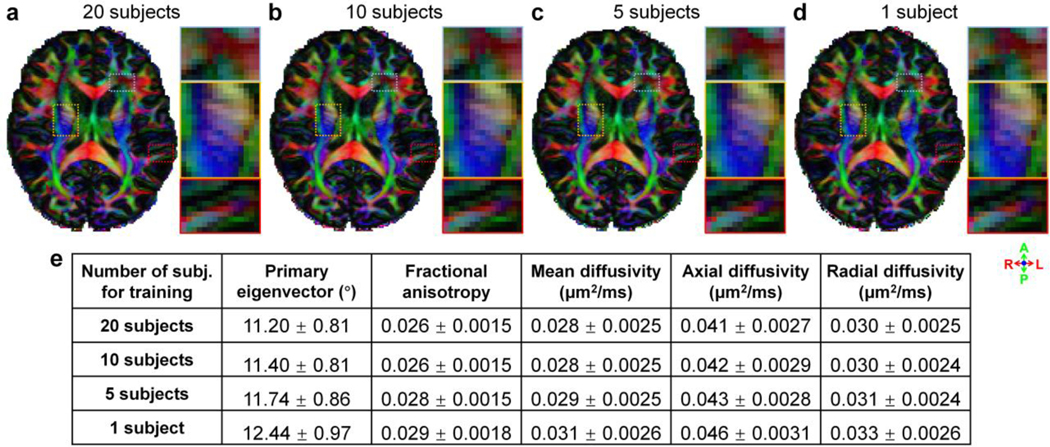
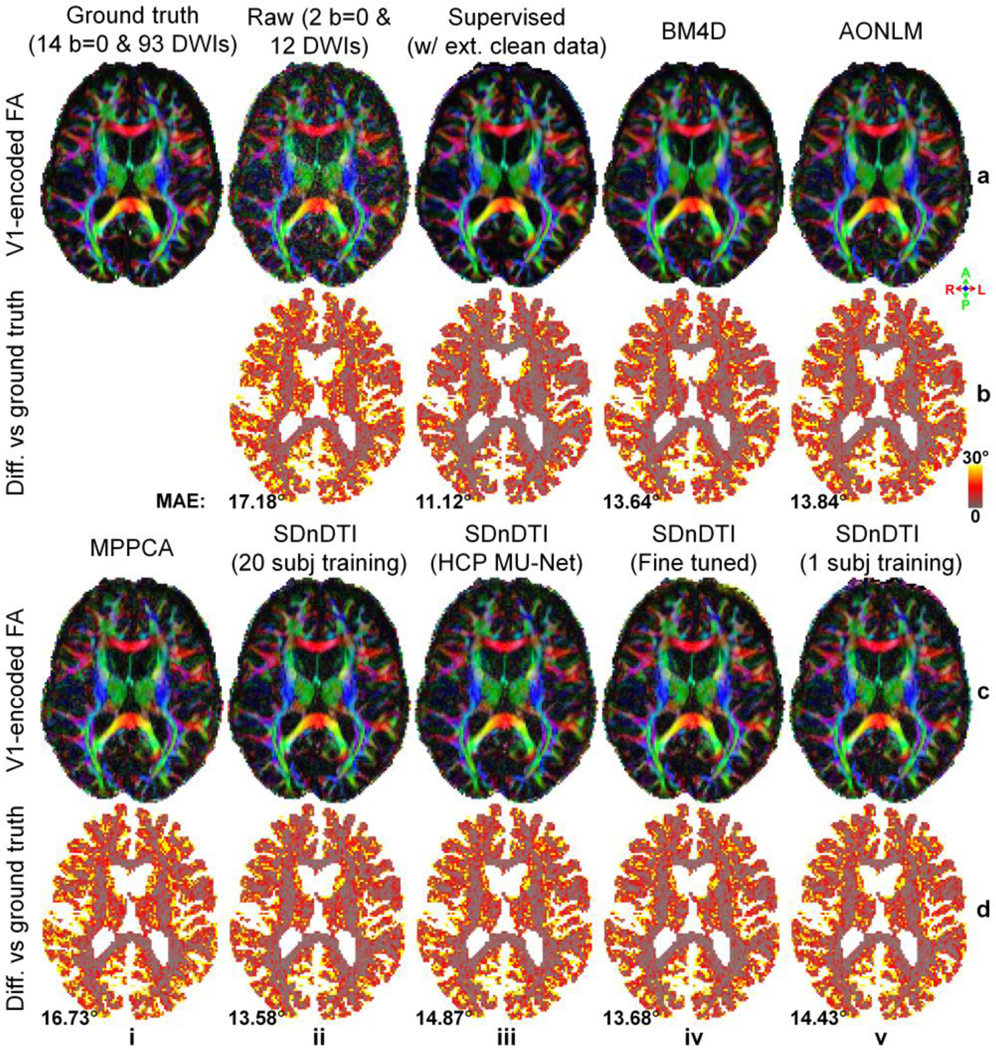
Diffusion tensor magnetic resonance imaging (DTI) is a widely adopted neuroimaging method for the in vivo mapping of brain tissue microstructure and white matter tracts. Nonetheless, the noise in the diffusion-weighted images (DWIs) decreases the accuracy and precision of DTI derived microstructural parameters and leads to prolonged acquisition time for achieving improved signal-to-noise ratio (SNR). Deep learning-based image denoising using convolutional neural networks (CNNs) has superior performance but often requires additional high-SNR data for supervising the training of CNNs, which reduces the feasibility of supervised learning-based denoising in practice. In this work, we develop a self-supervised deep learning-based method entitled "SDnDTI" for denoising DTI data, which does not require additional high-SNR data for training. Specifically, SDnDTI divides multi-directional DTI data into many subsets of six DWI volumes and transforms DWIs from each subset to along the same diffusion-encoding directions through the diffusion tensor model, generating multiple repetitions of DWIs with identical image contrasts but different noise observations. SDnDTI removes noise by first denoising each repetition of DWIs using a deep 3-dimensional CNN with the average of all repetitions with higher SNR as the training target, following the same approach as normal supervised learning based denoising methods, and then averaging CNN-denoised images for achieving higher SNR. The denoising efficacy of SDnDTI is demonstrated in terms of the similarity of output images and resultant DTI metrics compared to the ground truth generated using substantially more DWI volumes on two datasets with different spatial resolutions, b-values and numbers of input DWI volumes provided by the Human Connectome Project (HCP) and the Lifespan HCP in Aging. The SDnDTI results preserve image sharpness and textural details and substantially improve upon those from the raw data. The results of SDnDTI are comparable to those from supervised learning-based denoising and outperform those from state-of-the-art conventional denoising algorithms including BM4D, AONLM and MPPCA. By leveraging domain knowledge of diffusion MRI physics, SDnDTI makes it easier to use CNN-based denoising methods in practice and has the potential to benefit a wider range of research and clinical applications that require accelerated DTI acquisition and high-quality DTI data for mapping of tissue microstructure, fiber tracts and structural connectivity in the living human brain.
弥散张量磁共振成像(DTI)是一种广泛应用于活体脑组织结构和白质束映射的神经影像学方法。然而,弥散加权图像(DWIs)中的噪声降低了 DTI 衍生微观结构参数的准确性和精密度,并导致采集时间延长,以提高信噪比(SNR)。基于卷积神经网络(CNNs)的深度学习图像去噪具有优越的性能,但通常需要额外的高 SNR 数据来监督 CNN 的训练,这降低了基于监督学习的去噪在实践中的可行性。在这项工作中,我们开发了一种名为“SDnDTI”的基于自我监督的深度学习方法,用于对 DTI 数据进行去噪,该方法不需要额外的高 SNR 数据进行训练。具体来说,SDnDTI 将多向 DTI 数据分为许多六张 DWI 卷子集,并通过扩散张量模型将每个子集的 DWI 转换为沿相同的扩散编码方向,从而生成具有相同图像对比度但噪声观测不同的多个 DWI 重复。SDnDTI 通过首先使用具有更高 SNR 的所有重复的平均值作为训练目标的深度 3 维 CNN 对每个 DWI 重复进行去噪,然后对 CNN 去噪图像进行平均,以实现更高的 SNR,从而去除噪声。在两个具有不同空间分辨率、b 值和输入 DWI 卷数量的数据集上,与使用更多 DWI 卷生成的真实值相比,SDnDTI 的输出图像和结果 DTI 指标的相似性证明了其去噪效果,这些数据集由人类连接组计划(HCP)和老龄化人类连接组计划提供。SDnDTI 结果保留了图像的清晰度和纹理细节,并大大优于原始数据的结果。SDnDTI 的结果可与基于监督学习的去噪方法相媲美,并优于包括 BM4D、AONLM 和 MPPCA 在内的最先进的传统去噪算法的结果。通过利用扩散 MRI 物理的领域知识,SDnDTI 使得在实践中更容易使用基于 CNN 的去噪方法,并有可能受益于更广泛的研究和临床应用,这些应用需要加速 DTI 采集和高质量的 DTI 数据,以映射活体人脑的组织结构、纤维束和结构连接。