Department of Information Technology, North-Eastern Hill University, Shillong 793022, India.
Techno India NJR Institute of Technology, Udaipur 313003, India.
Sensors (Basel). 2022 Feb 24;22(5):1766. doi: 10.3390/s22051766.
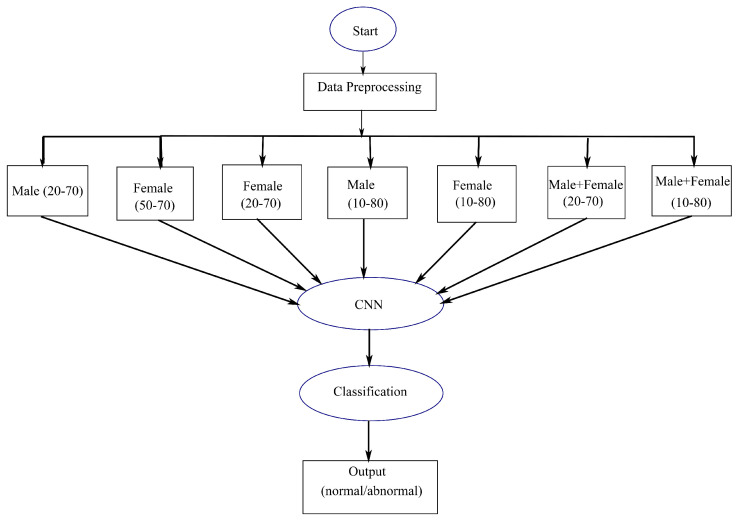
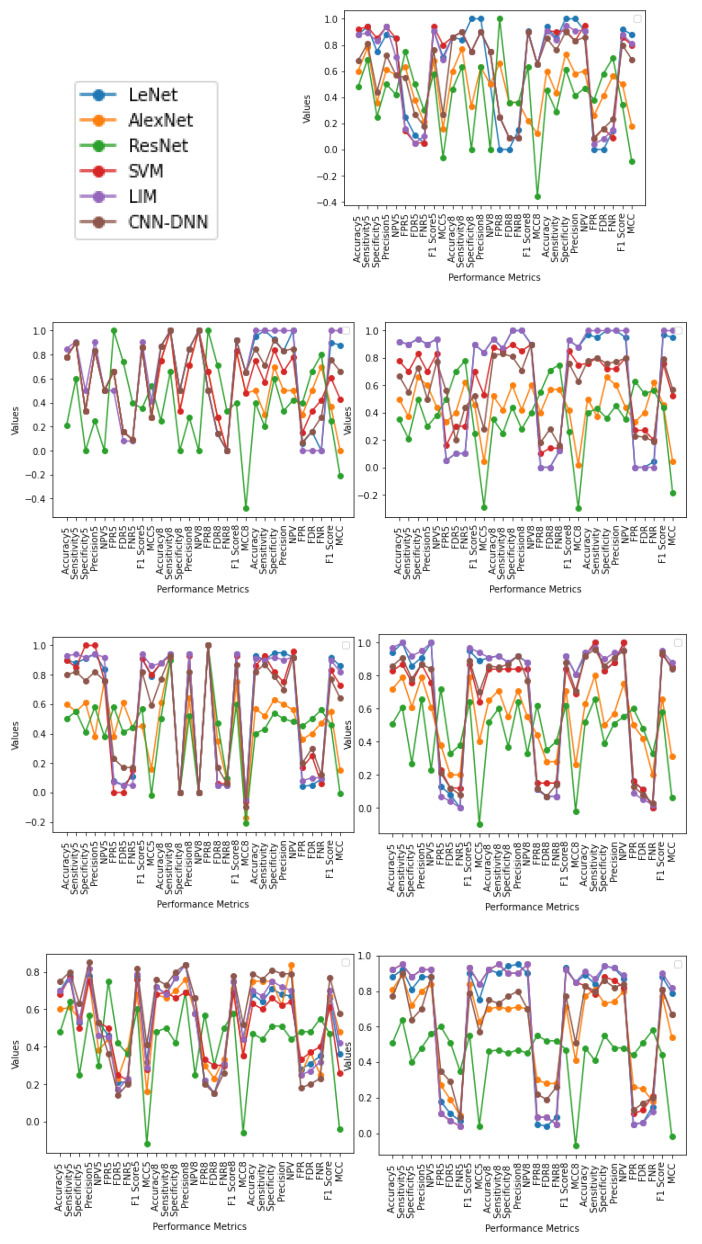
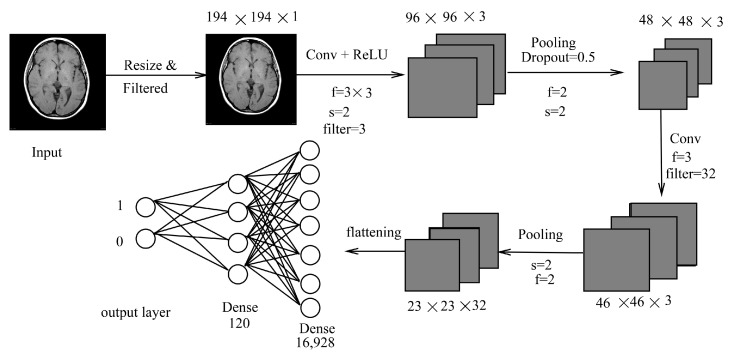
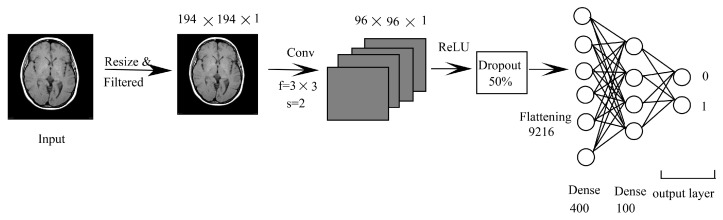
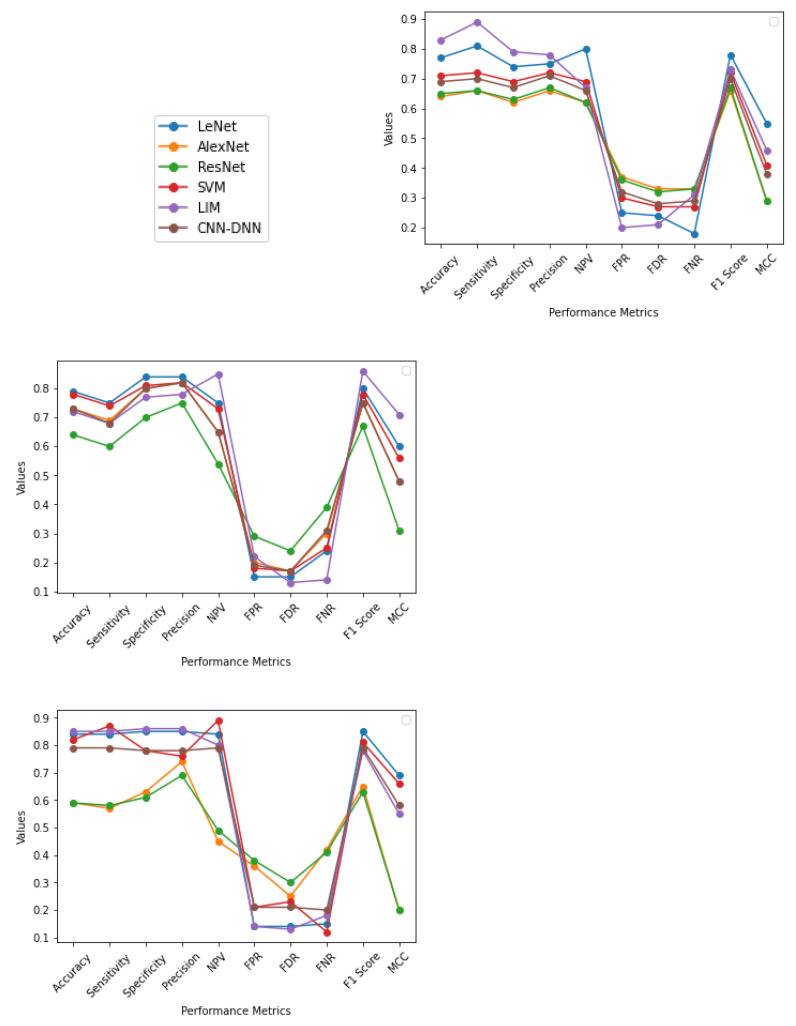
Usage of effective classification techniques on Magnetic Resonance Imaging (MRI) helps in the proper diagnosis of brain tumors. Previous studies have focused on the classification of normal (nontumorous) or abnormal (tumorous) brain MRIs using methods such as Support Vector Machine (SVM) and AlexNet. In this paper, deep learning architectures are used to classify brain MRI images into normal or abnormal. Gender and age are added as higher attributes for more accurate and meaningful classification. A deep learning Convolutional Neural Network (CNN)-based technique and a Deep Neural Network (DNN) are also proposed for effective classification. Other deep learning architectures such as LeNet, AlexNet, ResNet, and traditional approaches such as SVM are also implemented to analyze and compare the results. Age and gender biases are found to be more useful and play a key role in classification, and they can be considered essential factors in brain tumor analysis. It is also worth noting that, in most circumstances, the proposed technique outperforms both existing SVM and AlexNet. The overall accuracy obtained is 88% (LeNet Inspired Model) and 80% (CNN-DNN) compared to SVM (82%) and AlexNet (64%), with best accuracy of 100%, 92%, 92%, and 81%, respectively.
有效的分类技术在磁共振成像(MRI)中的应用有助于正确诊断脑肿瘤。先前的研究集中在使用支持向量机(SVM)和 AlexNet 等方法对正常(非肿瘤)或异常(肿瘤)脑 MRI 进行分类。在本文中,使用深度学习架构将脑 MRI 图像分类为正常或异常。增加性别和年龄作为更高的属性,以实现更准确和有意义的分类。还提出了一种基于深度学习卷积神经网络(CNN)和深度神经网络(DNN)的技术用于有效分类。还实现了其他深度学习架构,如 LeNet、AlexNet、ResNet 以及传统方法,如 SVM,以进行分析和比较结果。发现年龄和性别偏见更有用,并在分类中起着关键作用,它们可以被认为是脑肿瘤分析的重要因素。值得注意的是,在大多数情况下,所提出的技术优于现有的 SVM 和 AlexNet。与 SVM(82%)和 AlexNet(64%)相比,获得的整体准确率分别为 88%(LeNet 启发模型)和 80%(CNN-DNN),最佳准确率分别为 100%、92%、92%和 81%。