VIB Laboratory of Translational Immunomodulation, Center for Inflammation Research (IRC), Hasselt University, 3590 Diepenbeek, Belgium.
Department of Immunology and Infection, Biomedical Research Institute (BIOMED), Hasselt University, 3590 Diepenbeek, Belgium.
Nutrients. 2022 Mar 10;14(6):1171. doi: 10.3390/nu14061171.
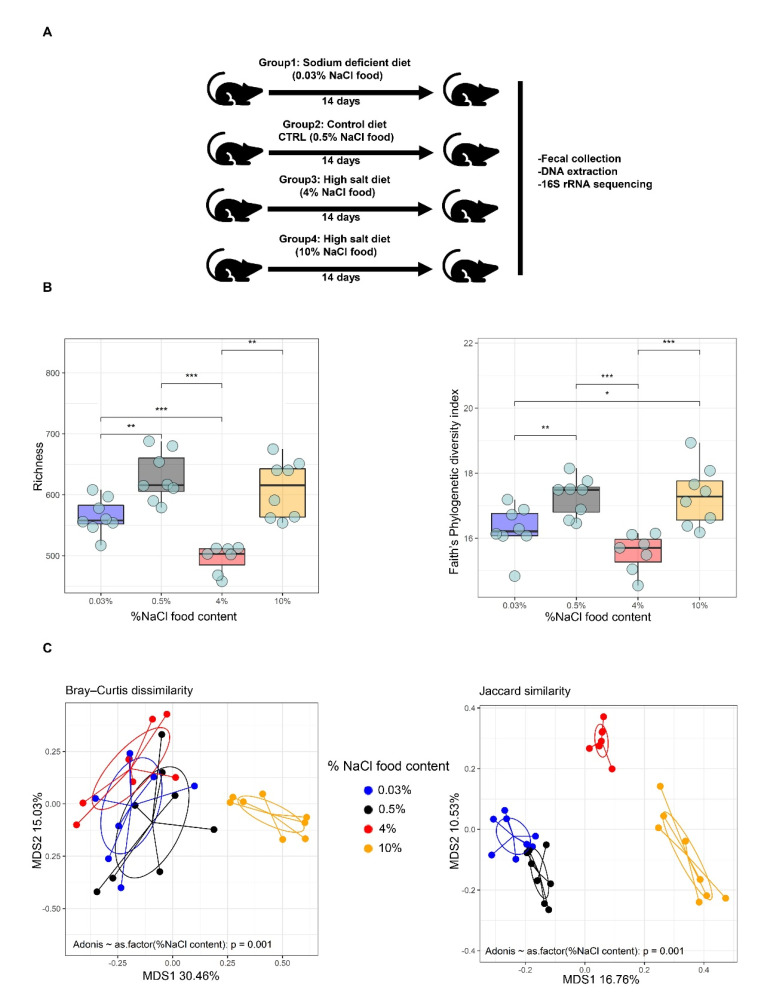
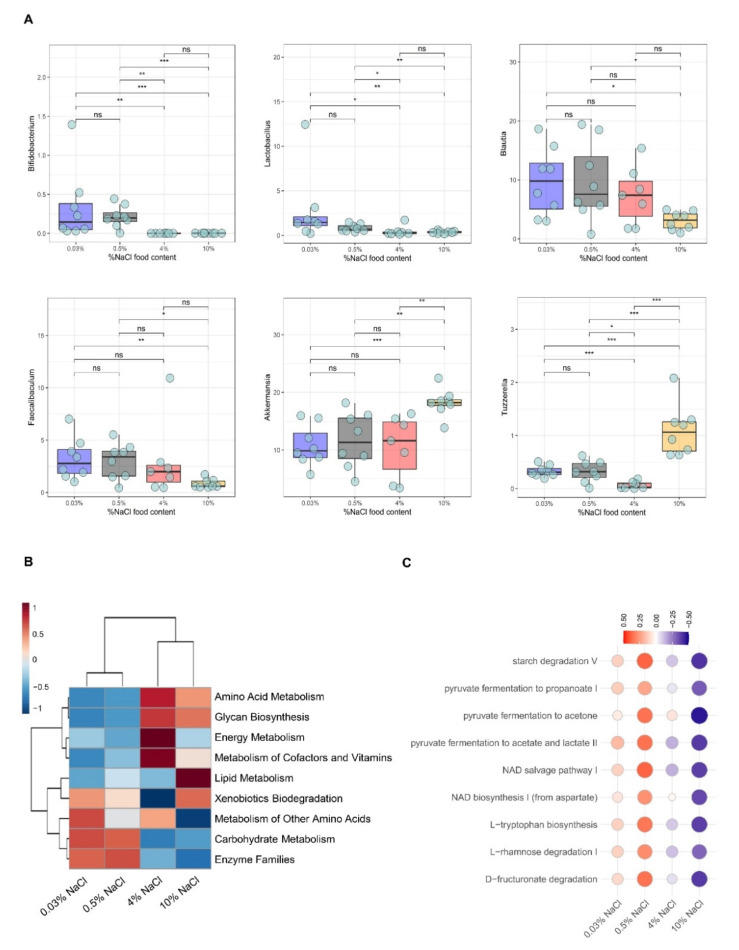
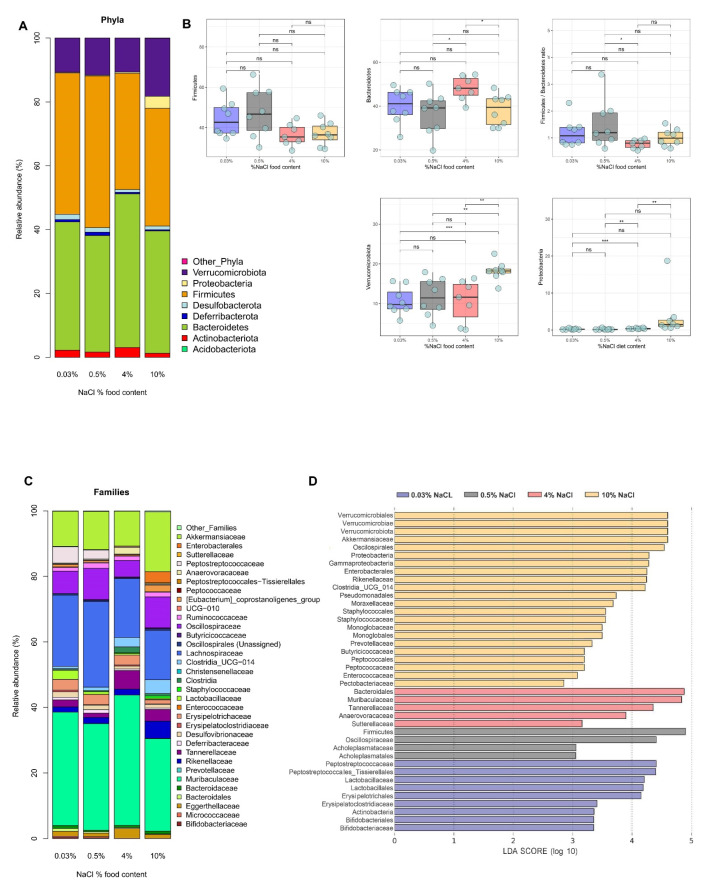
Dietary habits are amongst the main factors that influence the gut microbiome. Accumulating evidence points to the impact of a high-salt diet (HSD) on the composition and function of the intestinal microbiota, immune system and disease. In the present study, we thus investigated the effects of different NaCl content in the food (0.03%/sodium deficient, 0.5%/control, 4% and 10% NaCl) on the gut microbiome composition in mice. The bacterial composition was profiled using the 16S ribosomal RNA (rRNA) gene amplicon sequencing. Our results revealed that HSD led to distinct gut microbiome compositions compared to sodium-deficient or control diets. We also observed significant reduction in relative abundances of bacteria associated with immuno-competent short-chain fatty acid (SCFA) production (, , and ) in HSD-fed mice along with significant enrichment of , and depending on the sodium content in food. Furthermore, the predictive functional profiling of microbial communities indicated that the gut microbiota found in each category presents differences in metabolic pathways related to carbohydrate, lipid and amino acid metabolism. The presented data show that HSD cause disturbances in the ecological balance of the gastrointestinal microflora primarily through depletion of lactic acid-producing bacteria in a dose-dependent manner. These findings may have important implications for salt-sensitive inflammatory diseases.
饮食习惯是影响肠道微生物群的主要因素之一。越来越多的证据表明,高盐饮食(HSD)会影响肠道微生物群的组成和功能、免疫系统和疾病。在本研究中,我们因此研究了不同食物中 NaCl 含量(0.03%/低盐,0.5%/对照,4%和 10% NaCl)对小鼠肠道微生物群组成的影响。使用 16S 核糖体 RNA(rRNA)基因扩增子测序对细菌组成进行了分析。我们的结果表明,HSD 导致肠道微生物群组成与低盐或对照饮食有明显差异。我们还观察到,与免疫功能相关的短链脂肪酸(SCFA)产生菌(,,和)的相对丰度在 HSD 喂养的小鼠中显著降低,而取决于食物中的钠含量,和的相对丰度显著增加。此外,微生物群落的预测功能分析表明,每个类别中的肠道微生物群在与碳水化合物、脂质和氨基酸代谢相关的代谢途径上存在差异。所呈现的数据表明,HSD 通过乳酸产生菌的耗竭以剂量依赖的方式引起胃肠道微生物群生态平衡的紊乱。这些发现可能对盐敏感性炎症性疾病具有重要意义。