Faculty of Computers and Artificial Intelligence, South Valley University, Hurghada, Egypt.
Faculty of Computing and Information, Luxor University, Luxor, Egypt.
Comput Intell Neurosci. 2022 Mar 19;2022:1820777. doi: 10.1155/2022/1820777. eCollection 2022.
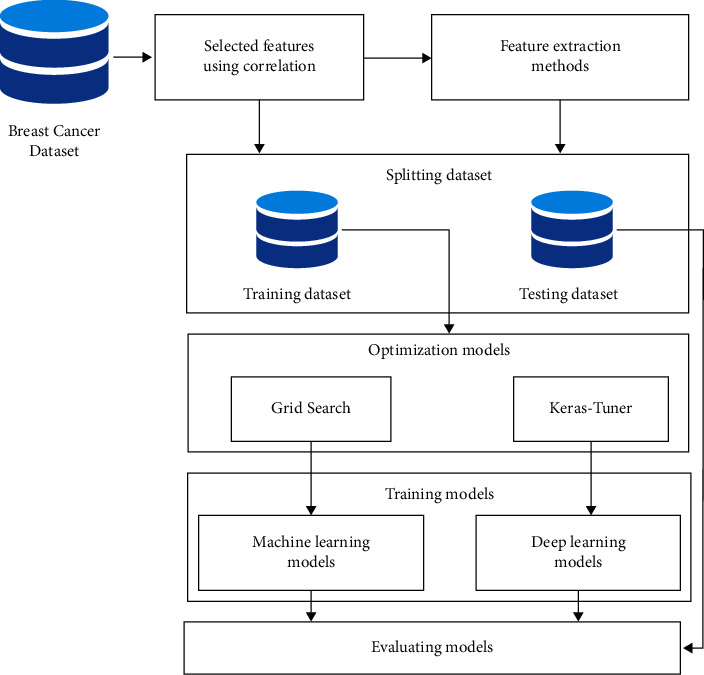
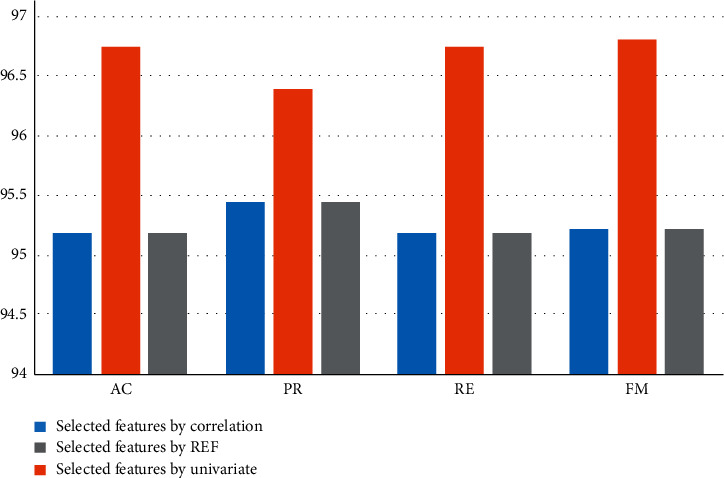
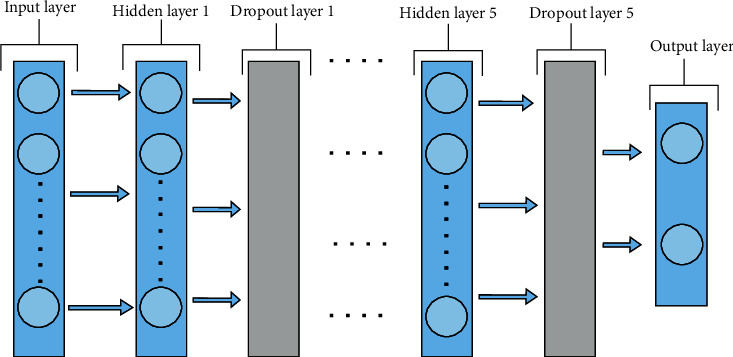
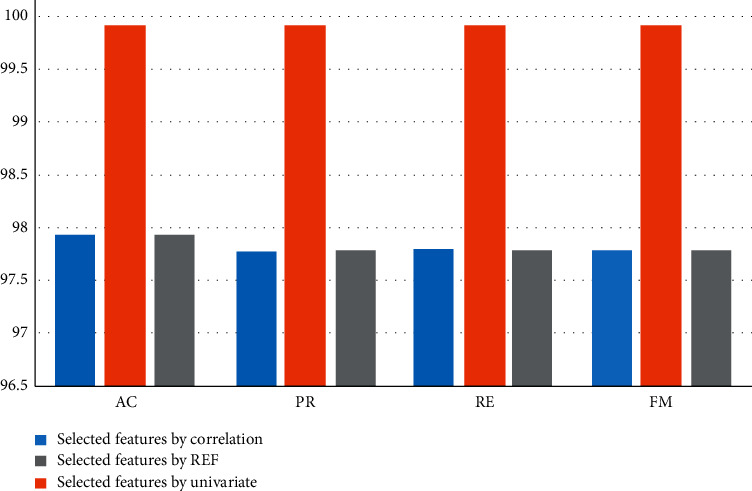
Breast cancer is a dangerous disease with a high morbidity and mortality rate. One of the most important aspects in breast cancer treatment is getting an accurate diagnosis. Machine-learning (ML) and deep learning techniques can help doctors in making diagnosis decisions. This paper proposed the optimized deep recurrent neural network (RNN) model based on RNN and the Keras-Tuner optimization technique for breast cancer diagnosis. The optimized deep RNN consists of the input layer, five hidden layers, five dropout layers, and the output layer. In each hidden layer, we optimized the number of neurons and rate values of the dropout layer. Three feature-selection methods have been used to select the most important features from the database. Five regular ML models, namely decision tree (DT), support vector machine (SVM), random forest (RF), naive Bayes (NB), and -nearest neighbor algorithm (KNN) were compared with the optimized deep RNN. The regular ML models and the optimized deep RNN have been applied the selected features. The results showed that the optimized deep RNN with the selected features by univariate has achieved the highest performance for CV and the testing results compared to the other models.
乳腺癌是一种发病率和死亡率都很高的危险疾病。在乳腺癌治疗中,最重要的方面之一是获得准确的诊断。机器学习 (ML) 和深度学习技术可以帮助医生做出诊断决策。本文提出了基于 RNN 和 Keras-Tuner 优化技术的优化深度递归神经网络 (RNN) 模型,用于乳腺癌诊断。优化后的深度 RNN 由输入层、五个隐藏层、五个丢弃层和输出层组成。在每个隐藏层中,我们优化了神经元的数量和丢弃层的速率值。使用了三种特征选择方法从数据库中选择最重要的特征。与优化后的深度 RNN 相比,比较了五种常规 ML 模型,即决策树 (DT)、支持向量机 (SVM)、随机森林 (RF)、朴素贝叶斯 (NB) 和 K 近邻算法 (KNN)。将常规 ML 模型和优化后的深度 RNN 应用于所选特征。结果表明,与其他模型相比,基于单变量选择特征的优化深度 RNN 在 CV 和测试结果方面表现出最高的性能。