Muhaidat Nadia, Alshrouf Mohammad A, Azzam Muayad I, Karam Abdulrahman M, Al-Nazer Majed W, Al-Ani Abdallah
Department of Obstetrics & Gynaecology, Jordan University Hospital, Amman, Jordan.
The School of Medicine, The University of Jordan, Amman, Jordan.
Int J Womens Health. 2022 Mar 28;14:395-404. doi: 10.2147/IJWH.S352167. eCollection 2022.
Since the emergence of COVID-19 vaccinations, many women around the world are reporting abnormalities in their menstrual periods post-vaccination. The aim of this study is to investigate the prevalence and impact of menstrual abnormalities after the COVID-19 vaccine among females residing within the Middle East and North Africa (MENA).
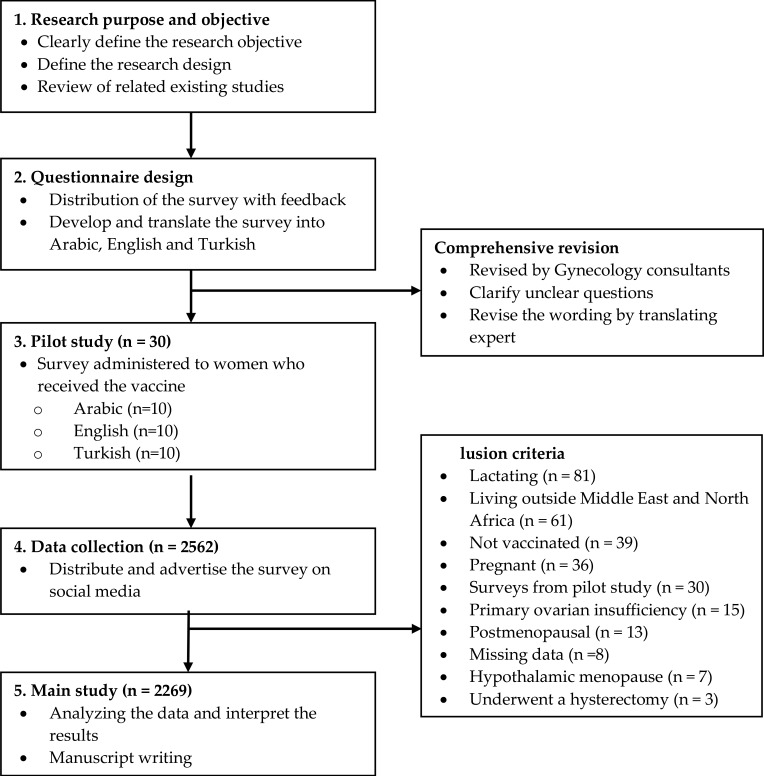
The study utilized a cross-sectional online self-administered survey from July 2021 to August 2021 targeting females living in the MENA region above the age of menarche who had received vaccine and were not pregnant or lactating, and do not have a history of primary ovarian insufficiency, hypothalamic menopause, or have undergone a hysterectomy. The survey was distributed regionally via social media.
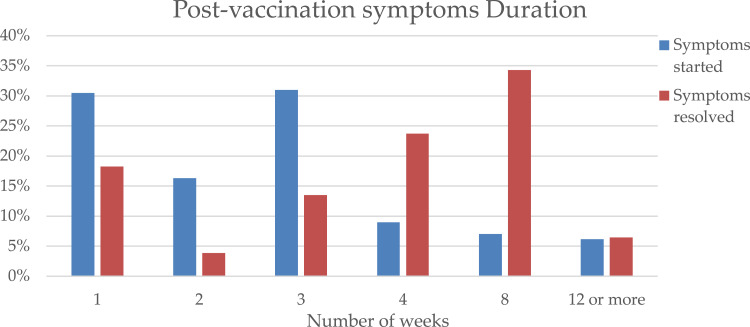
A total of 2269 females were included in our study, with a mean age of 34.3 ± 8.5 years. About 66.3% of participants reported menstrual symptoms post-vaccination, of which 46.7% experienced them after their first dose. However, in 93.6% of participants, the symptoms resolved within 2 months. Vaccine type did not significantly influence the incidence of abnormalities (p > 0.05). Participants who had confirmed previous COVID-19 infection had a very similar percentage of menstrual abnormalities compared to people who did not have COVID-19 infection or symptoms suspected of COVID-19 infection and did not test (67.5%, 66.8%, respectively); nevertheless, those who had experienced the COVID-19 vaccine general side effects had significantly more abnormalities (p < 0.001). Compared to their pandemic status, females reported significantly more abnormalities post-vaccination.
The study showed a possible link between the COVID-19 vaccine and menstrual abnormalities that have impacted their quality of life.
自新冠疫苗出现以来,世界各地许多女性报告接种疫苗后月经出现异常。本研究的目的是调查中东和北非(MENA)地区女性接种新冠疫苗后月经异常的发生率及其影响。
该研究采用了一项横断面在线自我管理调查,于2021年7月至2021年8月针对居住在中东和北非地区初潮年龄以上、已接种疫苗、未怀孕或哺乳、且无原发性卵巢功能不全、下丘脑性闭经病史或未接受子宫切除术的女性。该调查通过社交媒体在该地区进行分发。
我们的研究共纳入2269名女性,平均年龄为34.3±8.5岁。约66.3%的参与者报告接种疫苗后出现月经症状,其中46.7%在接种第一剂后出现。然而,93.6%的参与者症状在2个月内缓解。疫苗类型对异常发生率没有显著影响(p>0.05)。与未感染新冠病毒或无新冠病毒感染症状且未进行检测的人相比,确诊过新冠病毒感染的参与者月经异常的比例非常相似(分别为67.5%和66.8%);然而,出现过新冠疫苗一般副作用的参与者异常情况明显更多(p<0.001)。与疫情期间相比,女性报告接种疫苗后异常情况明显更多。
该研究表明新冠疫苗与月经异常之间可能存在关联,这对她们的生活质量产生了影响。