Kang Byunghoon, Lee Youngjin, Lim Jaewoo, Yong Dongeun, Ki Choi Young, Woo Yoon Sun, Seo Seungbeom, Jang Soojin, Uk Son Seong, Kang Taejoon, Jung Juyeon, Lee Kyu-Sun, Kim Myung Hee, Lim Eun-Kyung
BioNanotechnology Research Center, Korea Research Institute of Bioscience and Biotechnology (KRIBB), 125 Gwahak-ro, Yuseong-gu, Daejeon 34141, Republic of Korea.
Metabolic Regulation Research Center, Korea Research Institute of Bioscience and Biotechnology (KRIBB), 125 Gwahak-ro, Yuseong-gu, Daejeon 34141, Republic of Korea.
Chem Eng J. 2022 Aug 15;442:136143. doi: 10.1016/j.cej.2022.136143. Epub 2022 Mar 31.
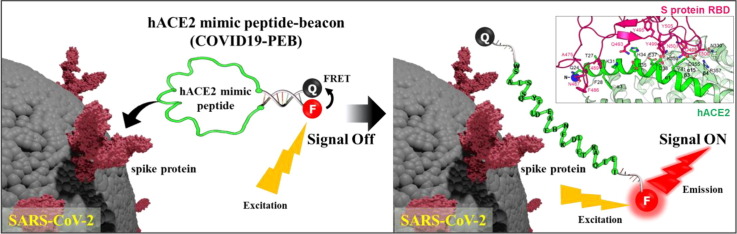
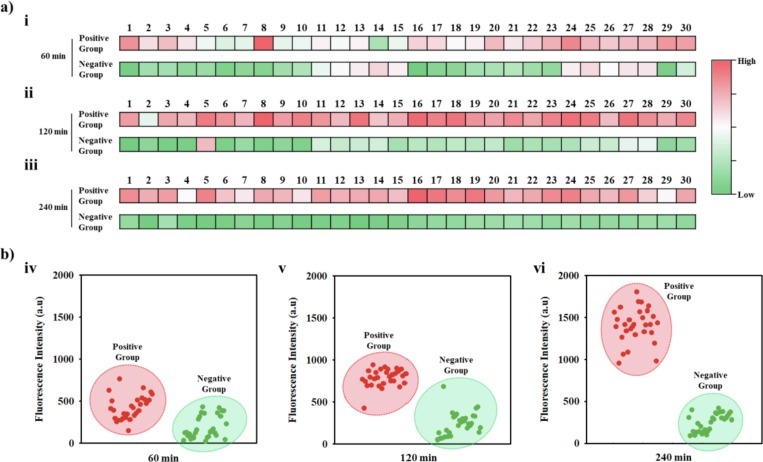
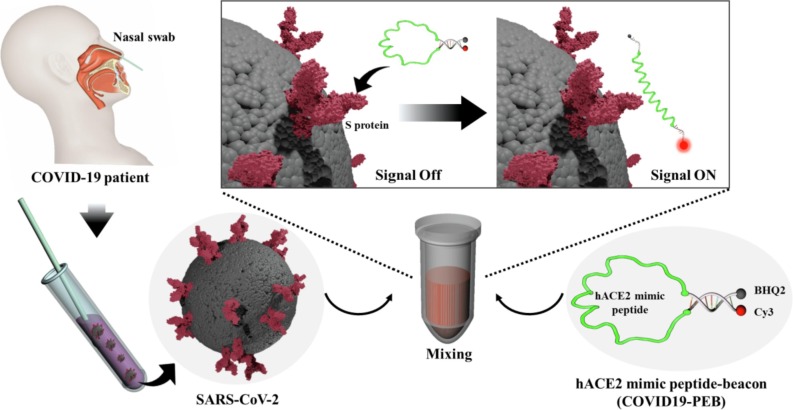
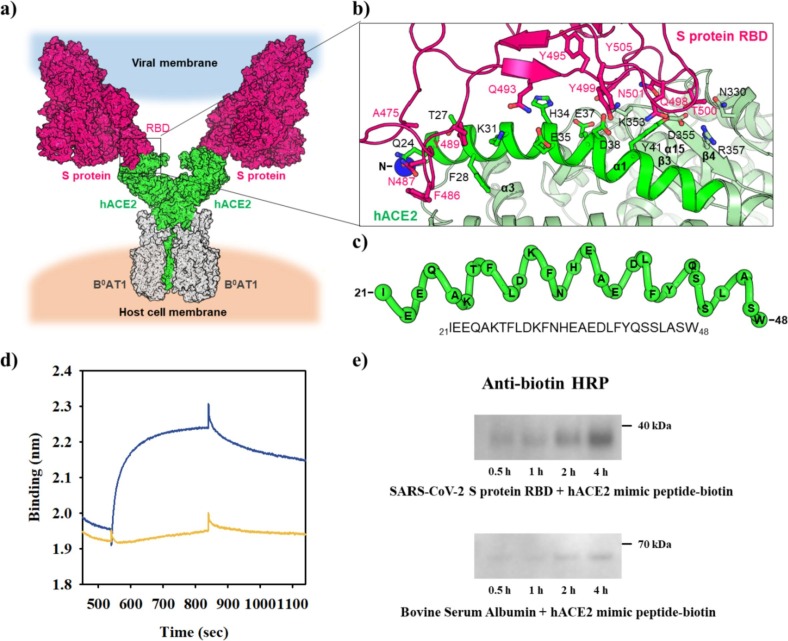
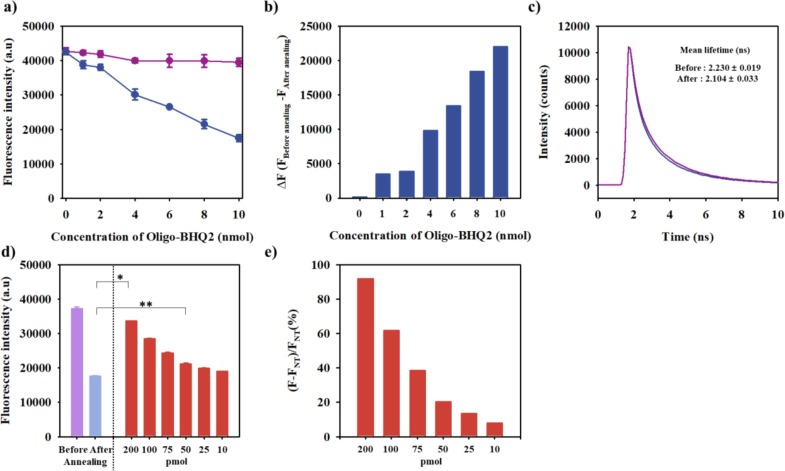
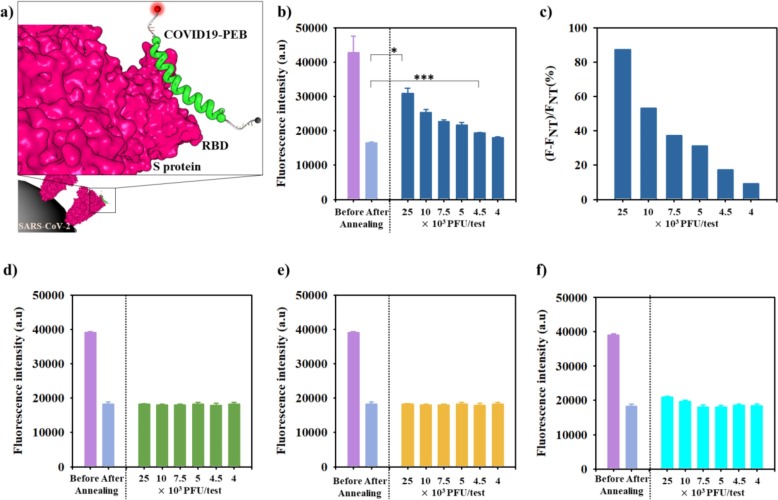
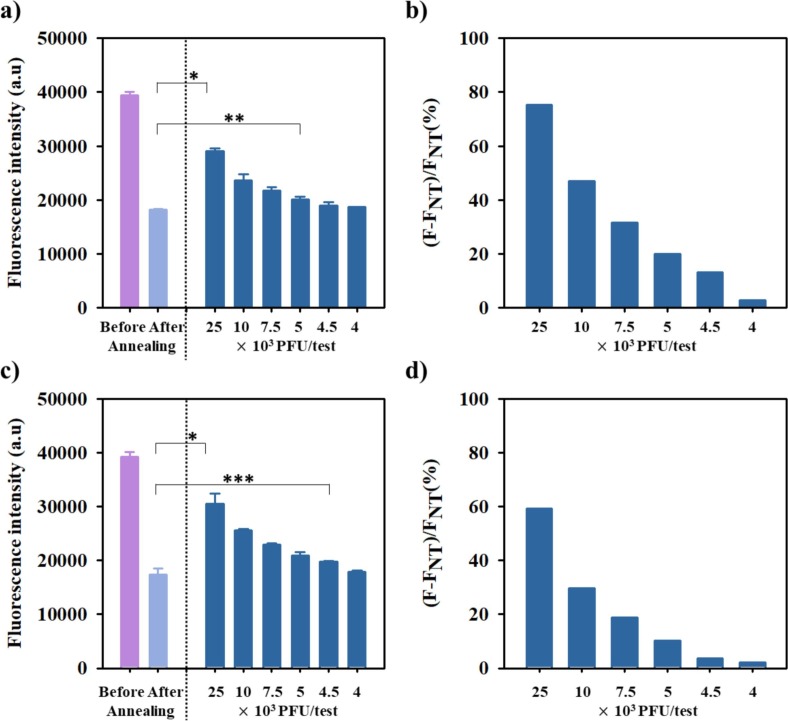
Severe acute respiratory syndrome coronavirus 2 (SARS-CoV-2) infection has led to a pandemic of acute respiratory disease, namely coronavirus disease (COVID-19). This disease threatens human health and public safety. Early diagnosis, isolation, and prevention are important to suppress the outbreak of COVID 19 given the lack of specific antiviral drugs to treat this disease and the emergence of various variants of the virus that cause breakthrough infections even after vaccine administration. Simple and prompt testing is paramount to preventing further spread of the virus. However, current testing methods, namely RT-PCR, is time-consuming. Binding of the SARS-CoV-2 spike (S) glycoprotein to human angiotensin-converting enzyme 2 (hACE2) receptor plays a pivotal role in host cell entry. In the present study, we developed a hACE2 mimic peptide beacon (COVID19-PEB) for simple detection of SARS-CoV-2 using a fluorescence resonance energy transfer system. COVID19-PEB exhibits minimal fluorescence in its ''closed'' hairpin structure; however, in the presence of SARS-CoV-2, the specific recognition of the S protein receptor-binding domain by COVID19-PEB causes the beacon to assume an ''open'' structure that emits strong fluorescence. COVID19-PEB can detect SARS-CoV-2 within 3 h or even 50 min and exhibits strong fluorescence even at low viral concentrations, with a detection limit of 4 × 10 plaque-forming unit/test. Furthermore, in SARS-CoV-2-infected patient samples confirmed using polymerase chain reaction, COVID19-PEB accurately detected the virus. COVID19-PEB could be developed as a rapid and accurate diagnostic tool for COVID-19.
严重急性呼吸综合征冠状病毒2(SARS-CoV-2)感染导致了一种急性呼吸道疾病的大流行,即冠状病毒病(COVID-19)。这种疾病威胁着人类健康和公共安全。鉴于缺乏治疗该疾病的特异性抗病毒药物,以及即使接种疫苗后仍出现导致突破性感染的各种病毒变体,早期诊断、隔离和预防对于抑制COVID-19的爆发至关重要。简单而迅速的检测对于防止病毒进一步传播至关重要。然而,目前的检测方法,即逆转录聚合酶链反应(RT-PCR),耗时较长。SARS-CoV-2刺突(S)糖蛋白与人血管紧张素转换酶2(hACE2)受体的结合在宿主细胞进入过程中起关键作用。在本研究中,我们开发了一种hACE2模拟肽信标(COVID19-PEB),用于使用荧光共振能量转移系统简单检测SARS-CoV-2。COVID19-PEB在其“封闭”发夹结构中荧光极小;然而,在存在SARS-CoV-2的情况下,COVID19-PEB对S蛋白受体结合域的特异性识别导致信标呈现“开放”结构,发出强烈荧光。COVID19-PEB可在3小时甚至50分钟内检测到SARS-CoV-2,即使在低病毒浓度下也表现出强烈荧光,检测限为4×10蚀斑形成单位/测试。此外,在使用聚合酶链反应确认的SARS-CoV-2感染患者样本中,COVID19-PEB准确检测到了病毒。COVID19-PEB可被开发为一种用于COVID-19的快速准确诊断工具。