Zhang Yanfu, Zhan Liang, Wu Shandong, Thompson Paul, Huang Heng
Department of Electrical and Computer Engineering, University of Pittsburgh,Pittsburgh, PA 15260, USA.
Department of Radiology, University of Pittsburgh, Pittsburgh, PA 15260, USA.
Med Image Comput Comput Assist Interv. 2021 Sep-Oct;12907:508-518. doi: 10.1007/978-3-030-87234-2_48. Epub 2021 Sep 21.
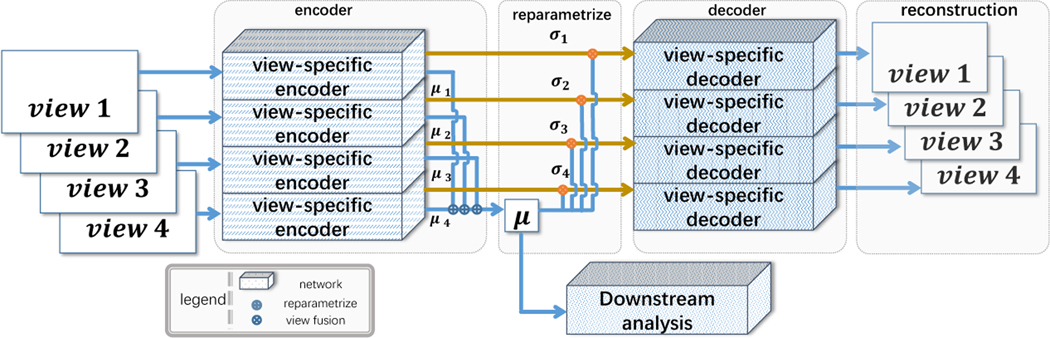
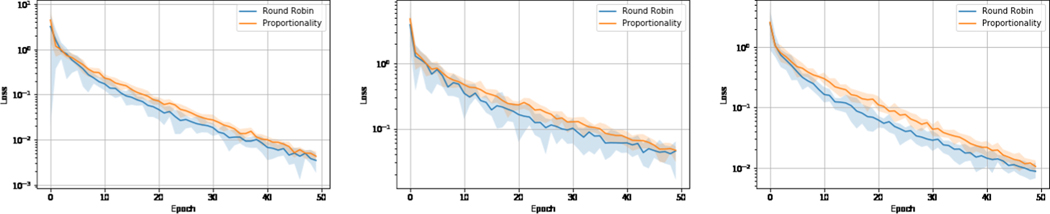
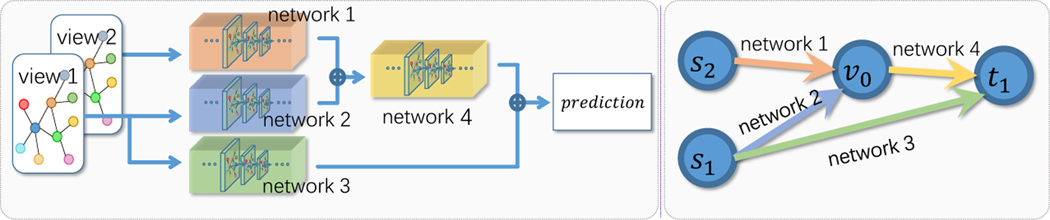
Diffusion MRI-derived brain structural connectomes or brain networks are widely used in the brain research. However, constructing brain networks is highly dependent on various tractography algorithms, which leads to difficulties in deciding the optimal view concerning the downstream analysis. In this paper, we propose to learn a unified representation from multi-view brain networks. Particularly, we expect the learned representations to convey the information from different views fairly and in a disentangled sense. We achieve the disentanglement via an approach using unsupervised variational graph auto-encoders. We achieve the view-wise fairness, proportionality, via an alternative training routine. More specifically, we construct an analogy between training the deep network and the network flow problem. Based on the analogy, the fair representations learning is attained via a network scheduling algorithm aware of proportionality. The experimental results demonstrate that the learned representations fit various downstream tasks well. They also show that the proposed approach effectively preserves the proportionality.
基于扩散磁共振成像的脑结构连接组或脑网络在脑研究中被广泛应用。然而,构建脑网络高度依赖于各种纤维束成像算法,这给确定下游分析的最佳视角带来了困难。在本文中,我们提出从多视角脑网络学习统一表示。具体而言,我们期望学习到的表示能够公平且以解缠的方式传达来自不同视角的信息。我们通过使用无监督变分图自动编码器的方法实现解缠。我们通过交替训练例程实现视角公平性、比例性。更具体地说,我们在深度网络训练和网络流问题之间构建类比。基于该类比,通过一种知晓比例性的网络调度算法实现公平表示学习。实验结果表明,学习到的表示能很好地适用于各种下游任务。它们还表明,所提出的方法有效地保持了比例性。