Shao Yun, Liao Zhijun, Gao Bingbing, He Bingfang
School of Pharmaceutical Sciences, Nanjing Tech University, Nanjing 211816, China.
ACS Omega. 2022 Mar 28;7(14):11530-11543. doi: 10.1021/acsomega.2c00357. eCollection 2022 Apr 12.
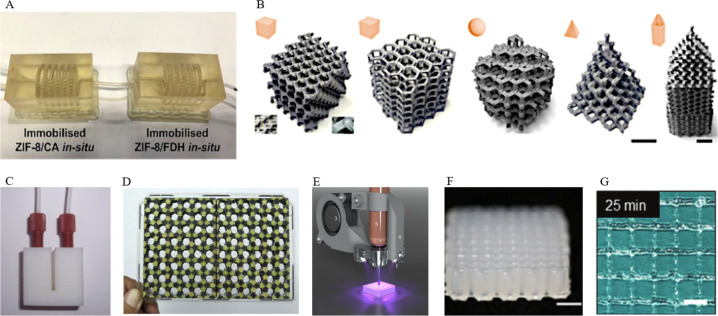
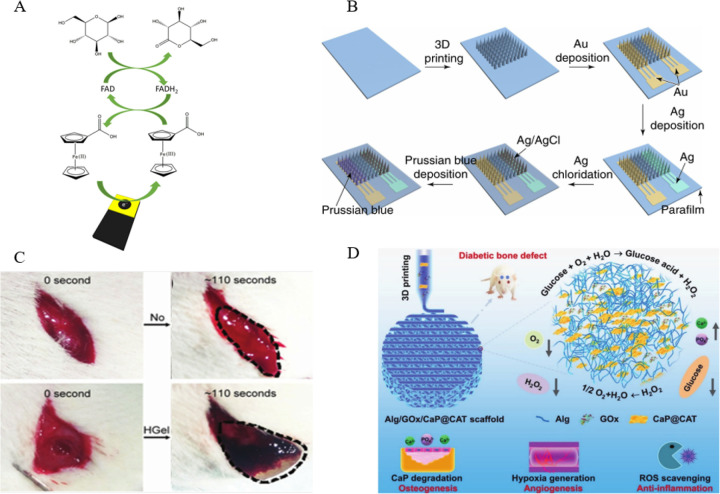
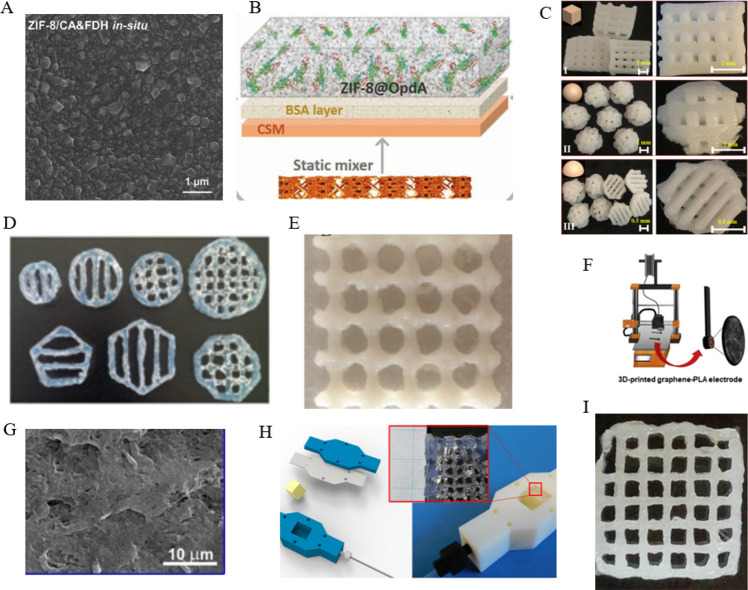
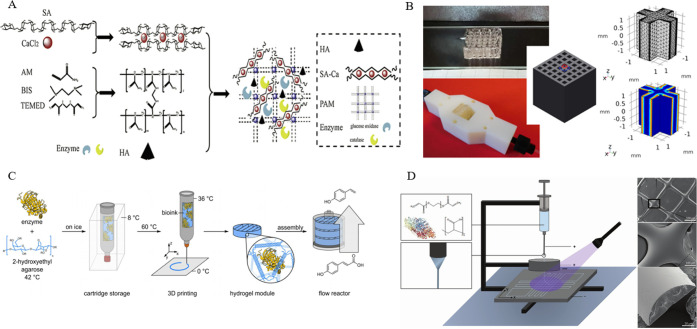
As the strategies of enzyme immobilization possess attractive advantages that contribute to realizing recovery or reuse of enzymes and improving their stability, they have become one of the most desirable techniques in industrial catalysis, biosensing, and biomedicine. Among them, 3D printing is the emerging and most potential enzyme immobilization strategy. The main advantages of 3D printing strategies for enzyme immobilization are that they can directly produce complex channel structures at low cost, and the printed scaffolds with immobilized enzymes can be completely modified just by changing the original design graphics. In this review, a comprehensive set of developments in the fields of 3D printing techniques, materials, and strategies for enzyme immobilization and the potential applications in industry and biomedicine are summarized. In addition, we put forward some challenges and possible solutions for the development of this field and some possible development directions in the future.
由于酶固定化策略具有有助于实现酶的回收或再利用以及提高其稳定性的诱人优势,它们已成为工业催化、生物传感和生物医学中最理想的技术之一。其中,3D打印是新兴且最具潜力的酶固定化策略。用于酶固定化的3D打印策略的主要优点是它们能够以低成本直接产生复杂的通道结构,并且只需改变原始设计图形就能对固定有酶的打印支架进行完全修饰。在本综述中,总结了3D打印技术、材料和酶固定化策略领域的一系列全面进展以及在工业和生物医学中的潜在应用。此外,我们针对该领域的发展提出了一些挑战和可能的解决方案以及未来一些可能的发展方向。