Vrije Universiteit Amsterdam.
Amsterdam Movement Sciences.
Res Q Exerc Sport. 2023 Sep;94(3):627-637. doi: 10.1080/02701367.2022.2035662. Epub 2022 Apr 22.
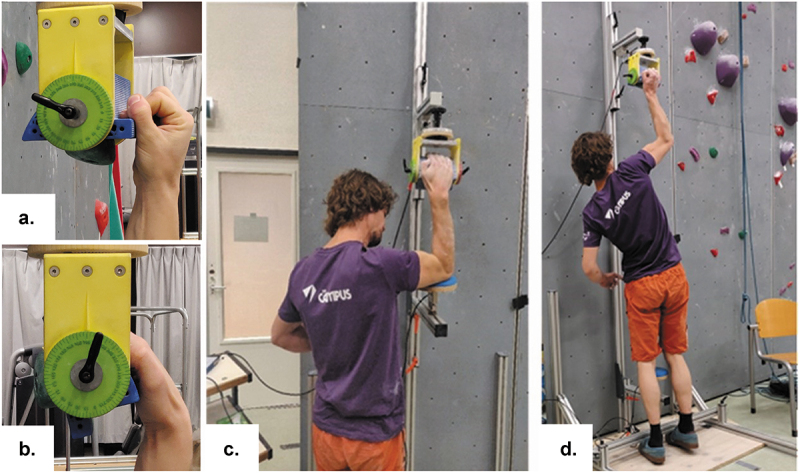
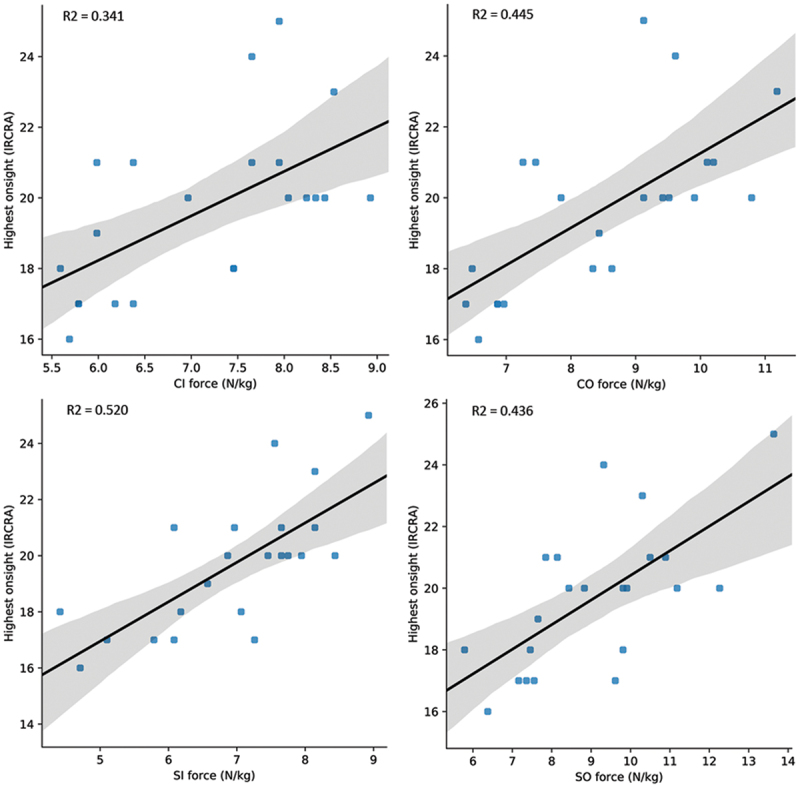
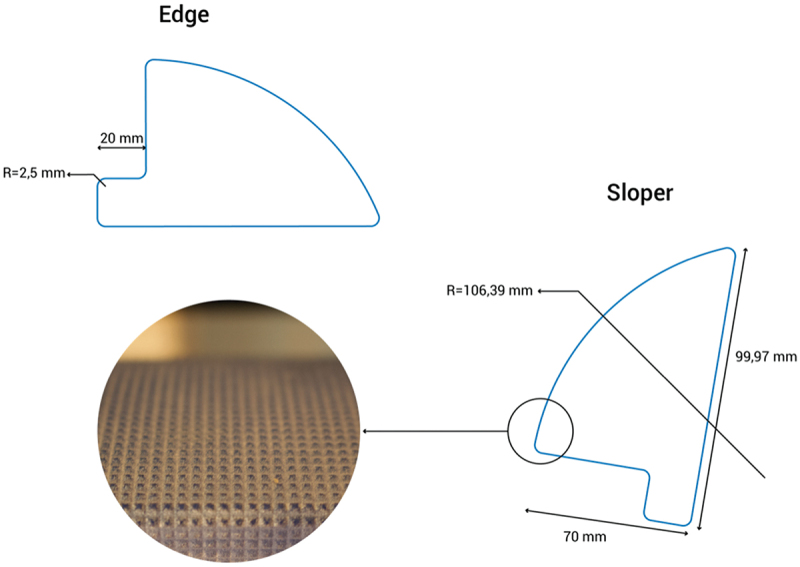
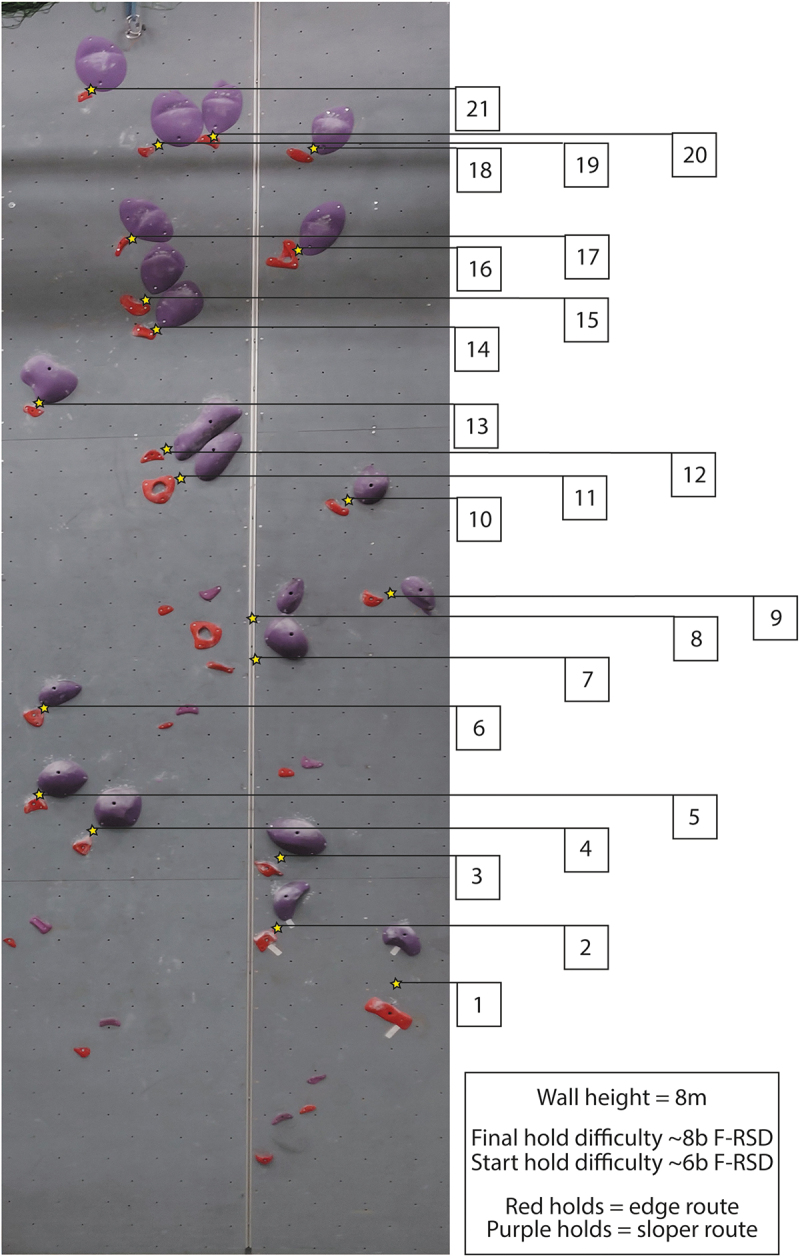
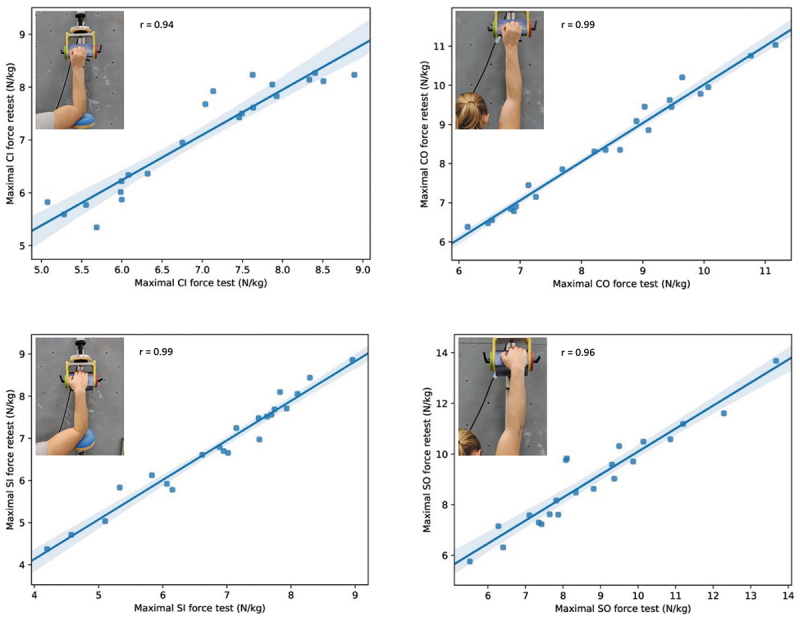
In climbing, exceptional levels of fingertip strength across different holds and body positions are considered essential for performance. There is no commonly agreed upon way to measure such "grip strength variability." Furthermore, the accurate and reliable monitoring of strength is necessary to achieve safe, progressive improvement in strength. Therefore, this study aimed to develop reliability and criterion validity for assessment of grip strength across multiple holds and body positions. Twenty-two advanced toelite climbers (age = 28.5 ± 8.6 years) performed maximal voluntary isometric contractions on two occasions (for test-retest reliability). Conditions included two hold types (edge and sloper) tested in two postures (elbow flexion [90°] and self-preferred). Climbing performance was determined on two "difficulty" routes (difficulty increases with each hold): one route composed of only edges and another only of slopers. Test-retest reliability was high (ICC between 0.94-0.99). Significant positive correlations were observed for the forces produced on the sloper test and climbing distance on the sloper route (r = 0.512,p < .05), and for the forces produced on the edge test and climbing distance on the edge route (ρ = 0.579, p < .01). These findings support reliability and validity of the method used to measure grip strength variability with different holds and body positions and suggest that improving strength across different grasping types supports adaptive climbing performance.
在攀岩中,不同握点和身体姿势下的指尖力量水平被认为是取得优异成绩的关键。目前,还没有一种被广泛认可的方法来测量这种“握力变化”。此外,为了实现安全、渐进的力量提升,对力量进行准确、可靠的监测是必要的。因此,本研究旨在开发一种评估多种握点和身体姿势下握力的可靠性和效标效度。 22 名高级精英攀岩者(年龄=28.5±8.6 岁)在两次(用于测试-重测可靠性)情况下进行了最大自主等长收缩。条件包括两种握点类型(边缘和倾斜),在两种姿势(90°肘弯曲和自我偏好)下进行测试。使用两种“难度”路线(每个握点的难度递增)来确定攀岩表现:一条路线仅由边缘组成,另一条路线仅由倾斜组成。 测试-重测可靠性很高(ICC 为 0.94-0.99)。在倾斜测试中产生的力与倾斜路线上的攀爬距离之间存在显著正相关(r = 0.512,p <.05),在边缘测试中产生的力与边缘路线上的攀爬距离之间存在显著正相关(ρ = 0.579,p <.01)。 这些发现支持了使用不同握点和身体姿势测量握力变化的方法的可靠性和有效性,并表明提高不同抓握类型的力量有助于适应性的攀岩表现。