Departamento de Física, Universidade Estadual de Maringá - Maringá, Maringá, PR, 87020-900, Brazil.
Rio Grande do Sul Superintendency, Brazilian Federal Police - Porto Alegre, Porto Alegre, RS, 90160-093, Brazil.
Sci Rep. 2022 Apr 27;12(1):6858. doi: 10.1038/s41598-022-10909-2.
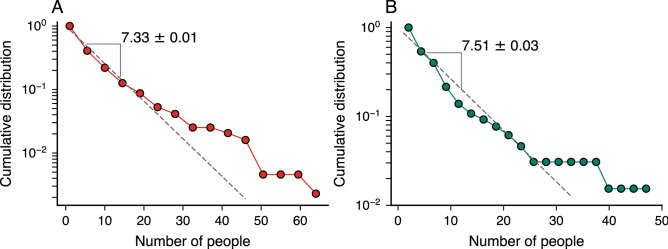
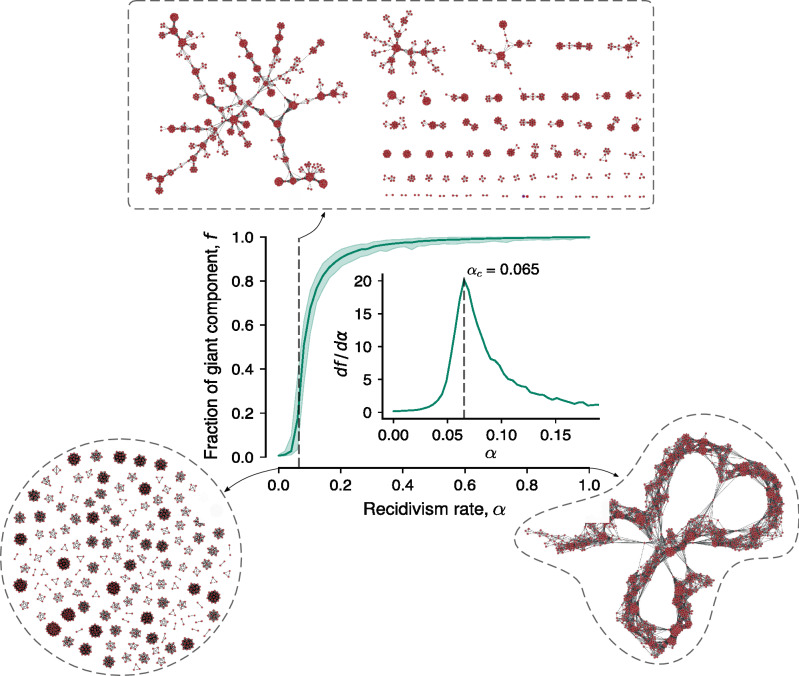
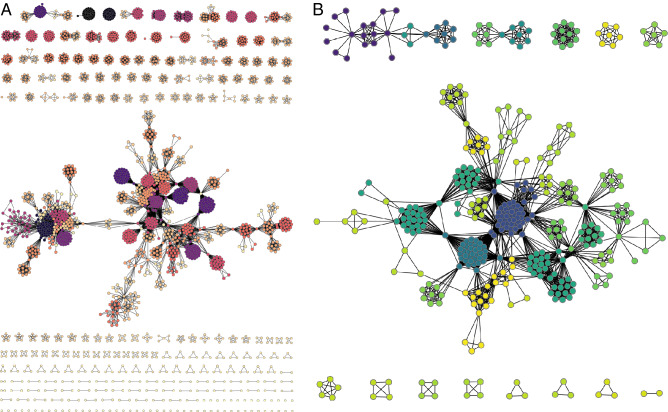
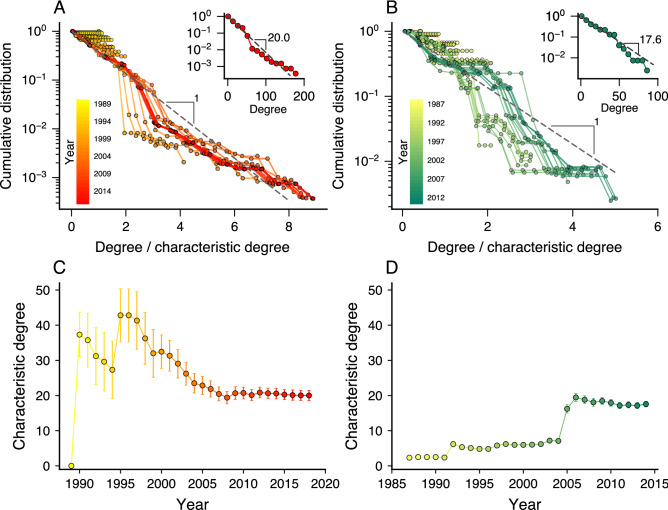
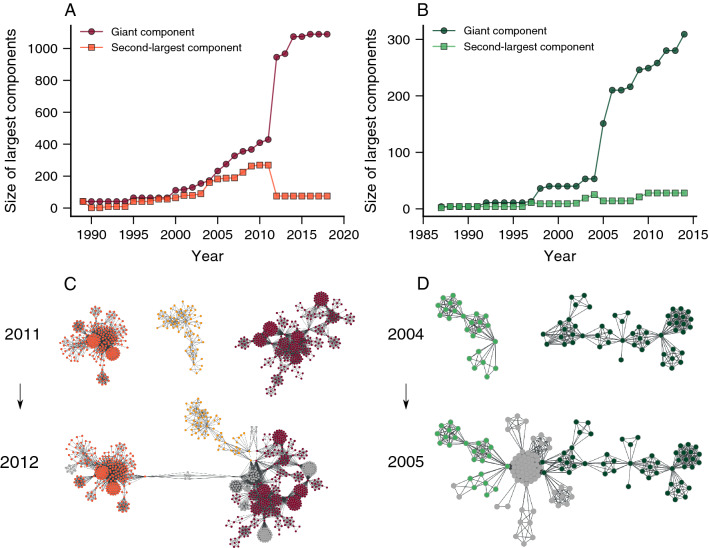
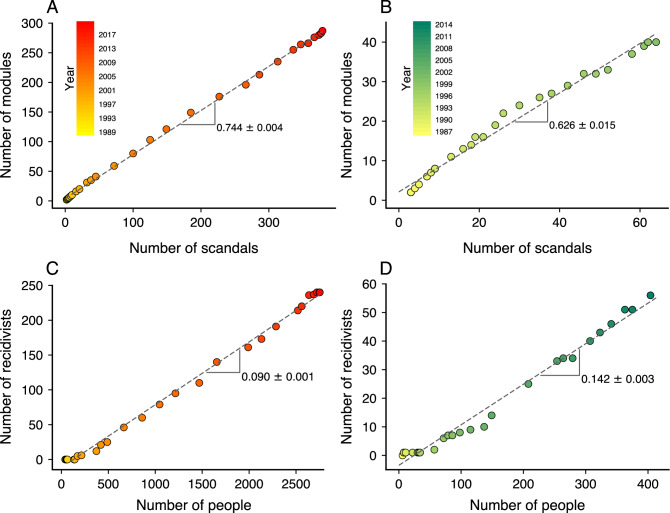
Corruption crimes demand highly coordinated actions among criminal agents to succeed. But research dedicated to corruption networks is still in its infancy and indeed little is known about the properties of these networks. Here we present a comprehensive investigation of corruption networks related to political scandals in Spain and Brazil over nearly three decades. We show that corruption networks of both countries share universal structural and dynamical properties, including similar degree distributions, clustering and assortativity coefficients, modular structure, and a growth process that is marked by the coalescence of network components due to a few recidivist criminals. We propose a simple model that not only reproduces these empirical properties but reveals also that corruption networks operate near a critical recidivism rate below which the network is entirely fragmented and above which it is overly connected. Our research thus indicates that actions focused on decreasing corruption recidivism may substantially mitigate this type of organized crime.
腐败犯罪需要犯罪代理人之间高度协调的行动才能成功。但是,专门针对腐败网络的研究仍处于起步阶段,实际上对于这些网络的性质知之甚少。在这里,我们对西班牙和巴西近三十年来与政治丑闻有关的腐败网络进行了全面调查。我们表明,两国的腐败网络具有相似的通用结构和动态特性,包括相似的度分布、聚类系数和配价系数、模块化结构以及由于少数惯犯导致网络组件合并的增长过程。我们提出了一个简单的模型,该模型不仅再现了这些经验特性,还表明腐败网络在临界累犯率附近运行,低于该率网络完全碎片化,高于该率网络过度连接。因此,我们的研究表明,专注于降低腐败累犯率的行动可能会大大减轻这种有组织犯罪。