Onyeaka Helen, Passaretti Paolo, Miri Taghi, Al-Sharify Zainab T
School of Chemical Engineering, University of Birmingham, B15 2TT, Edgbaston, UK.
Institute of Cancer and Genomic Sciences, College of Medical and Dental Sciences, University of Birmingham, UK.
Curr Res Food Sci. 2022 Apr 22;5:763-774. doi: 10.1016/j.crfs.2022.04.005. eCollection 2022.
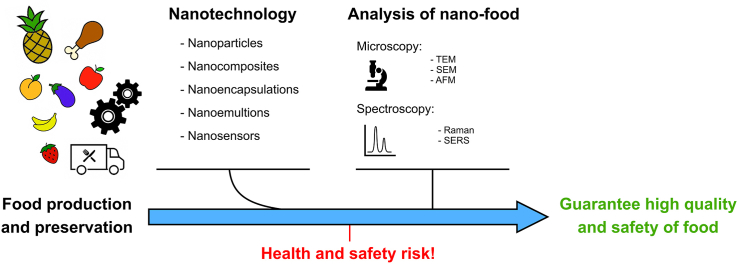
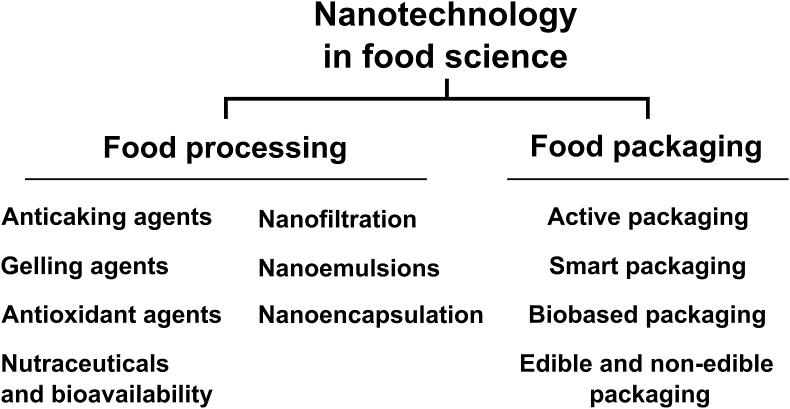
Nanotechnology involves developing, characterising, and applying structures ranging in size from 1 to 100 nm. As a key advanced technology, it has contributed to a substantial impact across engineering, medicine, agriculture and food. With regards to their application in food, nanomaterials posses the ability to lead the quantitative and qualitative development of high-quality, healthier, and safer foods by outperforming traditional food processing technologies for increasing shelf life and preventing contaminations. Although rapid progress has been made in nanotechnology in food products, the toxicity of nanoparticles and nanomaterials is not very well known. As a result, nanomaterials are potentially toxic, therefore, considering the constantly increasing employment in food science, they need to be further characterised, and their use must be better regulated. We may face a crisis of nanotoxicity if the molecular mechanisms by which nanoparticles and nanomaterials interact with food and within living organisms is not fully understood. Food safety can be guaranteed only if we are thoroughly aware of nanomaterial properties and potential toxicity. Therefore, it is urgently necessary to have in the food sector a regulatory system capable of managing nanofood risks and nanotechnology, considering the health effects of food processing techniques based on nanotechnology. This present review discusses the impact and role nanotechnology play in food science. The specific application of Nanomaterials in food science, their advantages and disadvantages, the potential risk for human health and the analysis to detect nanocomponents are also highlighted.
纳米技术涉及开发、表征和应用尺寸范围从1到100纳米的结构。作为一项关键的先进技术,它对工程、医学、农业和食品领域产生了重大影响。就其在食品中的应用而言,纳米材料能够通过在延长保质期和防止污染方面超越传统食品加工技术,引领高质量、更健康、更安全食品的定量和定性发展。尽管纳米技术在食品产品方面取得了快速进展,但纳米颗粒和纳米材料的毒性尚不为人所知。因此,纳米材料具有潜在毒性,鉴于其在食品科学中的应用不断增加,需要对其进行进一步表征,并更好地规范其使用。如果不能充分理解纳米颗粒和纳米材料与食品以及在生物体内相互作用的分子机制,我们可能会面临纳米毒性危机。只有当我们充分了解纳米材料的特性和潜在毒性时,食品安全才能得到保障。因此,考虑到基于纳米技术的食品加工技术对健康的影响,食品行业迫切需要一个能够管理纳米食品风险和纳米技术的监管系统。本综述讨论了纳米技术在食品科学中的影响和作用。还重点介绍了纳米材料在食品科学中的具体应用、它们的优缺点、对人类健康的潜在风险以及检测纳米成分的分析方法。