Zhou Xu, Yuan Long, Wu Chengzhou, Luo Gaoxing, Deng Jun, Mao Zhengwei
Department of Ophthalmology, Southwest Hospital, Third Military Medical University (Army Medical University) Chongqing 400038 China.
Department of Breast Surgery, Southwest Hospital, Third Military Medical University (Army Medical University) Chongqing 400038 China.
RSC Adv. 2018 May 15;8(32):17656-17676. doi: 10.1039/c8ra02424c. eCollection 2018 May 14.
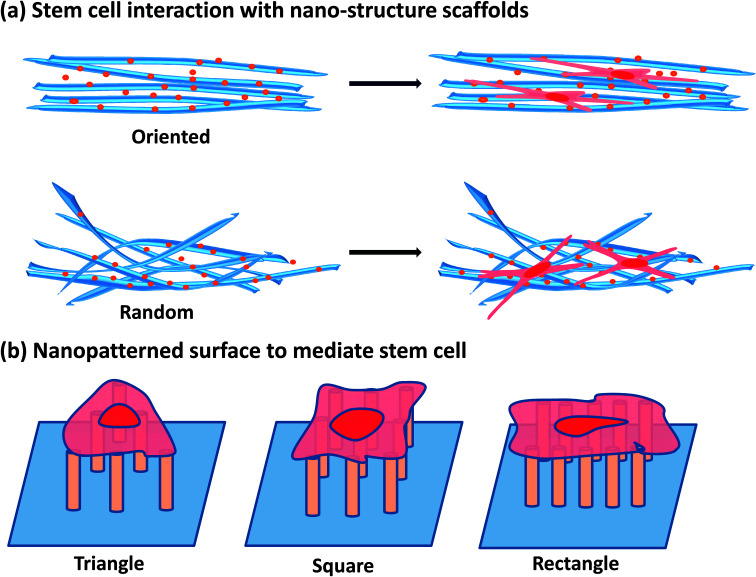
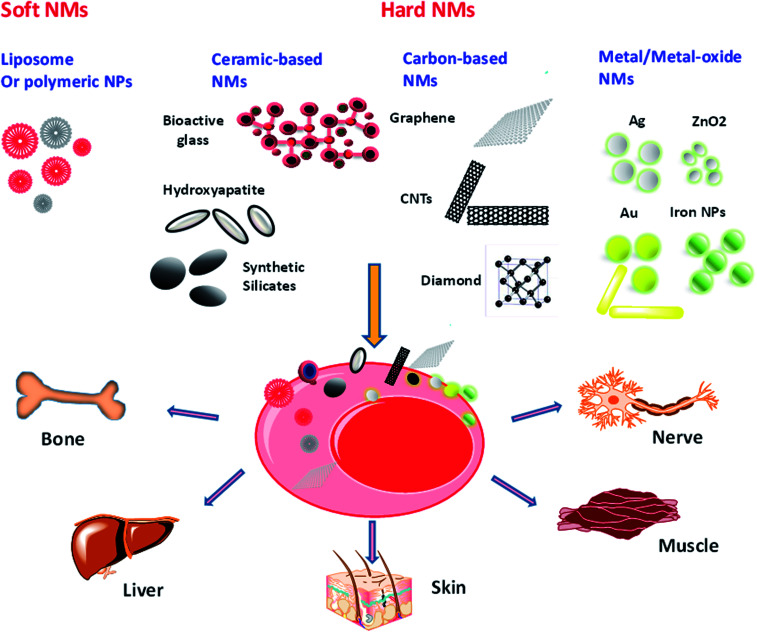
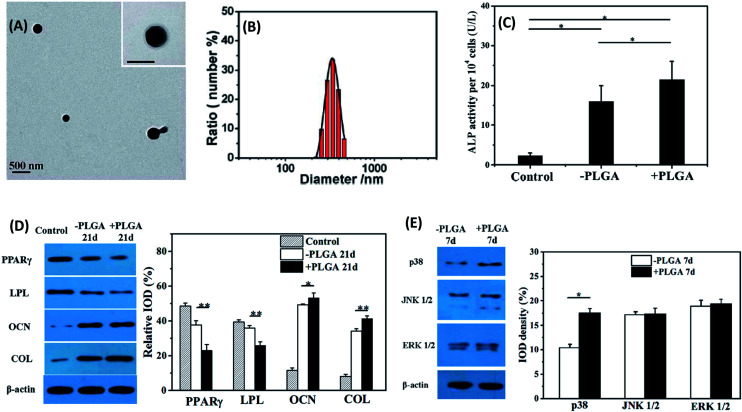
The field of stem-cell-therapy offers considerable promise as a means of delivering new treatments for a wide range of diseases. Recent progress in nanotechnology has stimulated the development of multifunctional nanomaterials (NMs) for stem-cell-therapy. Several clinical trials based on the use of NMs are currently underway for stem-cell-therapy purposes, such as drug/gene delivery and imaging. However, the interactions between NMs and stem cells are far from being completed, and the effects of the NMs on cellular behavior need critical evaluation. In this review, the interactions between several types of mostly used NMs and stem cells, and their associated possible mechanisms are systematically discussed, with specific emphasis on the possible differentiation effects induced by NMs. It is expected that the enhanced understanding of NM-stem cell interactions will facilitate biomaterial design for stem-cell-therapy and regenerative medicine applications.
干细胞治疗领域作为一种为多种疾病提供新治疗方法的手段,具有相当大的前景。纳米技术的最新进展推动了用于干细胞治疗的多功能纳米材料(NMs)的发展。目前正在进行几项基于纳米材料使用的干细胞治疗临床试验,例如药物/基因递送和成像。然而,纳米材料与干细胞之间的相互作用远未完成,纳米材料对细胞行为的影响需要严格评估。在这篇综述中,系统地讨论了几种最常用的纳米材料与干细胞之间的相互作用及其相关的可能机制,特别强调了纳米材料诱导的可能分化效应。预计对纳米材料与干细胞相互作用的深入理解将有助于干细胞治疗和再生医学应用的生物材料设计。